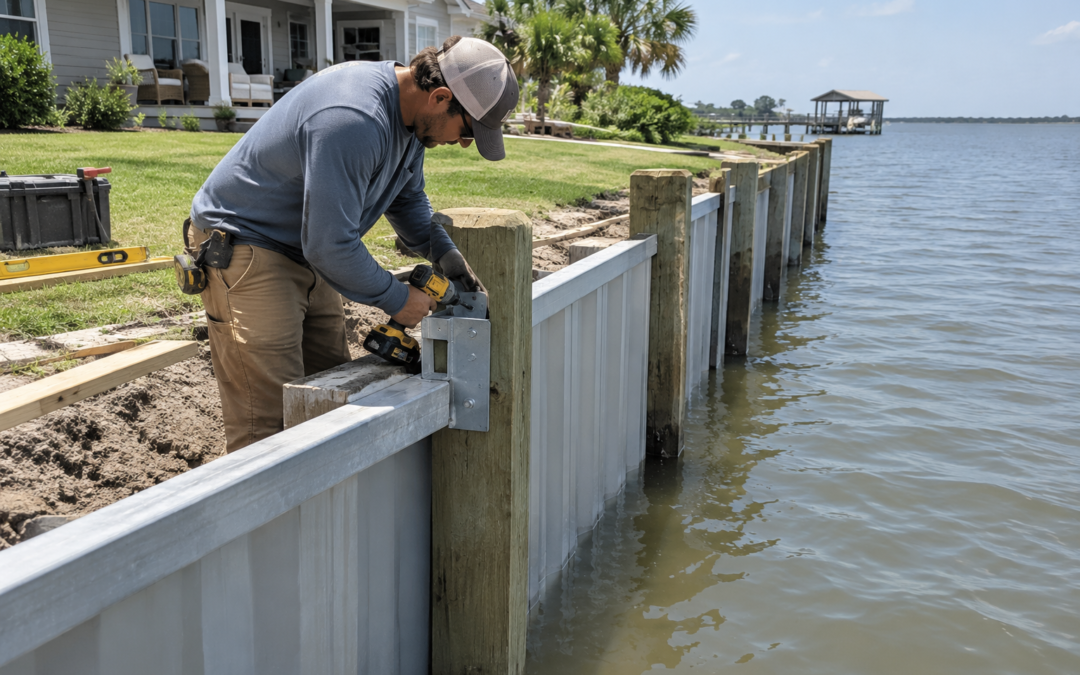
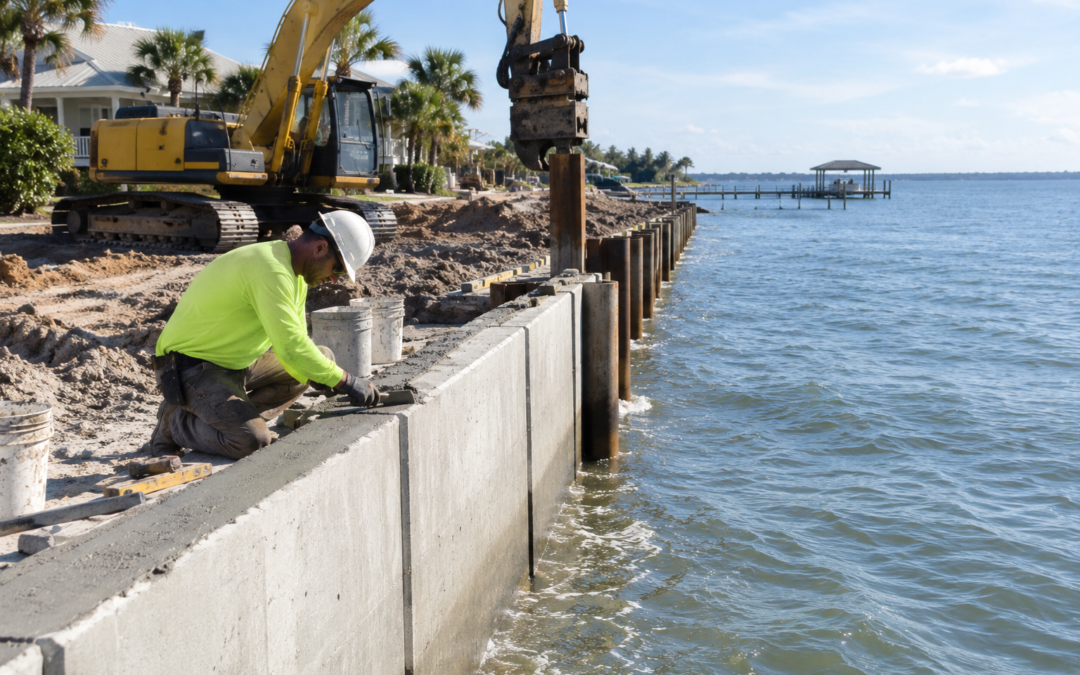
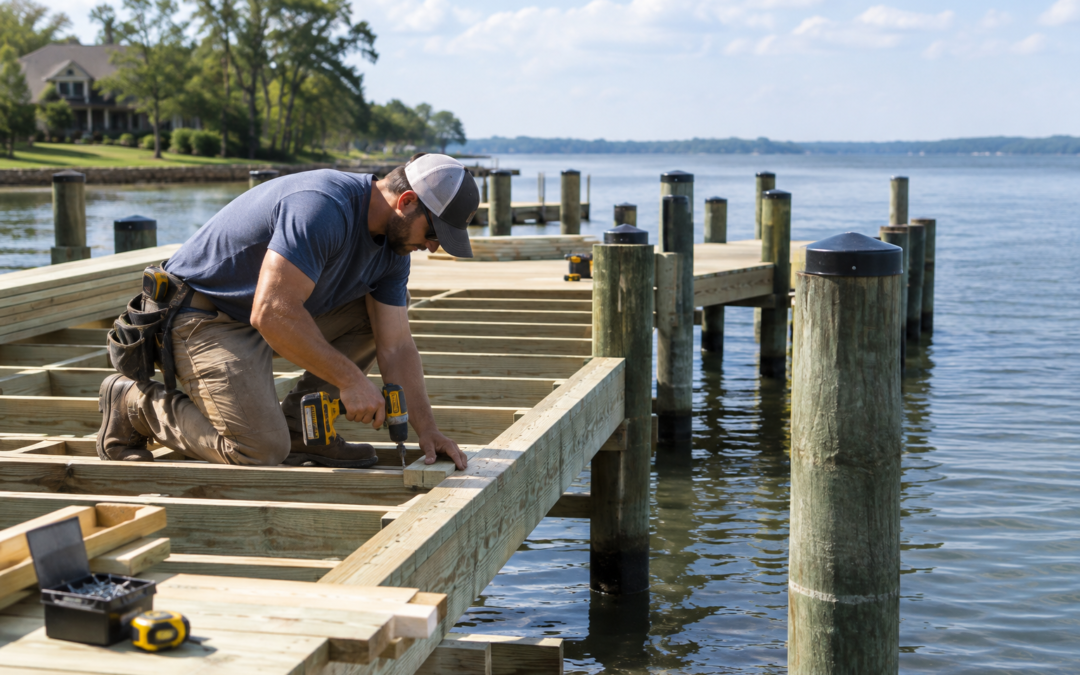
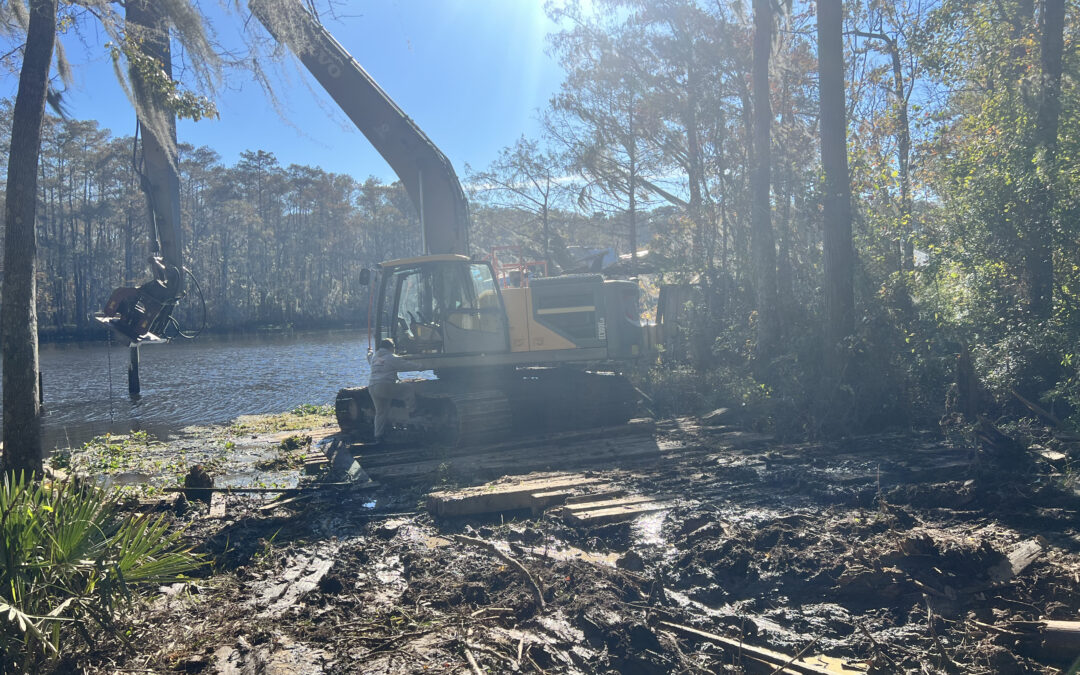
Kenner sits along the southern shore of Lake Pontchartrain, and that location comes with a specific set of soil and water challenges. Anyone building a dock, boathouse, or seawall here needs a foundation that can handle soft, waterlogged ground and the occasional storm surge. That foundation almost always starts with pile driving.
Pile driving is the process of installing long structural supports, called piles, deep into the ground to carry the weight of a dock, pier, boathouse, or bulkhead above it. Without properly driven piles, waterfront structures in Kenner would settle unevenly, shift during storms, or fail outright within a few years.

What Is Pile Driving and Why Does Kenner Need It?
Pile driving is a foundation method that drives steel, timber, or concrete piles deep into the ground until they reach load-bearing soil or rock. In Kenner, where lake-adjacent soil is soft and prone to erosion, piles are the only reliable way to anchor a dock, seawall, or boathouse so it stays level and stable for decades.
Kenner’s location on Lake Pontchartrain means most waterfront lots sit on a mix of clay, silt, and sand that shifts with water levels. A structure built on a shallow footing or a simple slab will eventually sink, tilt, or separate from the shoreline. Piles solve this by transferring the structure’s weight past the unstable topsoil and into deeper, more stable layers.
Why Standard Foundations Fail Near the Lake
A few reasons homeowners run into trouble when they skip proper pile foundations:
– Soft lakebed soil compresses unevenly under weight over time
– Seasonal water level changes cause soil expansion and contraction
– Storm surge and wave action erode unsupported footings
– Heavy structures like boathouses need deeper support than typical residential foundations provide
Any one of these can turn a small settling issue into a costly structural repair. Piles address all four at once by anchoring the load well below the zone where soil conditions fluctuate.
Types of Piles Used in Kenner Marine Construction
Not every project calls for the same pile material. The right choice depends on the structure’s weight, the water conditions, and the expected lifespan of the project.
| Pile Type | Best For | Typical Lifespan |
|---|---|---|
| Timber piles | Residential docks, small piers | 20 to 30 years |
| Steel piles | Boathouses, heavier commercial structures | 40+ years |
| Concrete piles | Seawalls, bulkheads, permanent foundations | 50+ years |
| Vinyl-sheathed piles | Areas with high marine borer activity | 30 to 40 years |
Timber piles remain popular for smaller residential docks because they are cost-effective and easy to install. Steel and concrete piles cost more upfront but hold up better under the heavier loads of a boathouse or a commercial marina structure, which matters for Kenner properties that see frequent boat traffic and larger vessels.
The Pile Driving Process, Step by Step
Every pile driving project follows a similar sequence, though the details change based on soil conditions and structure type.
- Site assessment and soil testing. Our crew evaluates soil composition, water depth, and load requirements before recommending a pile type.
- Permitting. Kenner marine construction projects typically require permits from local parish authorities and, depending on scope, the Army Corps of Engineers.
- Pile placement. Using a pile driver, piles are driven to a predetermined depth or until they reach refusal, meaning the soil resistance confirms adequate load capacity.
- Capping and framing. Once piles are set, caps and framing are installed to support the deck, seawall, or boathouse structure above.
- Final inspection. A completed pile foundation is checked for level, plumb alignment, and load capacity before construction continues.
This process usually takes a few days for a standard residential dock, though larger boathouse or seawall projects can take longer depending on the number of piles required.
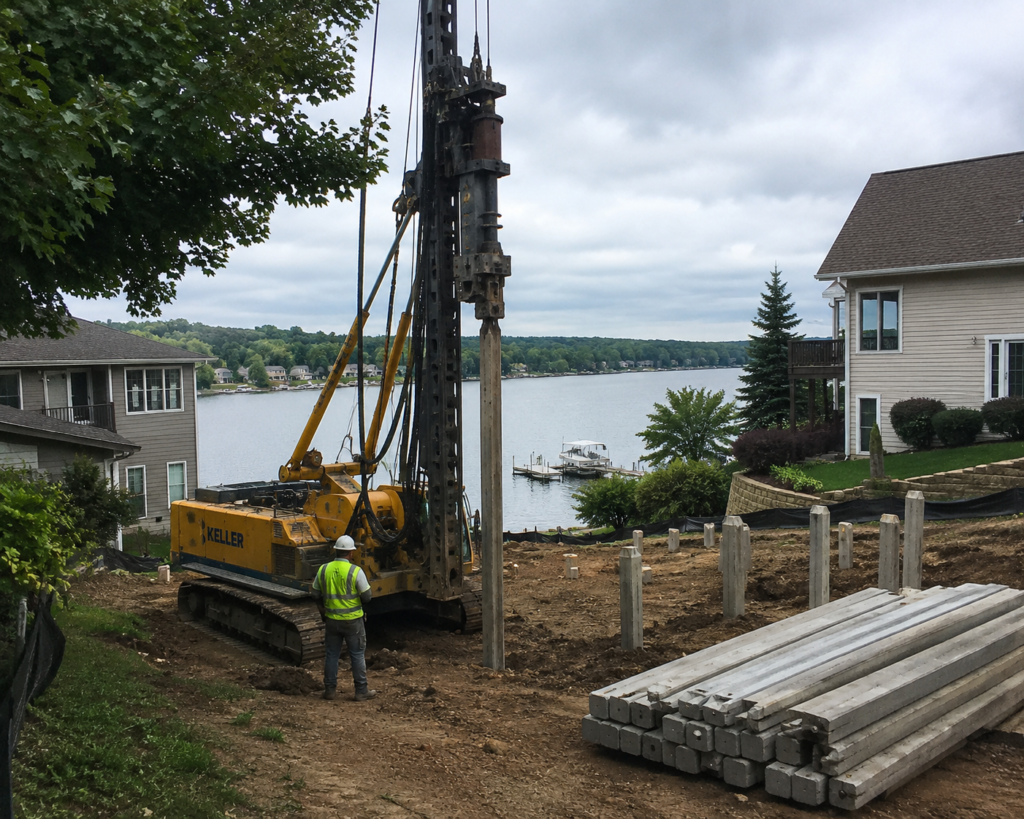
How Much Does Pile Driving Cost in Kenner?
Pile driving costs in the Kenner area typically range from $150 to $400 per pile, depending on material, depth, and site accessibility. A standard residential dock might need 6 to 12 piles, while a boathouse foundation can require significantly more.
Several factors influence the final price:
– Soil conditions and how deep piles need to go to reach stable ground
– Pile material, with steel and concrete costing more than timber
– Site access, since waterfront lots with limited equipment access often cost more to work
– Permitting requirements, which can add time and administrative cost to a project
Getting a detailed site assessment before starting is the best way to get an accurate estimate rather than relying on a rough per-pile average.
Permitting for Pile Driving Near Lake Pontchartrain
Because Kenner sits directly on Lake Pontchartrain, most pile driving projects require sign-off from local jurisdictions and, in many cases, the Army Corps of Engineers. Permitting requirements depend on the size of the structure, its distance from the shoreline, and whether the project affects navigable waters.
Working with a contractor who already understands the local permitting landscape saves significant time. Lamulle Construction handles permitting coordination as part of every marine construction foundation project, so property owners are not left navigating parish and federal requirements on their own.
Why Choose Lamulle Construction for Pile Driving in Kenner
Lamulle Construction has built its reputation on marine construction foundations across the Louisiana and Mississippi Gulf Coast since the years following World War II. That decades-long presence means our crews already know the soil conditions, permitting process, and seasonal water patterns specific to areas like Kenner.
We handle pile driving as part of our broader marine construction foundation services, which means the same team that drives your piles also builds the dock or structure that sits on top of them. That continuity reduces miscommunication between separate contractors and keeps the project on one consistent timeline.