Every dock, boathouse, pier, and seawall built along the Louisiana coast depends on the foundation beneath it. Get the foundation right and the structure above it can last decades with routine maintenance. Get it wrong and even the highest quality framing and decking will eventually fail as the ground beneath it shifts, settles, or erodes.
Louisiana’s coastal soils present specific challenges for marine construction foundations that do not exist inland. Soft clay, silt, and organic soils are common throughout much of the state’s waterfront, and the water table sits close to the surface almost everywhere near the coast.
Why Foundation Choice Matters So Much for Waterfront Construction
Marine construction foundations carry loads that inland foundations rarely encounter: lateral pressure from soil and water, wave and current forces, and in many cases the cyclical stress of tidal movement. Louisiana’s soft coastal soils compound this challenge, since soil that provides adequate bearing capacity in a firm clay or sand environment may provide only a fraction of that capacity in the soft alluvial soils common along much of the Louisiana coast.
Timber Piling Foundations
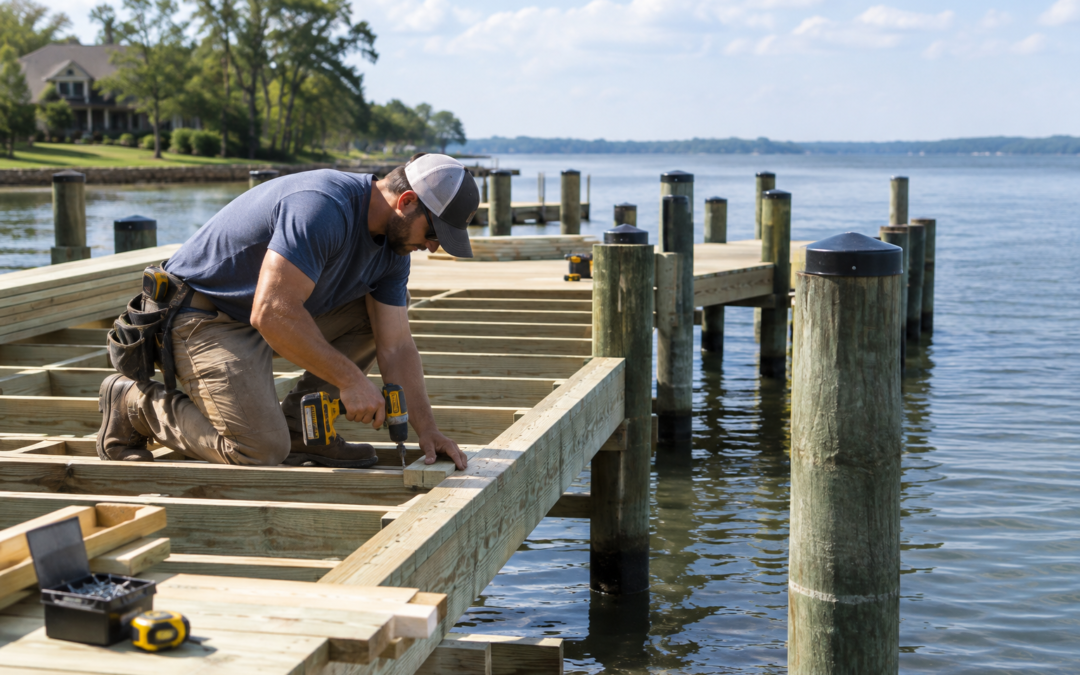
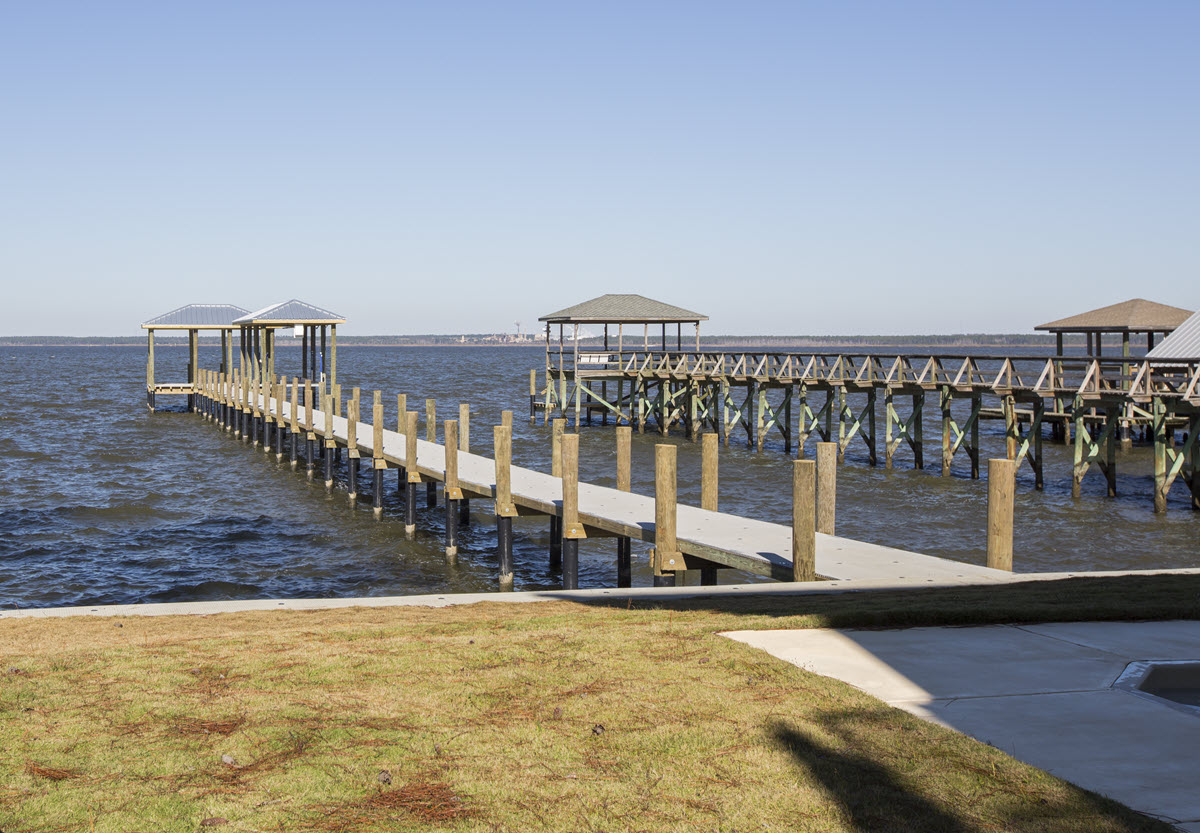
Timber pilings remain the most common foundation choice for residential docks, piers, and smaller boathouse structures throughout Louisiana. Pressure treated timber pilings are driven into the bottom using vibratory or impact hammers until they reach adequate embedment depth. The treatment level matters significantly: aquatic and ground contact rated treatment is required for adequate service life. Timber pilings have a finite service life, typically 25 to 40 years depending on water chemistry and treatment quality.
Concrete Piling Foundations
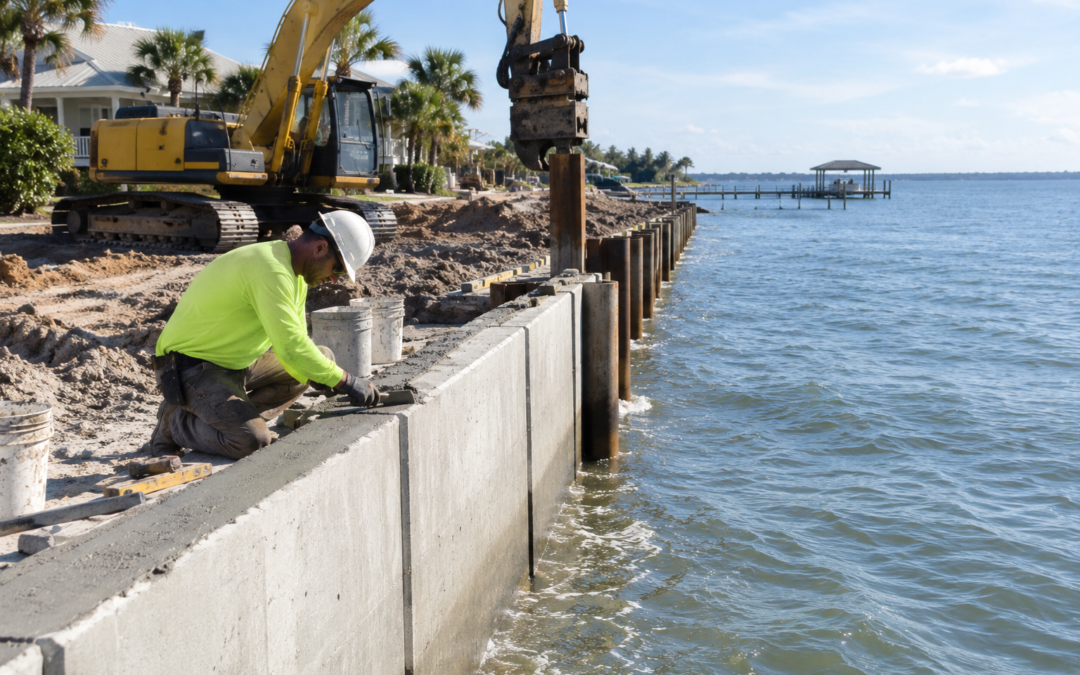
Concrete pilings offer greater durability and load capacity than timber and are increasingly used for larger structures and residential projects where the property owner wants maximum longevity. Concrete resists the corrosion and biological attack that affects timber in saltwater and brackish environments. The tradeoff is cost, since concrete requires more expensive materials and often more specialized installation equipment.
Steel Piling Foundations
Steel pilings are used primarily in commercial marine construction and in situations where soil conditions or structural loads exceed what timber or standard concrete can economically handle. Steel requires corrosion protection in Louisiana’s saltwater and brackish environments, typically through coating systems or cathodic protection.
Helical Pile Foundations
Helical piles are a newer foundation technology that has become increasingly popular for Louisiana marine construction, particularly for seawalls, bulkhead anchor systems, and smaller structures. A helical pile is essentially a large screw that is mechanically driven into the ground. Helical piles can be installed with relatively compact equipment, provide reliable capacity in soft soils, and can be load tested immediately after installation.
Sheet Pile Foundations for Seawalls and Bulkheads
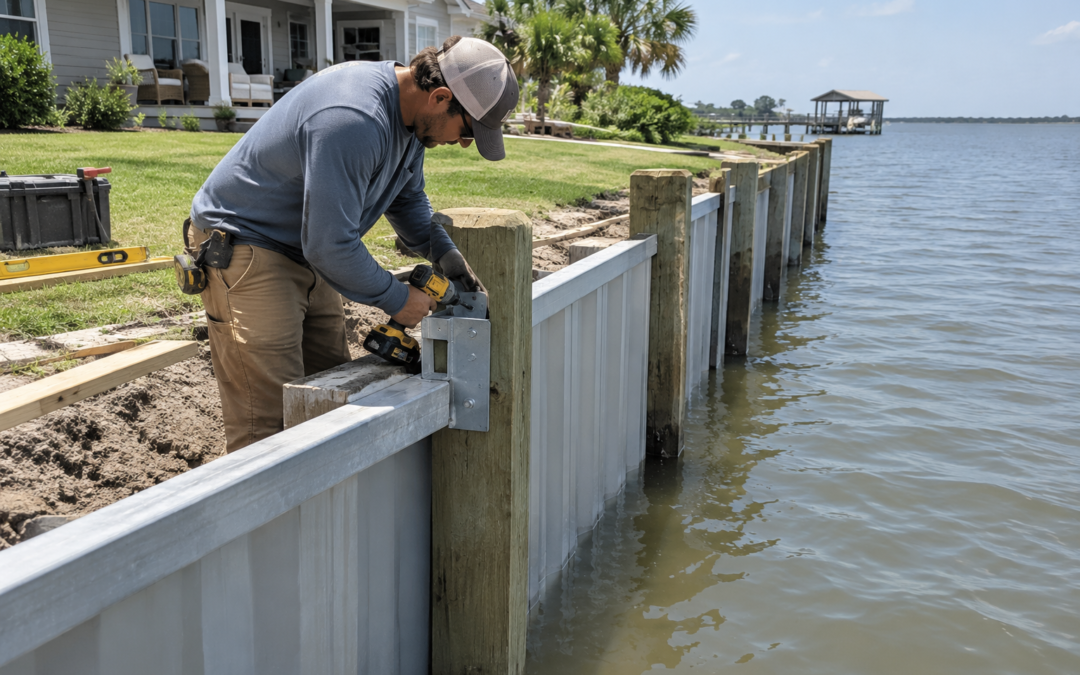
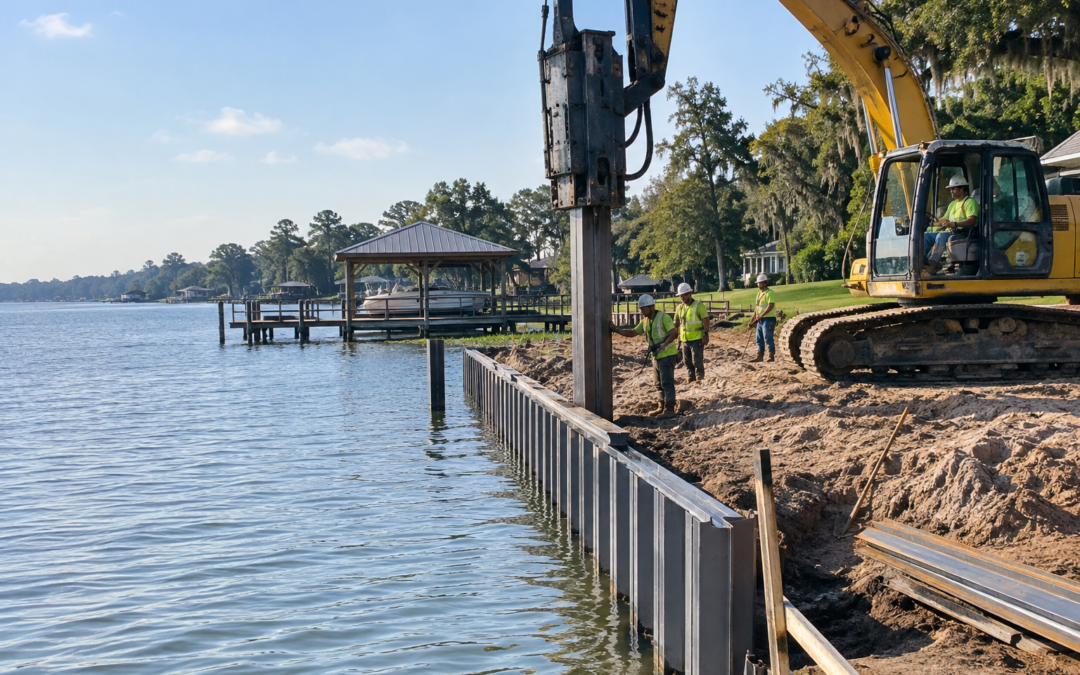
Sheet piling is used primarily for seawalls and bulkheads rather than docks or piers. Interlocking sheet pile sections, available in vinyl, steel, or occasionally concrete, are driven into the ground to create a continuous wall that both retains soil and forms the structural face of the shoreline protection system. Vinyl sheet piling has become the standard choice for residential bulkheads throughout Louisiana due to its corrosion resistance. Our sheet pile page covers this system in more detail.
Matching Foundation Type to Louisiana Soil Conditions
Soft organic soils and marsh muck, common in much of coastal Louisiana, generally require deeper pile penetration or the additional capacity that helical piles or larger diameter driven piles can provide. Firmer clay soils provide better bearing capacity at shallower depths. A proper site assessment, ideally including soil borings or at minimum a review of known conditions for the immediate area, is the foundation of good foundation design.
How Lamulle Approaches Foundation Design
Every Lamulle project begins with an assessment of the specific soil and water conditions present at the site. That assessment informs the foundation type, the piling depth and spacing, and the material specification for the project. This is not a step we skip or shortcut, because the foundation is nearly impossible to correct after the fact without significant additional cost.