Kenner sits along the southern shore of Lake Pontchartrain, just west of New Orleans, in one of the more densely developed waterfront zones on the Louisiana coast. The lakefront here is a mix of residential properties, recreational boating facilities, and the open park and marina infrastructure that stretches along the shore. For waterfront property owners in Kenner, Lake Pontchartrain’s southern exposure presents real erosion challenges that require real shoreline protection.
Lake Pontchartrain is not the Gulf of Mexico, but it is not a calm pond either. The lake covers nearly 640 square miles, and its shallow depth, typically 12 to 16 feet, allows wind-driven waves to build across long fetches. When winds blow from the north and east, the southern shore, where Kenner sits, receives the full energy of waves that have traveled across the entire lake. Combined with the tidal-like oscillations the lake experiences and the storm surge potential during hurricane events, the Kenner shoreline is an environment where unprotected or poorly maintained structures deteriorate steadily.
A properly engineered seawall is the most effective long-term solution for stopping that deterioration and protecting the investment you have made in your waterfront property.
What Lake Pontchartrain’s Southern Shore Does to Unprotected Shorelines
The erosion mechanism on Lake Pontchartrain’s southern shore is less dramatic than open Gulf coastline but more persistent. Wind-driven waves from north and northeast directions hit the south shore repeatedly throughout the year. Each wave cycle washes a small amount of soil from an unprotected bank. Over months and years, that small-per-cycle loss adds up to significant land loss.
In Kenner’s case, much of the lakefront soil is soft alluvial clay and silt. This material erodes more easily than sandy beach soil in some ways, because wave energy can suspend fine particles and carry them away. Once the bank face becomes exposed, each subsequent wave hits not the vegetated, rooted surface but bare soil that has no resistance to water movement.
Boat wake from recreational and commercial traffic on the lake adds to the baseline wave load. During storm events, surge from the east or northeast can push significant water volume against the south shore. Katrina’s surge affected the Lake Pontchartrain south shore severely, and the memory of that event underscores why shoreline protection in Kenner is not a luxury but a necessity.
Seawall Types for Kenner’s Lake Pontchartrain Shoreline
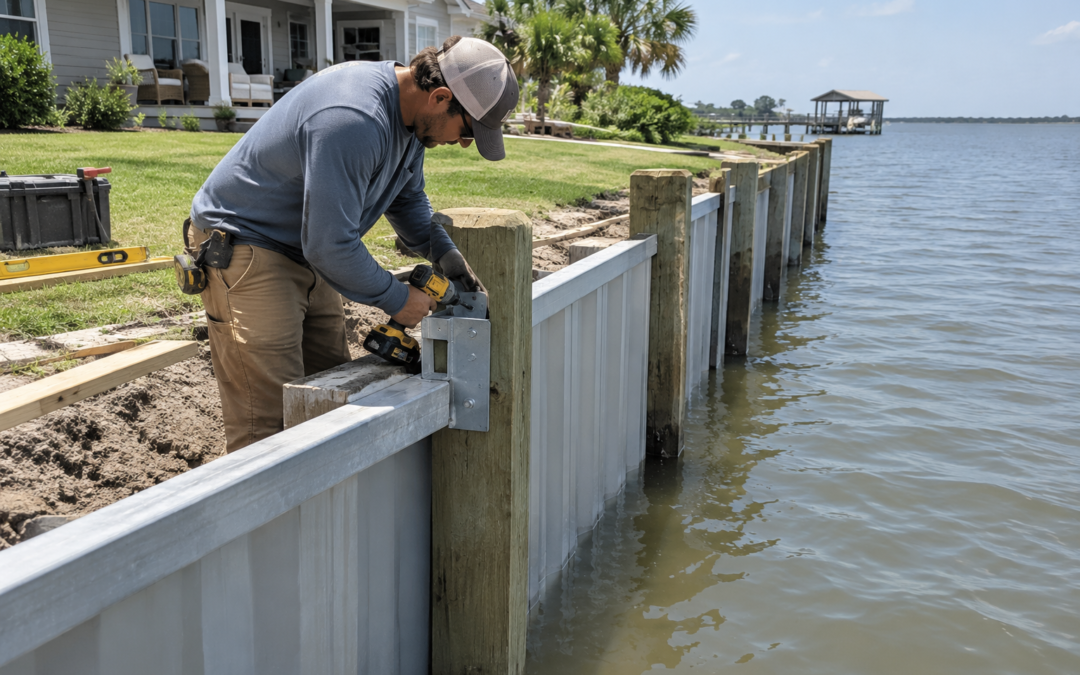
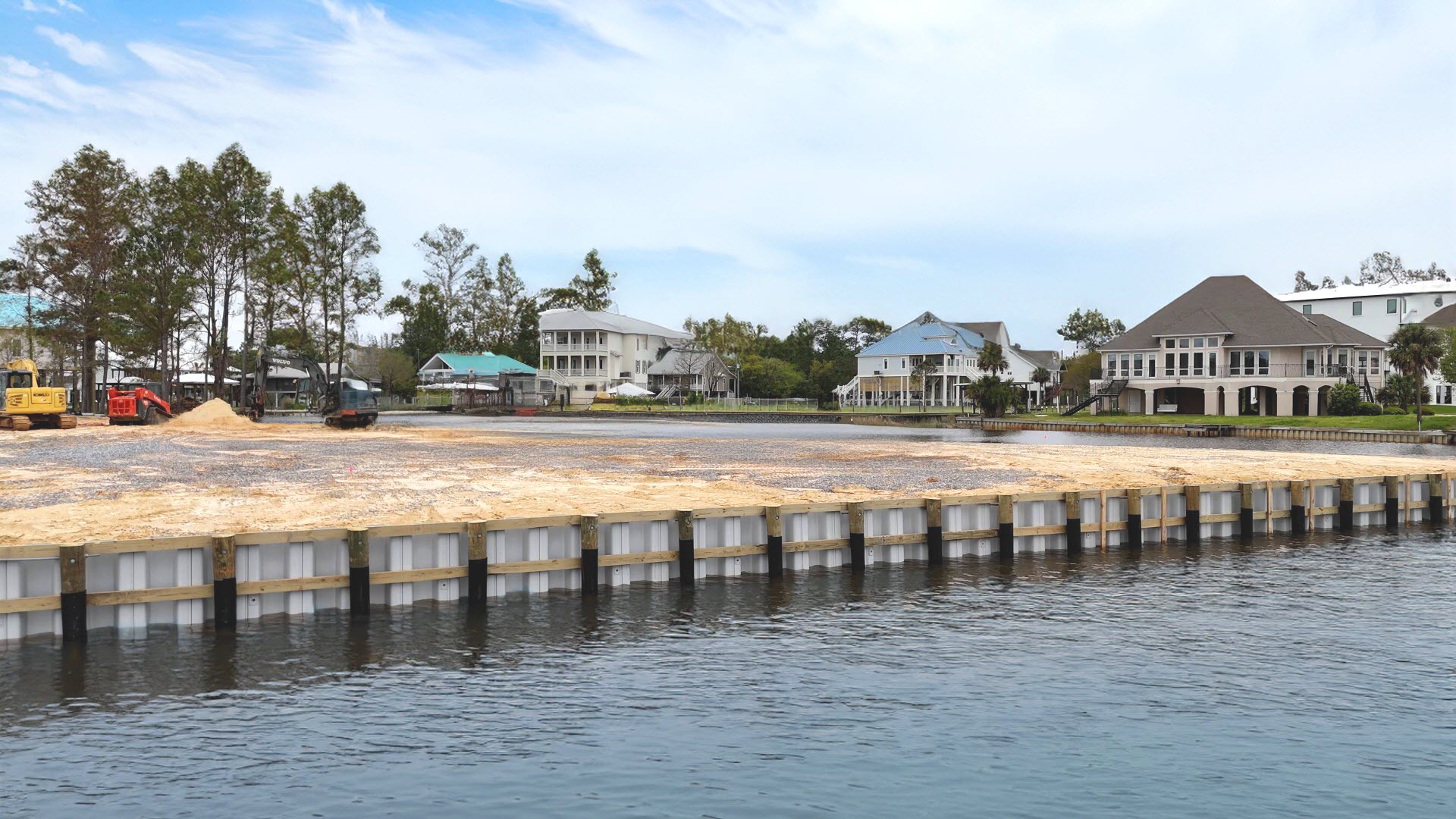
Vinyl sheet pile seawalls are the most common installation for residential and light commercial Kenner waterfront properties. Vinyl performs well in Lake Pontchartrain’s brackish water environment, resists corrosion, and does not require the same maintenance burden as steel or timber. For properties experiencing moderate wave loading from wind-driven fetch and routine boat wake, a properly installed vinyl system with appropriate tie-back anchors handles the load effectively.
The key specification for a Kenner vinyl seawall is the tie-back anchor system. Lake Pontchartrain’s south shore clay soils can become saturated after heavy rain or surge events, and saturated clay exerts significant lateral pressure on a sheet pile wall. Anchors need to be sized and spaced for this loading, not for a sheltered canal environment.
Concrete seawalls are appropriate for Kenner properties with higher exposure, particularly those on the open lake edge with no natural or structural buffer in front. Concrete carries the mass to resist wave impact forces that vinyl systems are not designed for.
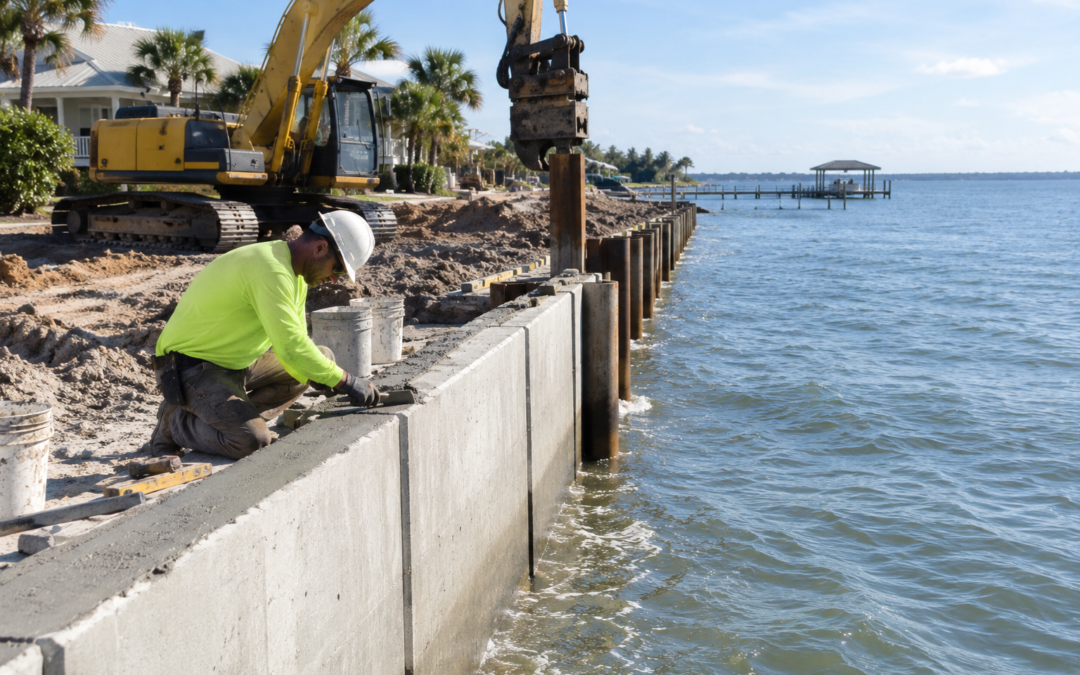
Sheet pile and concrete cap combinations are a practical approach for many Kenner properties. The sheet pile provides the primary structural barrier. A cast concrete cap ties the tops of the piles together, adds mass at the wave impact zone, and provides a finished top surface.
Our seawall construction team can assess your specific site, exposure, and soil conditions to recommend the right system for your property.
Designing for Lake Pontchartrain’s Surge History
Key design elements for surge-aware seawall construction in Kenner include:
- Elevation. The top of the wall should be set at or above the local base flood elevation with adequate freeboard for wave runup above the surge level. The applicable FEMA flood maps for this area reflect post-Katrina updates and should be the baseline for any design.
- Tie-back system. For a lake shoreline with surge potential, tie-back anchors need to be designed for the hydrostatic loads that surge places on the wall. This typically means higher anchor capacity and tighter anchor spacing than a calmer water installation.
- Drainage. Surge events saturate the soil behind the wall, and that water needs somewhere to go after the surge recedes. Weep holes or drain pipes at the wall base allow drainage without allowing soil to follow the water through the wall.
- Base stabilization. Surge and storm wave action scours the bottom at the base of the wall. Riprap placement at the toe of the wall after installation protects the foundation from this scour.
The Seawall Construction Process for Kenner Properties
- Permitting first. Work along Lake Pontchartrain requires permits from the Louisiana Department of Natural Resources, the Army Corps of Engineers, and potentially from Jefferson Parish. Starting this process early is critical for projects planned before hurricane season.
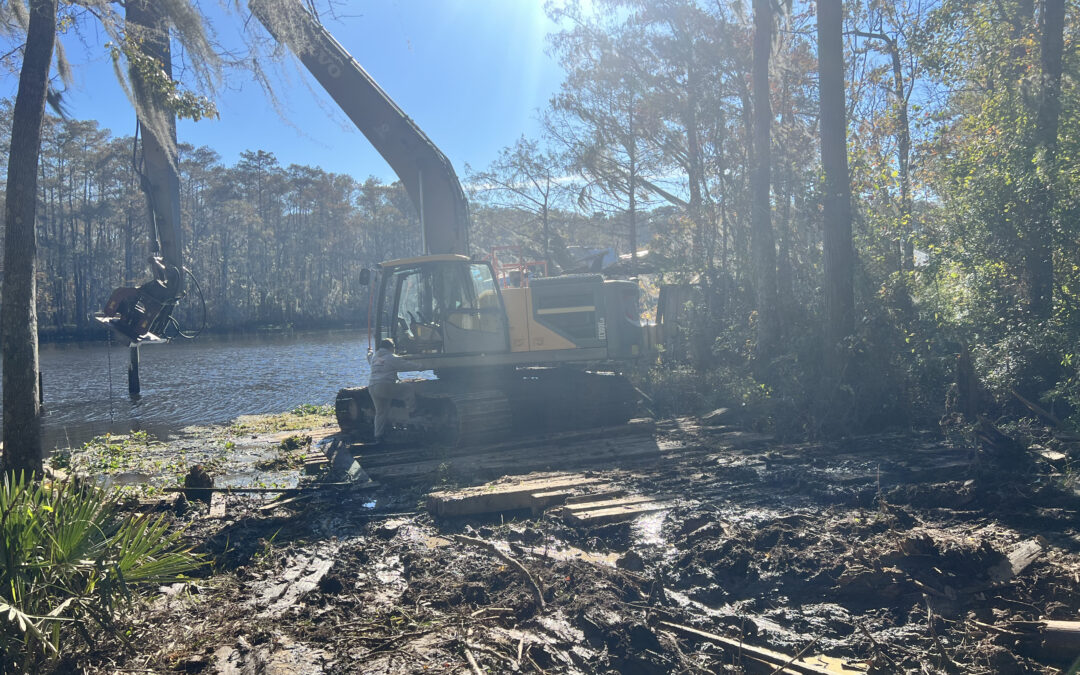
- Site preparation. The work area along the shoreline needs to be cleared before new installation begins. Access for equipment, typically by barge on the water side and land equipment on the upland side, needs to be planned in advance.
- Pile driving and installation. Sheet piling is driven to the required depth using vibratory or impact hammers. In Kenner’s clay substrate, piles typically need to be driven to adequate depth below the mudline to achieve the required embedment for stability.
- Tie-back installation. After piling is set, tie-back anchors are installed. Waler beams connect the top of the piles and distribute tie-back loads across the wall.
- Cap and finishing. The concrete cap is poured or precast panels are set after the structural work is complete. Backfill is placed and compacted behind the wall, and any riprap scour protection is placed at the base.
Lamulle serves the full scope of New Orleans area marine construction including the Kenner shoreline.
How a New Seawall Changes Your Property
The immediate and most visible effect of a new seawall is that the shoreline stops moving. The ongoing land loss stops. Dock pilings that were being undermined by bank erosion are now sitting on stable ground. The yard or lawn area adjacent to the water can be graded and developed without the risk of erosion taking it away.
From a property value standpoint, a seawall is a recognized improvement that appraisers and buyers understand. A Kenner waterfront property with a properly maintained seawall is more valuable and more sellable than one with a failing structure or an unprotected bank.