The Tchefuncte River runs through Covington and Madisonville before opening into Lake Pontchartrain, and that stretch of water sees steady boat traffic from residents and visitors alike. A boathouse here does more than store a boat. It protects a vessel from sun damage, hull fouling, and the wear that comes from sitting exposed to river current and weather day after day.
Beyond function, a boathouse adds real value to riverfront property. It creates a natural gathering space, often doubles as covered storage for kayaks and fishing gear, and gives a waterfront home a finished, intentional look rather than a bare dock with a boat tied alongside it.
What Makes River Boathouse Construction Different
Building a boathouse on the Tchefuncte River involves considerations that differ from lake or canal construction.
- River current requires more robust piling and bracing than still water settings
- Seasonal water level changes mean the structure needs enough clearance to handle both low water and flood conditions
- Boat traffic and wake from other vessels using the river add wear that a quieter canal would not
- Soil variability along the riverbank means foundation depth needs vary lot to lot
Understanding these factors before finalizing a design keeps the structure sound through years of river conditions rather than needing early repairs.
Boathouse Design Options for Tchefuncte River Properties
Homeowners along the river typically choose from a few common boathouse configurations, each suited to different needs and budgets.
| Design Type | Best For | Key Feature |
|---|---|---|
| Single-slip boathouse | One boat, straightforward storage needs | Compact footprint, lower cost |
| Double-slip boathouse | Multiple boats or a boat plus watercraft | Wider structure, higher cost |
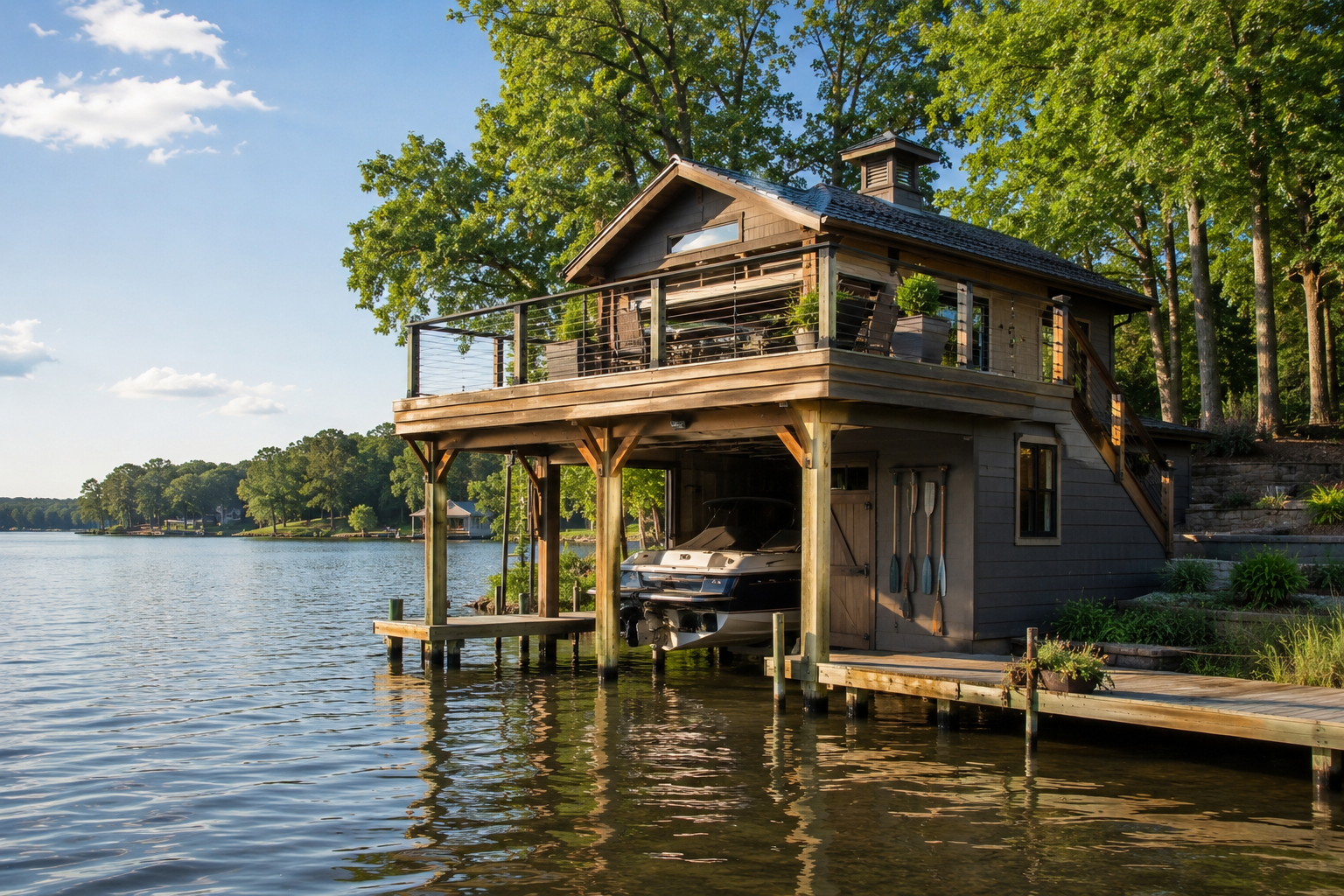
| Boathouse with rooftop deck | Homeowners wanting additional outdoor living space | Combines storage with an elevated gathering area |
| Boathouse with boat lift | Properties wanting the boat fully out of water | Integrated lift system reduces hull wear |
Single-slip boathouses remain the most common choice for Tchefuncte River properties with one primary vessel, while double-slip designs suit households with a boat and additional watercraft like jet skis or kayaks needing covered storage.
The Boathouse Construction Process
Building a boathouse on the river follows a structured sequence from initial planning through completion.
- Site assessment. Evaluating water depth, current strength, and soil conditions specific to the property.
- Design and permitting. Finalizing the boathouse layout and securing necessary approvals before construction begins.
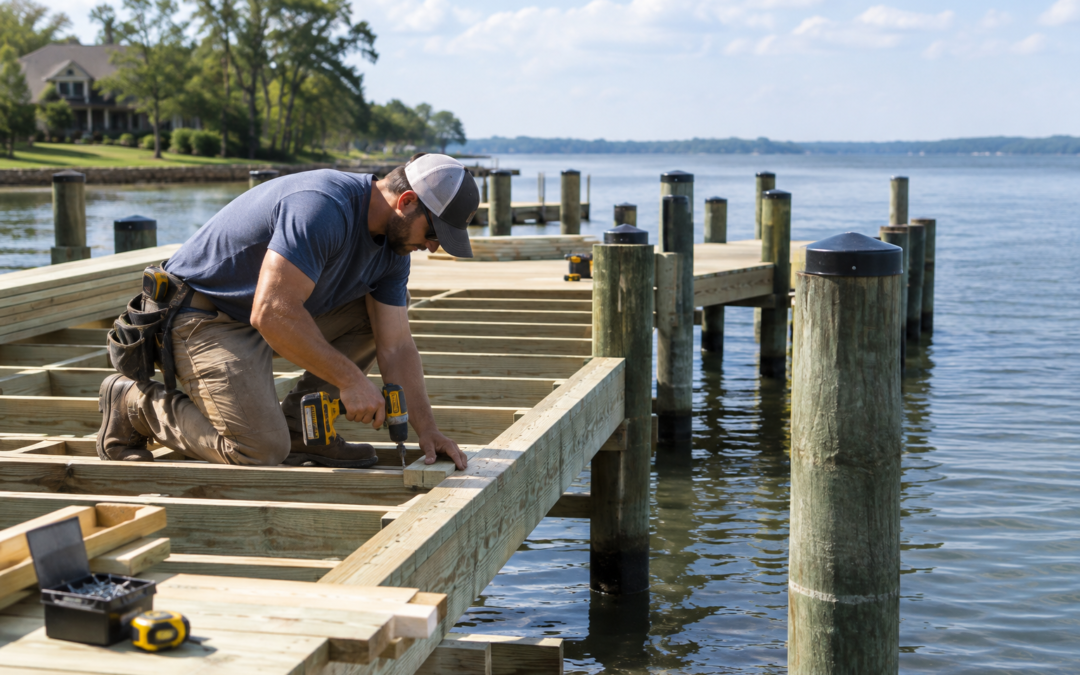
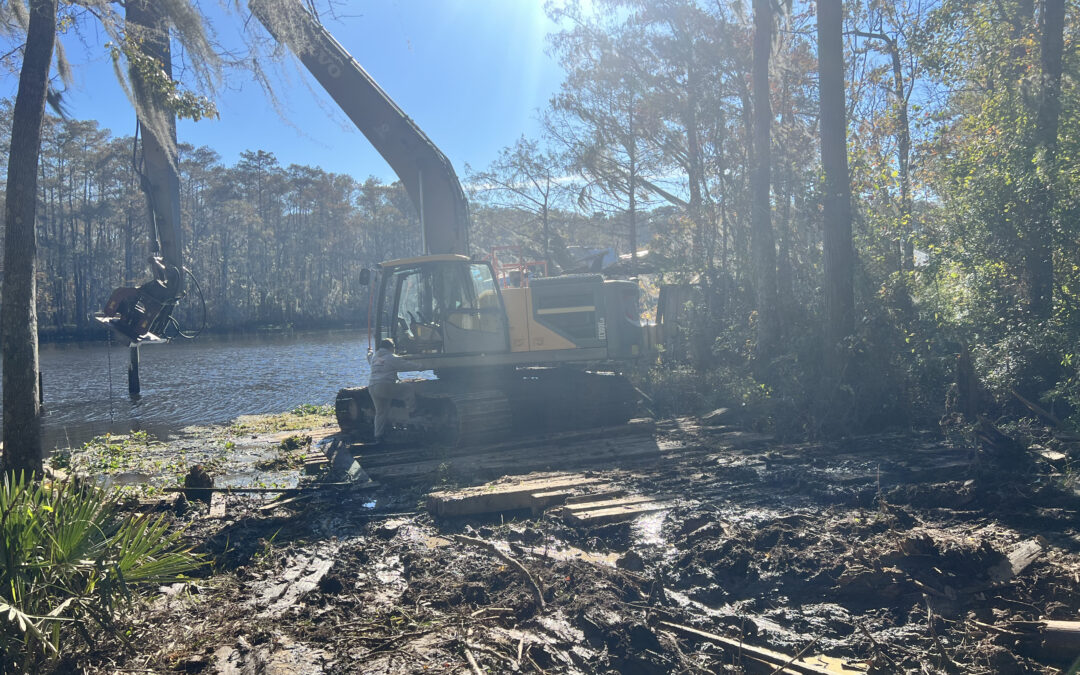
- Pile driving. Installing pilings deep enough to handle river current and support the structure’s full weight.
- Framing and roofing. Building out the structural frame and roof system suited to the design chosen.
- Finishing details. Adding decking, lighting, and any additional features like a boat lift or storage areas.
- Final inspection. Confirming the completed structure meets permitting and safety requirements.
Most boathouse projects take three to six weeks from the start of construction, depending on design complexity and the extent of pile driving required.
Permitting for Boathouse Construction on the Tchefuncte
Boathouse construction along the Tchefuncte River typically requires permitting through St. Tammany Parish, and because the river qualifies as a navigable waterway, projects often also need review from the Army Corps of Engineers. This dual layer of permitting can take longer than a straightforward dock project, so building in extra time for approval is worth planning for.
Lamulle Construction manages the full permitting process as part of every boathouse project, coordinating with both parish and federal requirements so homeowners are not left navigating the paperwork alone.
How Much Does a Boathouse Cost on the Tchefuncte River?
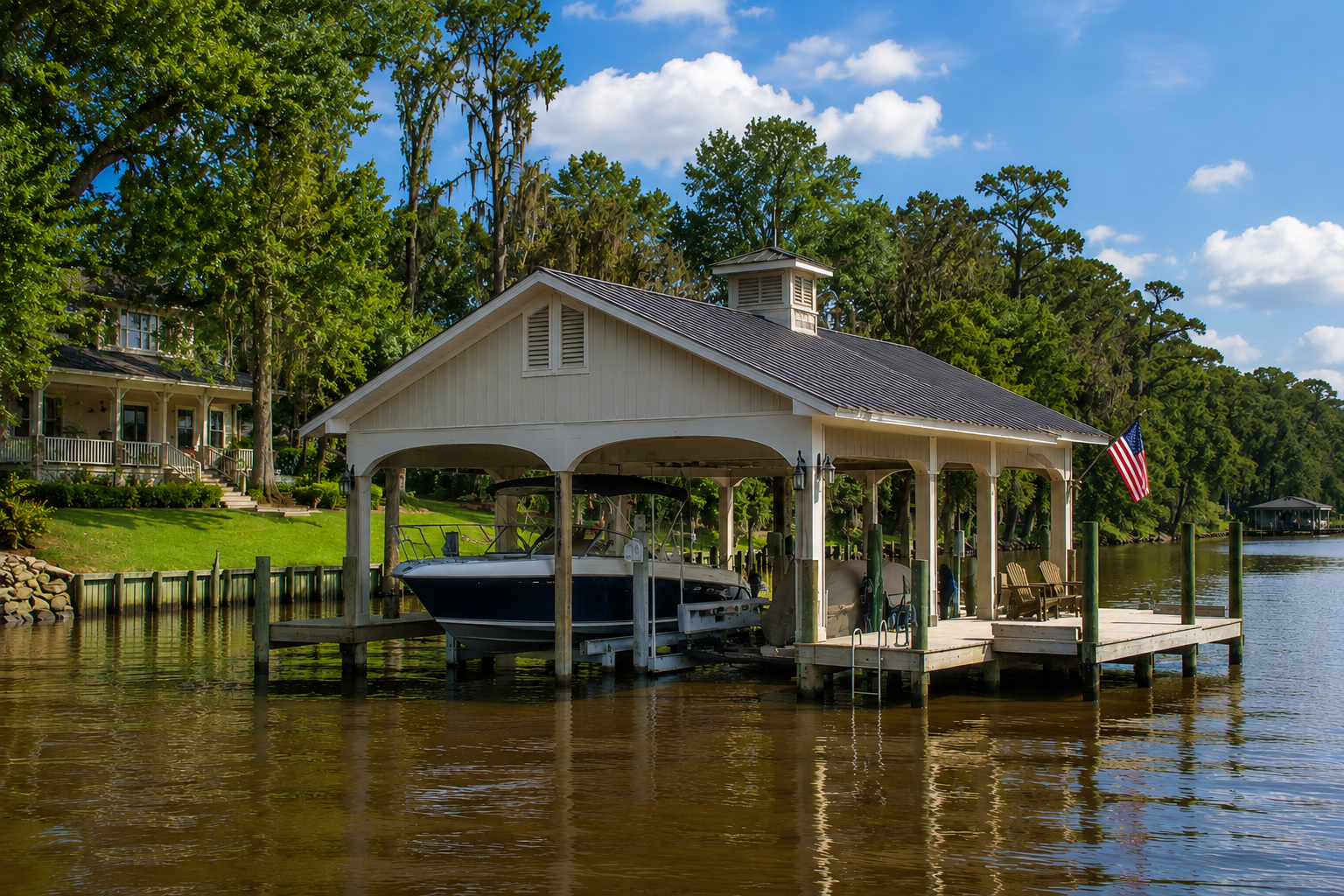
Boathouse construction costs along the Tchefuncte typically range from $30,000 to $80,000 or more, depending on size, design complexity, and foundation requirements. A single-slip boathouse with basic finishes sits toward the lower end, while a double-slip design with a rooftop deck and integrated boat lift runs considerably higher.
Several factors influence where a project falls within that range:
- Number of boat slips and overall structure size
- Roofing and decking material choices
- Pile depth required for the specific riverbank soil conditions
- Additional features like boat lifts, lighting, or a rooftop deck
A site visit and design consultation gives a far more precise estimate than a general range, since river current and soil conditions vary meaningfully along different stretches of the Tchefuncte.
Maintaining a Boathouse in River Conditions
River current, seasonal flooding, and consistent boat traffic all take a toll on a boathouse over time. A few maintenance practices help protect the investment.
- Inspect pilings and structural framing after major flood events
- Check roofing and decking materials annually for wear
- Address any hardware corrosion promptly, since river moisture accelerates rust
- Clear debris buildup around pilings during high water periods
Staying ahead of these small issues keeps a boathouse structurally sound for decades rather than needing early major repairs.
Why Choose Lamulle Construction for Boathouse Construction on the Tchefuncte
Lamulle Construction has built boathouses and marine structures across the Gulf Coast since the years following World War II, and that experience includes projects specifically designed for the Tchefuncte River’s current and water level patterns. We manage the entire process, from pile driving through final finishes, under one team.
Boathouse projects often connect naturally with other services, including dock building and boat lift installation for homeowners building out a complete waterfront setup.