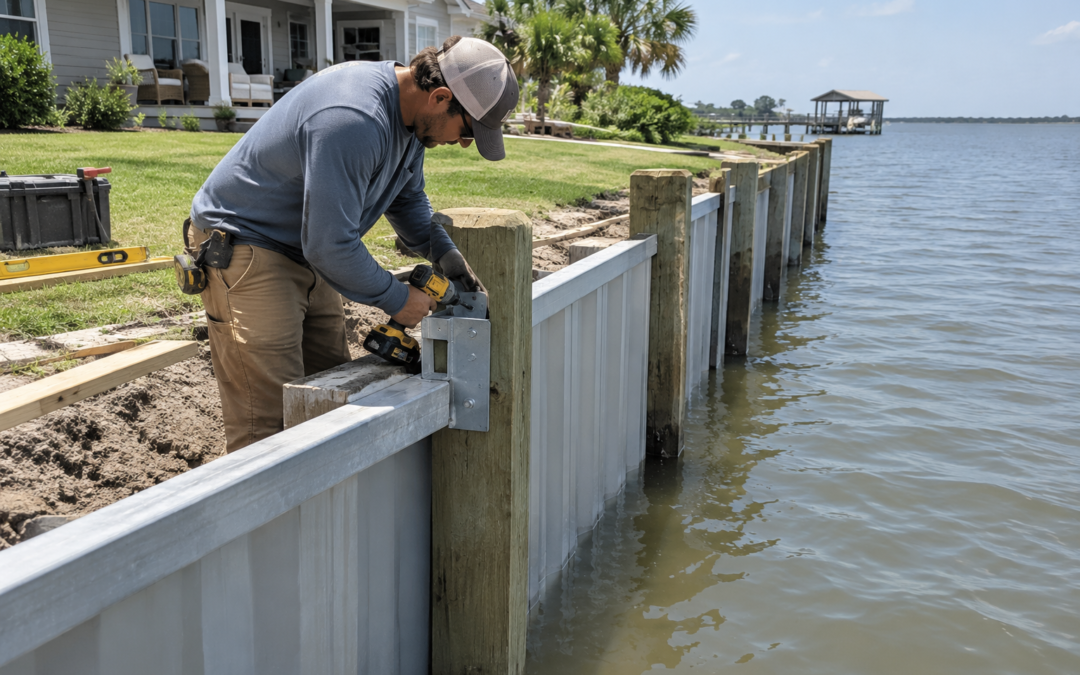
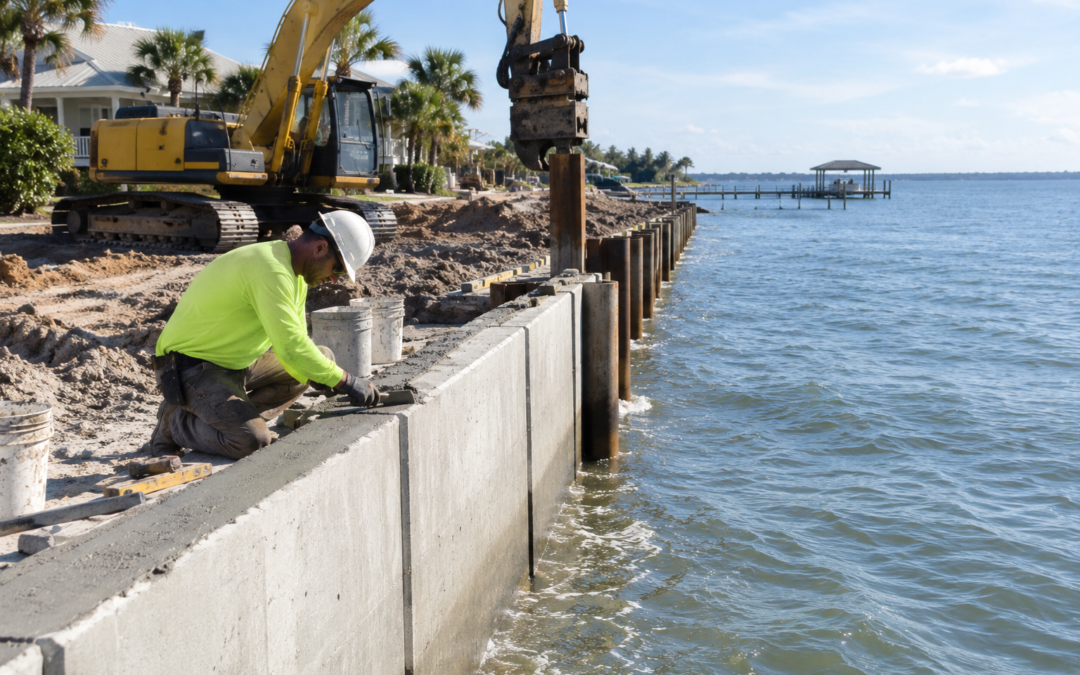
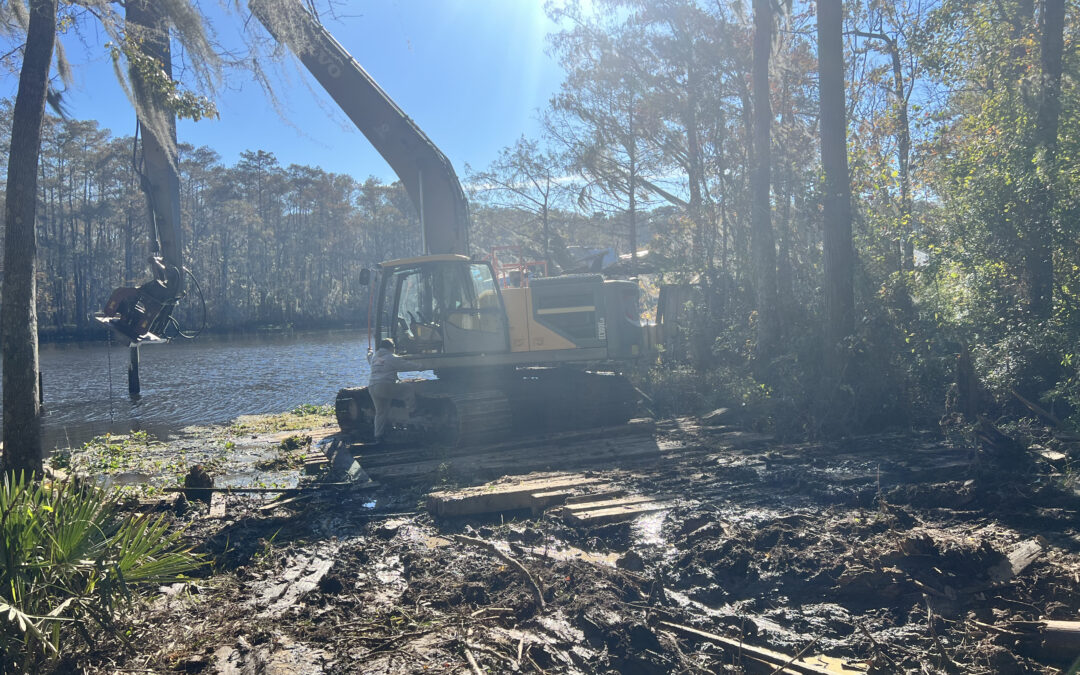
Mandeville sits directly on the north shore of Lake Pontchartrain, and that lakefront position means seawalls here take a steady beating from wave action, water level changes, and the occasional tropical storm. A seawall in good condition protects a property’s shoreline, but once cracks or gaps appear, problems tend to accelerate quickly.
Seawall repair costs in Mandeville typically range from $150 to $500 per linear foot, depending on the extent of damage, wall material, and whether the repair involves partial patching or a more significant structural rebuild. Minor crack repairs sit at the lower end, while sections needing full replacement of damaged panels cost considerably more.
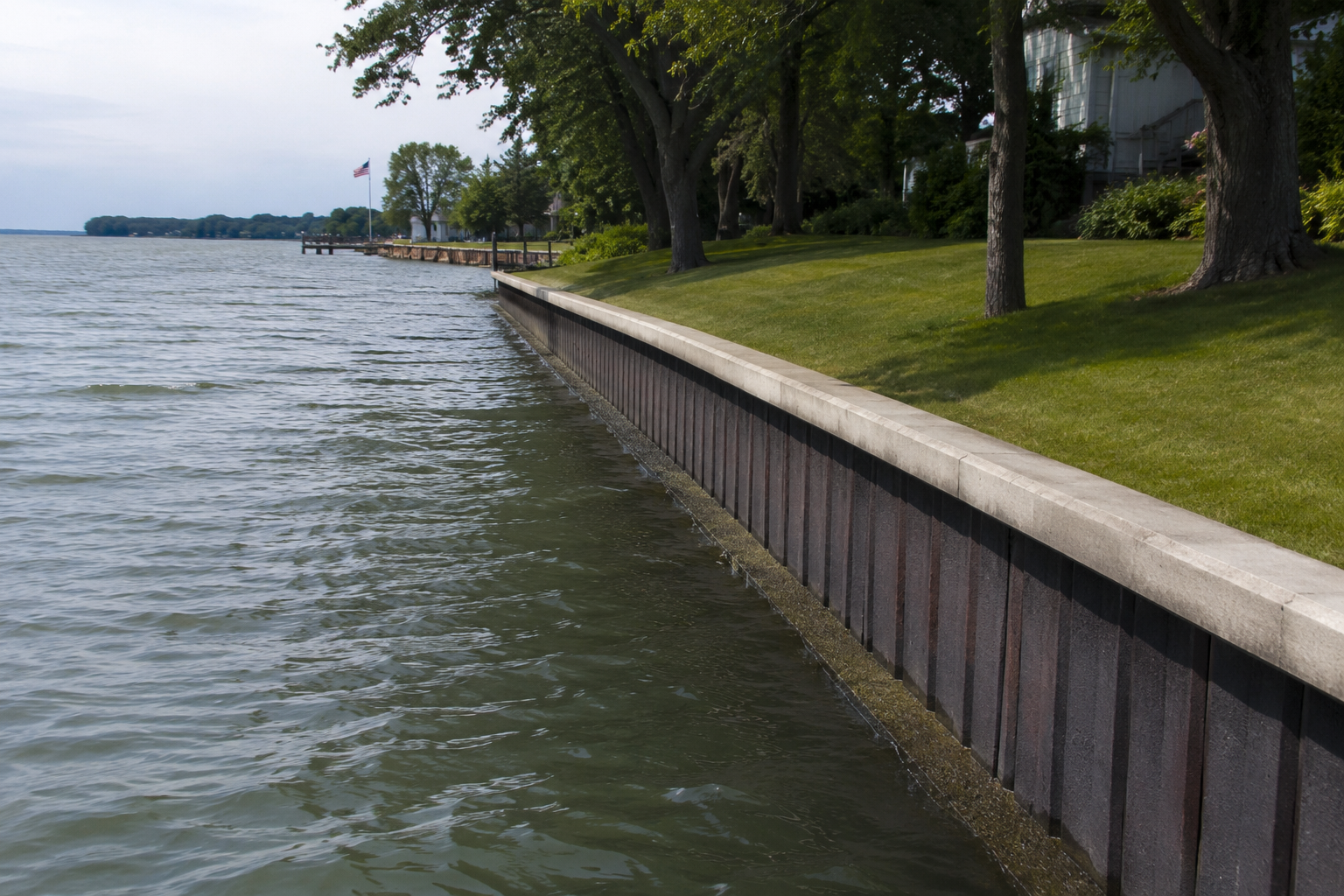
Why Mandeville Seawalls Take So Much Punishment
Lake Pontchartrain is a large, shallow body of water, and shallow lakes generate choppy, frequent wave action rather than the long, gentle swells you might see on a deeper body of water. That means Mandeville’s shoreline gets hit repeatedly, day after day, rather than dealing with occasional bigger waves. Over years, that repeated impact wears at seams, joints, and the soil behind a seawall in ways that are easy to underestimate.
Add to that Louisiana’s hurricane season, which regularly pushes storm surge and heavy wave action against the north shore, and it becomes clear why seawalls here need more frequent inspection than structures in calmer inland settings. Water level in the lake also fluctuates seasonally and during weather events, and a seawall built without accounting for that range is more likely to develop stress cracks over time.
Soil composition plays a role too. Much of Mandeville’s lakefront sits on soft, sandy soil that does not always compact evenly. When a seawall’s footing sits in ground like this, small settling issues can develop gradually and go unnoticed until a visible crack or lean appears above the waterline.
Signs Your Mandeville Seawall Needs Repair
Catching seawall problems early keeps repair costs manageable. A few warning signs are worth watching for:
- Visible cracks or gaps in the wall face
- Soil settling or sinking behind the wall
- Water seeping through at the base or joints
- Leaning or tilting sections along the shoreline
- Erosion undermining the wall’s footing
- Discoloration or staining that suggests water is passing through the wall
- Vegetation growing in cracks, which widens them over time
- Uneven or wavy sections along the top of the wall
Any one of these signs suggests the wall’s structural integrity is compromised, and waiting typically makes the eventual repair more expensive. A hairline crack that gets patched early might cost a few hundred dollars to address. That same crack, left alone through two or three storm seasons, can turn into a section requiring full replacement.
Why Small Problems Escalate Quickly
Water finds the path of least resistance. Once it starts moving through even a small gap in a seawall, it carries soil particles with it on the way out. This process, called piping, hollows out the ground behind the wall gradually and invisibly. By the time a visible sinkhole or depression appears in the yard, significant soil loss has often already occurred.
This is one of the main reasons Lamulle Construction recommends a proactive inspection schedule rather than waiting for obvious damage. A trained eye can often spot the early signs of piping or joint separation well before a homeowner would notice anything unusual from the yard.
What Drives Seawall Repair Costs in Mandeville
Several factors determine where a repair lands within that cost range.
| Factor | Impact on Cost |
|---|---|
| Wall material | Concrete and vinyl repairs cost differently than timber |
| Extent of damage | Minor cracks cost far less than full panel replacement |
| Length of wall needing repair | Longer sections increase material and labor costs |
| Site accessibility | Limited equipment access raises labor costs |
| Soil conditions behind the wall | Erosion requiring soil replacement adds to the project |
| Water level at time of repair | Lower water levels can simplify access and reduce cost |
| Permitting complexity | Larger projects requiring more extensive review take longer and cost more |
A wall showing isolated cracking usually costs far less to fix than one where erosion has undermined a long stretch of footing, which is why an in-person assessment gives a much more accurate number than a general estimate. Two seawalls of the same length and material can have very different repair costs depending on how far the damage has progressed and how difficult the site is to access with equipment.
A Closer Look at Material-Specific Repair Costs
Concrete seawalls are common throughout Mandeville and tend to fail through cracking, spalling, or joint separation. Repairing concrete typically involves cleaning out damaged sections, applying structural patching compounds, and in some cases installing new rebar reinforcement before resealing. Concrete repairs generally run toward the middle of the cost range, since the material itself is durable but repair work requires specialized techniques to bond properly with existing concrete.
Vinyl seawalls, which have become more popular in recent construction due to their resistance to rot and corrosion, typically fail at panel seams or where they meet the cap. Vinyl repairs often cost less than concrete work per linear foot, since damaged panels can sometimes be replaced individually without disturbing the surrounding structure. However, vinyl systems that have shifted due to soil movement may require more extensive tie-back work, which raises the cost.
Timber seawalls, while less common in new construction today, still exist on many older Mandeville properties. Wood degrades from rot, insect activity, and constant water exposure, and repairs often mean replacing entire sections rather than patching, since compromised wood rarely holds a patch well. Timber repairs can vary widely in cost depending on how much of the structure needs replacement.
Repair Options for Mandeville Seawalls
Not every seawall problem needs a full rebuild. Depending on the damage, a few different approaches might apply.
- Crack sealing and patching. For minor surface cracks that have not yet compromised structural integrity. This is the least invasive and least expensive repair category, typically involving cleaning the crack, applying a bonding agent, and sealing with a waterproof compound rated for continuous water exposure.
- Tie-back reinforcement. Adding or replacing tie-back rods that anchor the wall to the shore, often needed when a wall starts leaning. Tie-backs act like anchors holding the wall in place against the pressure of soil and water behind it, and when they corrode or loosen, the wall loses stability even if the visible wall face looks fine.
- Partial panel replacement. Replacing individual damaged sections without rebuilding the entire wall. This approach works well when damage is contained to specific areas rather than spread across the full length of the structure.
- Soil stabilization and backfill. In cases where erosion has hollowed out soil behind the wall, repair often needs to include replacing lost soil and compacting it properly before addressing the wall itself. Skipping this step means even a well-repaired wall face sits on unstable ground.
- Full seawall replacement. Necessary when damage is extensive or the wall has reached the end of its structural life. This is the most involved and expensive option, but for walls approaching 40 or 50 years old with widespread deterioration, it is often more cost-effective long term than repeated partial repairs.
A site assessment determines which category a given wall falls into, since visible damage on the surface does not always reflect the full extent of what is happening below the waterline. Lamulle Construction typically recommends a diver or underwater camera inspection for older walls where damage below the waterline is suspected but not confirmed.
Permitting for Seawall Repair in Mandeville
Seawall repair projects along Lake Pontchartrain typically require permitting through St. Tammany Parish, and larger structural repairs may also need review depending on scope and proximity to the water. Permitting requirements generally scale with the size of the repair, meaning a small patch job involves less paperwork than a full wall replacement.
For projects involving significant excavation, new tie-back installation, or work that could affect adjacent properties, additional review from state agencies may apply. This is particularly true for any project that involves altering the wall’s footprint or extending it beyond its original alignment.
Lamulle Construction manages permitting coordination as part of every seawall repair project, which keeps homeowners from having to navigate the parish process on their own. Our familiarity with St. Tammany Parish’s specific requirements for lakefront work generally means fewer delays than a contractor unfamiliar with local regulations would experience.
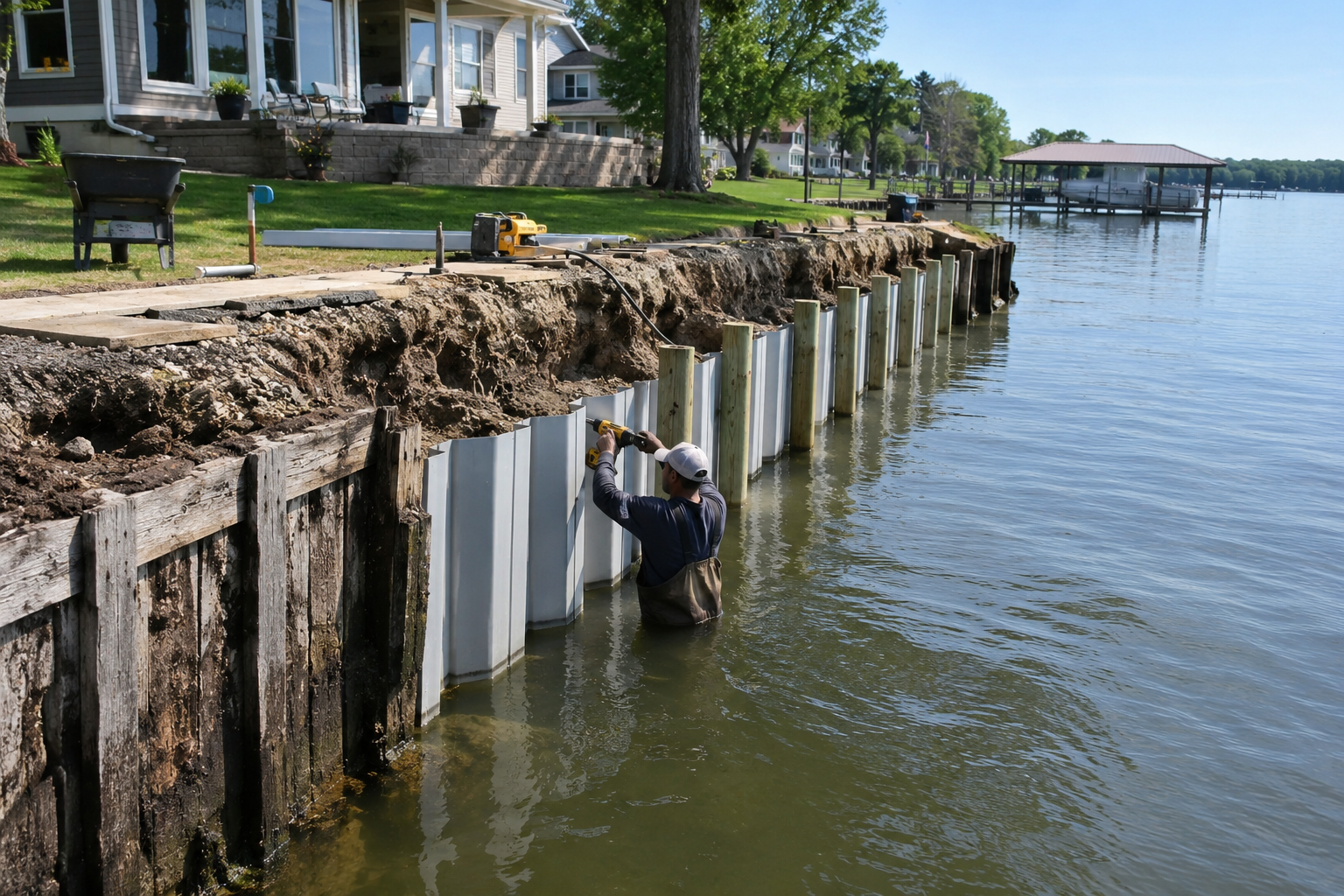
Timeline Considerations for Permitted Work
Permit approval timelines vary depending on project scope, but homeowners should generally expect anywhere from a week to several weeks between application and approval for straightforward repairs. More extensive projects, particularly those requiring engineering review or affecting a longer stretch of shoreline, can take longer. Planning repair work well ahead of hurricane season gives enough buffer to avoid rushing a permit application during the busiest time of year for coastal contractors.
How Long Do Seawall Repairs Last?
Repair longevity depends heavily on the type of fix and the material involved. Crack sealing and patching typically holds for 5 to 10 years before needing attention again, while tie-back reinforcement and partial panel replacement can extend a wall’s life by 15 to 20 years when done correctly. Full replacement, done with quality materials, generally lasts 30 to 50 years.
Several factors influence how long a given repair actually holds up in practice. The quality of materials used matters significantly. A patching compound rated specifically for continuous submersion and freeze-thaw cycling will outlast a generic concrete patch by years. Similarly, tie-back rods made from galvanized or stainless steel resist corrosion far longer than standard steel in a lake environment.
Installation quality matters just as much as material selection. A repair rushed or done without proper surface preparation, even with premium materials, often fails prematurely. This is one of the reasons homeowners should be cautious about unusually low repair quotes, since cutting corners on preparation work is one of the easiest ways to lower a bid at the expense of longevity.
Regular inspection after storm events helps catch new problems early, before a small repair grows into a bigger one. Lamulle Construction recommends a visual inspection after any significant storm, along with a more thorough annual check, particularly heading into hurricane season each year.
Seawall Repair Versus Replacement: Making the Right Call
Homeowners often ask whether it makes more financial sense to keep repairing a seawall as problems arise or to invest in full replacement upfront. The answer depends on the wall’s age, the extent of existing damage, and how much of the structure is likely to need attention over the next several years.
As a general guideline, if damage is limited to isolated sections and the wall is less than 20 to 25 years old, targeted repair is usually the more cost-effective choice. If a wall is approaching or past its expected structural lifespan and showing damage across multiple sections, the math often favors replacement, since repeated partial repairs on an aging structure can add up to more than the cost of a full rebuild over time.
A useful way to think about this is the cumulative repair threshold. If repair costs over a projected five-year period are likely to approach 50 percent or more of full replacement cost, replacement typically becomes the more sensible long-term investment. A thorough site assessment from an experienced contractor should include this kind of cost comparison, not just a quote for the immediate repair in front of you.
Financing and Insurance Considerations
Seawall repair is a significant expense, and many Mandeville homeowners look into financing options or insurance coverage before committing to a project. Homeowners insurance policies vary considerably in how they treat seawall damage, and coverage often depends on the cause of the damage rather than the damage itself. Damage clearly tied to a named storm may be covered under certain policies, while gradual deterioration from age and normal wear typically is not.
Reviewing your policy language before assuming coverage either way is worth the time investment, since assumptions in either direction can lead to unpleasant surprises. Some homeowners also explore home equity financing or contractor payment plans for larger seawall projects, particularly full replacements that run into the tens of thousands of dollars for longer stretches of shoreline.
Why Choose Lamulle Construction for Seawall Repair in Mandeville
Lamulle Construction has repaired seawalls across the Louisiana Gulf Coast since the years following World War II, giving our crews a deep understanding of how Lake Pontchartrain’s water levels and storm patterns affect Mandeville shoreline structures specifically. We handle everything from minor crack repair to full wall replacement, and our estimates reflect an honest read of what a given wall actually needs rather than an upsell toward the most expensive option available.
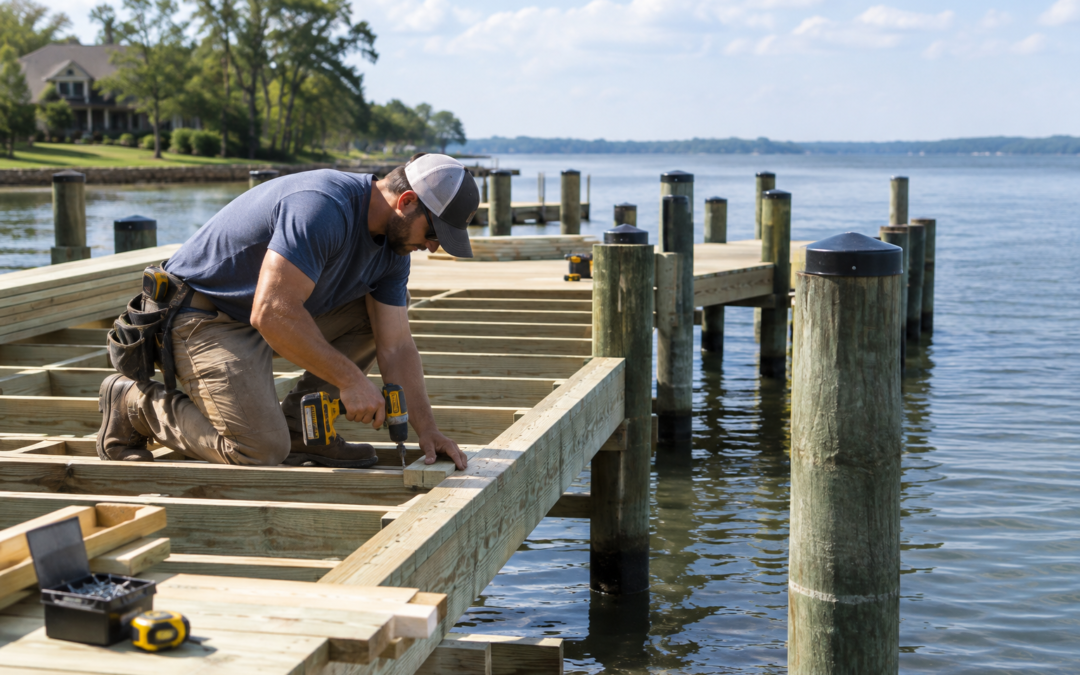
Seawall work often connects to other waterfront needs, including dock building and bulkhead repair for properties dealing with multiple shoreline issues at once. Because our crews handle both categories of work, we can often identify related problems during a seawall assessment that a specialist focused only on one type of structure might miss.