Few places on the Gulf Coast live as intimately with the water as Bay St. Louis. The town curves around the Bay of St. Louis, with the Mississippi Sound opening to the south and the Jourdan River and a scatter of bayous feeding the bay from the north, and nearly every waterfront lot here sits at the end of a long conversation between land and water that never really stops.
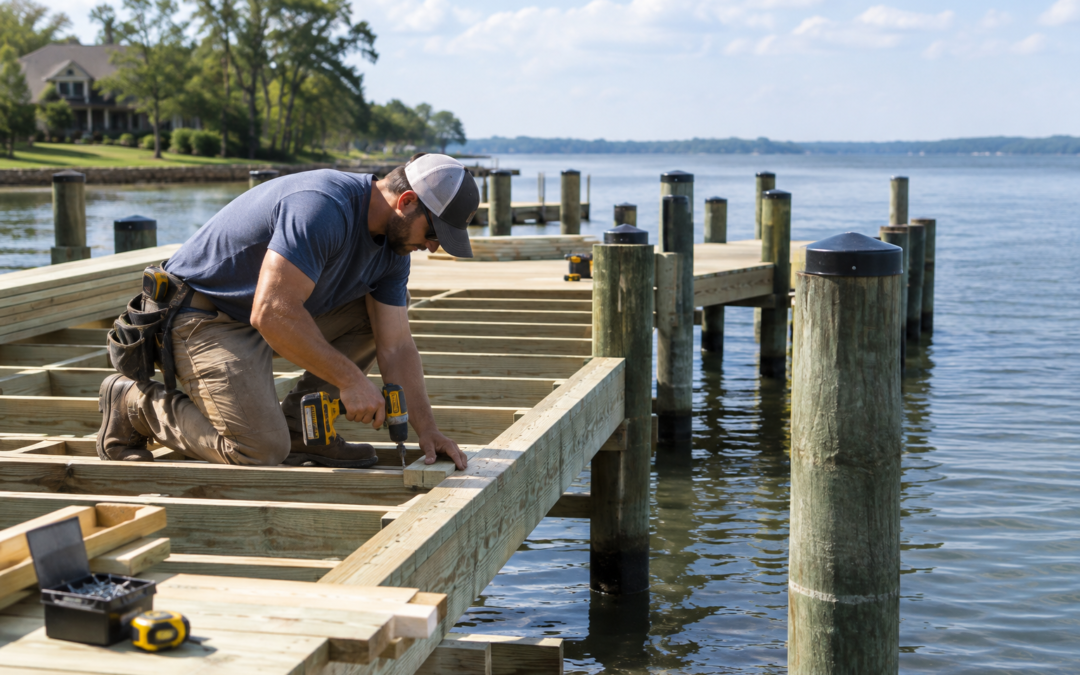
On most days that conversation is conducted in small increments, in the form of tides, wind chop, and the wake of passing boats, each nudging a little more soil from an unprotected bank. Then, every so often, a hurricane compresses years of that erosion into a single afternoon, as Katrina did in 2005. A bulkhead is the structure that stands between those extremes, holding the shoreline where you want it, protecting the yard, home, and waterfront structures behind it, and providing the stable edge on which a dock can be built.
What Should You Know About Bulkhead Construction in Bay St. Louis?
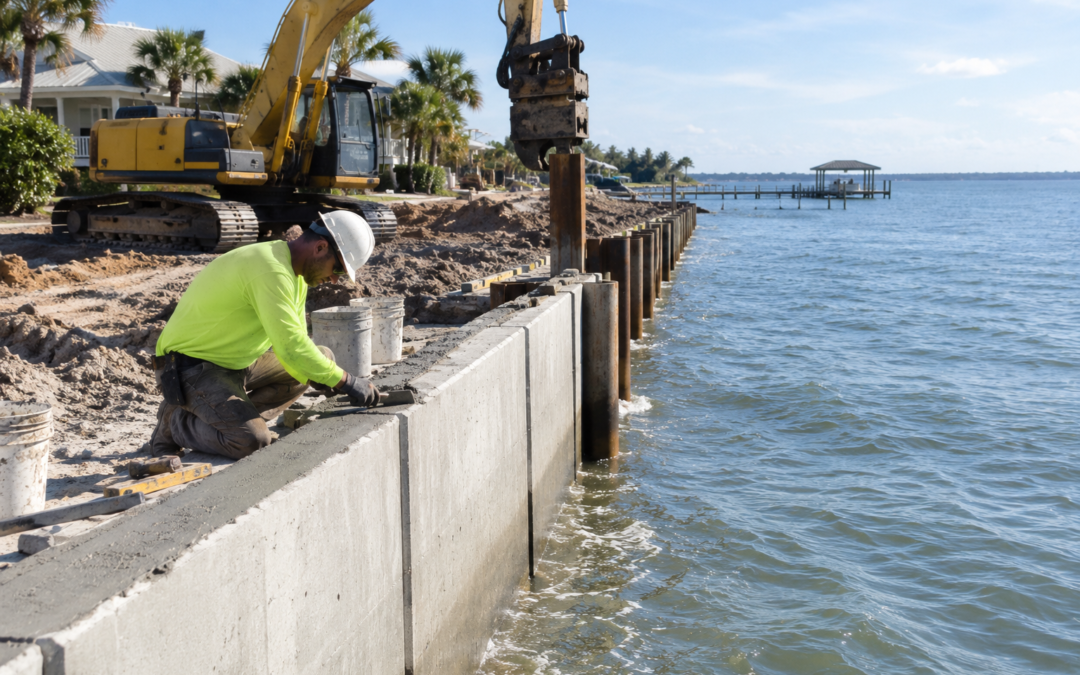
Bulkhead construction in Bay St. Louis means building a retaining wall, usually vinyl or concrete sheet pile with tie back anchors, along the shoreline to stop erosion. The wall must handle tidal movement, boat wake, sandy soils, and hurricane surge, and it requires permits from Mississippi coastal agencies and the Army Corps of Engineers.
Every one of those requirements influences the design, so the sections below explain how local conditions shape the wall, how the materials compare, and how the project moves from first site visit to finished shoreline.
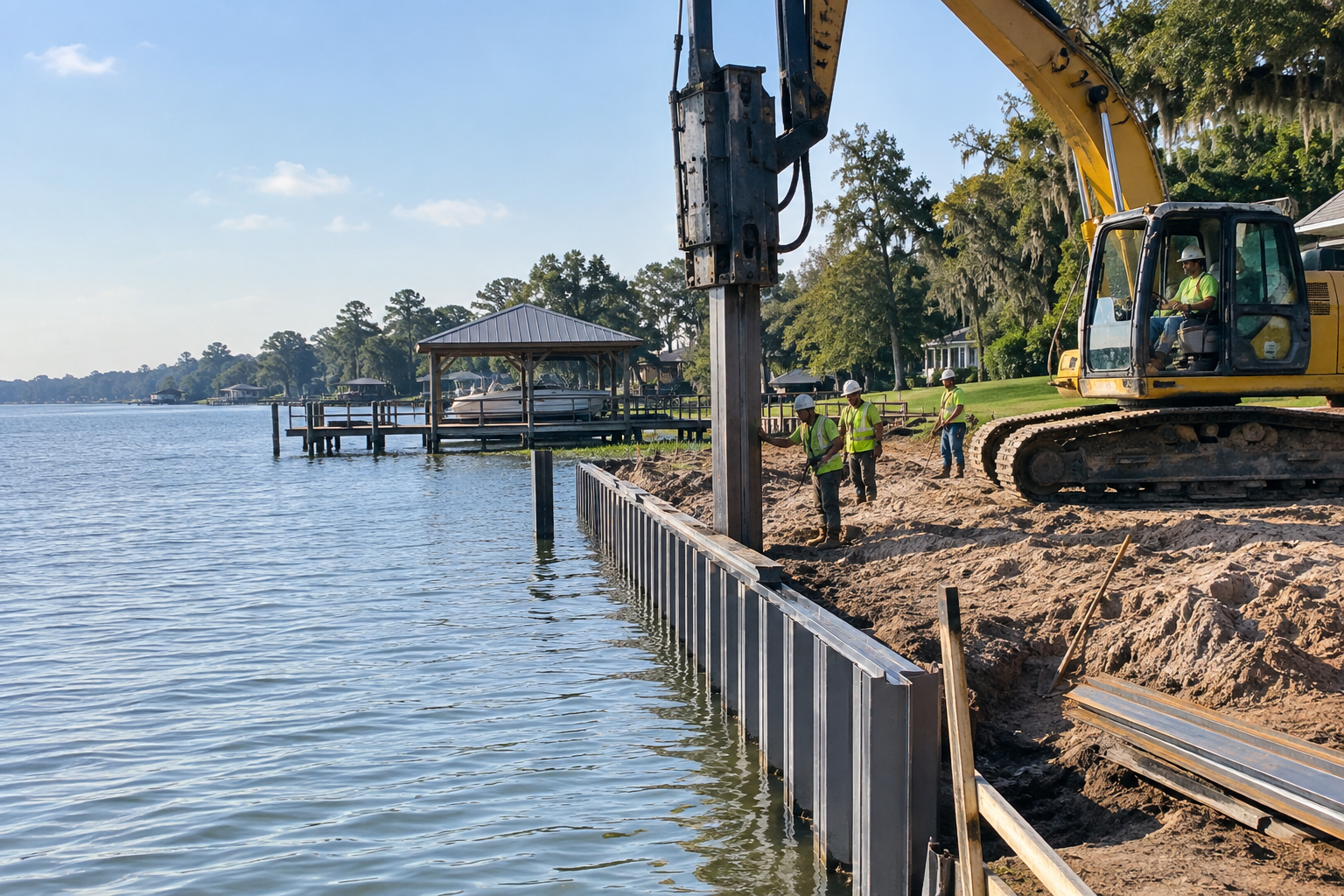
What Bay St. Louis Shorelines Ask of a Bulkhead
Much of the shoreline around Bay St. Louis is made up of sand, shell, and softer sediments rather than the dense clay found farther inland. That matters for two reasons. Unprotected sandy banks lose ground quickly to waves, and sandy soils give anchors and pilings less to grip, so a wall here has to be designed with embedment and tie back capacity that reflect the actual ground rather than a generic rule of thumb.
The tidal range on the Mississippi Sound is modest, but modest is not the same as unimportant, because the daily rise and fall subjects the wall, its drainage, and the soil at its base to a repeating cycle of loading. Add the steady recreational traffic in the harbor, the bay, and the bayous, and the wall also absorbs the repeated slap of boat wake, which over the years does far more cumulative damage than most owners realize.
Storm surge is the condition that ultimately defines good design on this coast. Bay St. Louis took a direct and devastating hit from Hurricane Katrina, and the memory of that event is a reminder that a bulkhead should be built high enough and deep enough for storm loading, not merely for a calm day. A wall sized only for everyday conditions can be overtopped, undermined, or pushed outward when surge arrives.
Choosing the Right Bulkhead Material
The right material depends on how exposed your shoreline is, what you plan to build behind and beside the wall, and how long you intend to hold the property. The table below compares the main options, and our guide to bulkhead materials explores the tradeoffs in more depth.
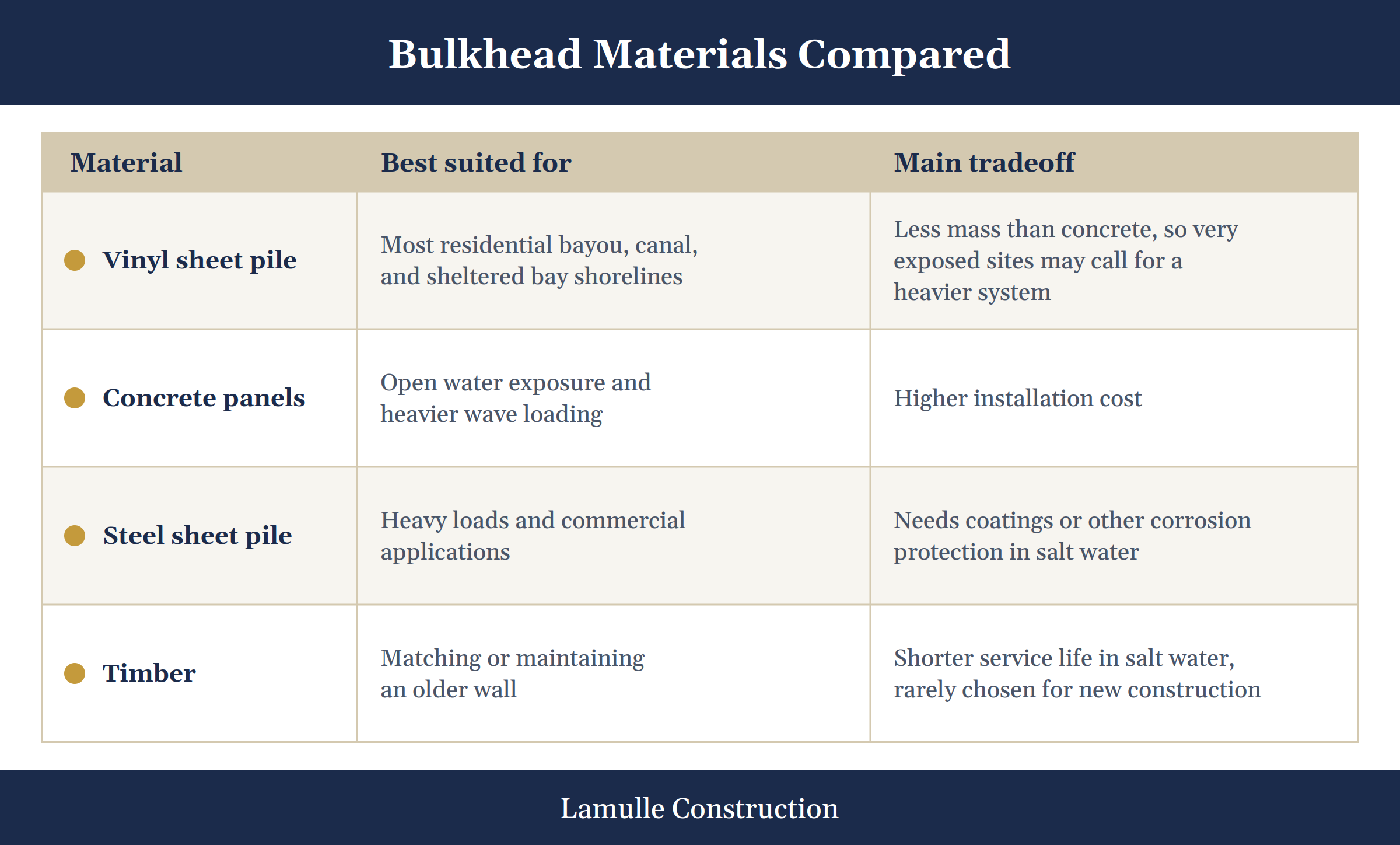
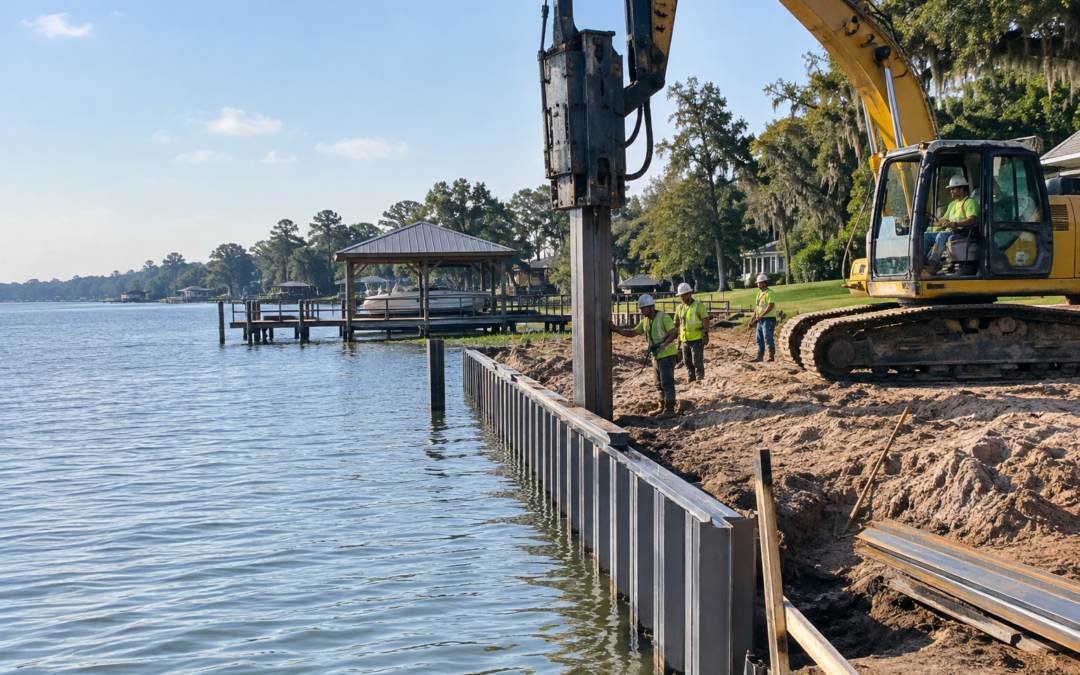
Vinyl sheet pile has become the default for residential work because it does not rust or rot, it installs efficiently, and it asks very little of the owner once it is in the ground. For the majority of bayou, canal, and sheltered bay properties it delivers decades of service at a sensible cost.
Concrete earns its place where the shoreline takes a harder beating. Its mass and rigidity help it resist the force of waves and surge on open water, which is why it appeals to owners with direct exposure who are willing to invest more for greater durability. Steel is strong and well suited to heavy loads, but in salt water it needs coatings or other protection against corrosion, so it tends to be reserved for commercial or unusually demanding applications, while timber survives mostly on older properties where it is already in place.
What Separates a Well Built Bulkhead From One That Fails Early
A bulkhead can look deceptively simple from the yard, a clean line of panels with a cap along the top, but most of what makes it last is hidden below the surface or behind the wall. The first and most important element is embedment. The sheet pile has to be driven deep enough below the bottom to resist the forces pushing against it, and in the sandy soils common around Bay St. Louis that depth must come from the conditions at the site, not from guesswork.
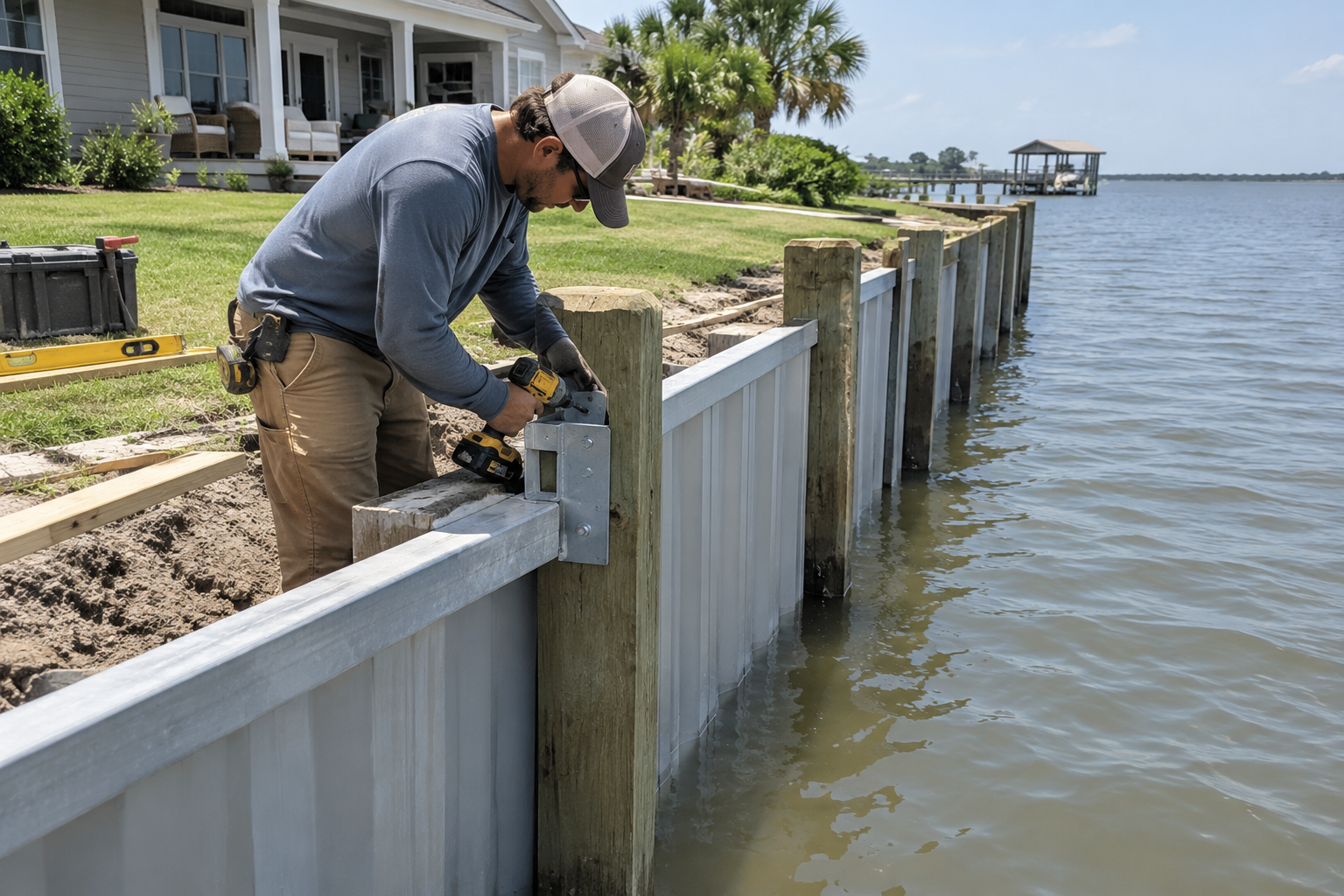
Just as important is the anchor system. Tie back rods run from the wall to a deadman or helical anchor set back in the soil, and waler beams tie the panels together along the face, working as a unit to keep the wall from bowing under the pressure of the soil behind it. Wall height and the cap complete the picture, since a wall set too low will be overtopped and eroded from behind, while a well designed cap ties the sections together and shields the sheet pile from sun and impact.
Two quieter details often decide whether a wall reaches its full lifespan. Drainage, in the form of weep holes or drain pipes, allows water to escape from behind the wall so pressure does not accumulate and push it outward, and toe protection such as riprap prevents scour from undermining the base. A proposal that addresses embedment, anchors, height, cap, drainage, and toe protection reflects a contractor who understands why bulkheads fail.
How a New Bulkhead Comes Together
The project begins with assessment and permitting, when the contractor surveys the shoreline, reviews soil conditions, prepares the design, and submits the applications that allow work to begin. This phase takes the longest, often a few months, and it is the part of the schedule that owners most often underestimate.
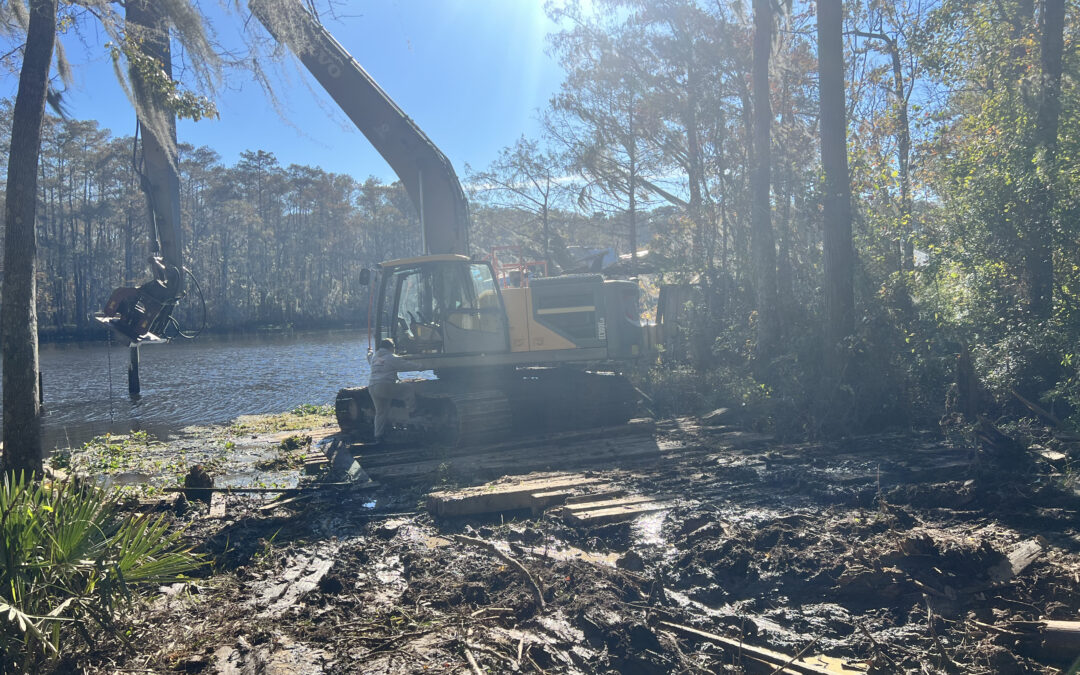
Once approvals are in hand, construction moves faster than most people expect. Equipment, frequently working from a barge or from the upland, drives the sheet pile along the planned wall line to the specified depth, after which the crew installs the tie back anchors and walers, sets the cap, and places and compacts fill behind the wall to restore the grade. Weep holes and toe protection follow, and a final walk through with the owner confirms that everything has been completed to the specification. For a typical residential wall, the construction itself often takes only a few weeks.
Bulkheads are not just for new projects, and our bulkhead repair page explains how we evaluate and restore existing walls when a full replacement is not yet necessary.
Permitting a Bulkhead on the Mississippi Coast
Shoreline work in Mississippi typically involves several agencies, and the approval process is usually the longest part of the project. The Mississippi Department of Marine Resources oversees coastal permitting, and work in coastal wetlands or along the shoreline generally requires its review. Federal authorization from the Army Corps of Engineers is also commonly required, often through a Nationwide Permit for qualifying bulkheads, though larger or more complex projects may need an individual permit.
Those federal approvals can in turn involve state water quality review, and local requirements from the city or county, particularly floodplain rules that affect wall height and setbacks, may apply as well. Because requirements vary by site and by the scope of work, it pays to work with a contractor who handles Mississippi coastal permitting regularly. Our guide to Louisiana versus Mississippi permitting explains how the two states differ.
What Drives the Cost of a Bulkhead in Bay St. Louis
Bulkhead pricing follows the specifics of the site more than any rule of thumb. Wall length is the largest factor, since every foot requires sheet pile, anchors, and cap, and the material you choose shifts the total, with vinyl generally the most economical and concrete and steel adding cost.
Wall height, soil conditions, and the required embedment depth change how much material and driving time the project needs. Site access matters as well, because a lot where equipment can reach the shoreline from the upland costs less to work than one that requires barge access, and removing an old wall before building a new one adds demolition. A site visit is the only way to arrive at a figure you can rely on.
How to Choose a Bulkhead Contractor
Building a retaining wall on land and building one at the edge of coastal water are different skills, so experience on the Gulf Coast should be the first thing you look for. A contractor who has built bulkheads in coastal Mississippi understands the soils, tides, and storm conditions that shape the design, and will be able to explain why a given embedment depth or anchor spacing suits your lot.
The written proposal should specify the sheet pile type, embedment depth, anchor spacing, wall height, cap, and drainage, and the contractor should prepare and manage the permit applications for you. Confirm license and insurance, and ask for references from completed shoreline projects. You can read more about how we work on the Mississippi coast on our Bay St. Louis marine construction page.
A Bulkhead Built for the Way This Coast Behaves
A bulkhead designed around Bay St. Louis’s sandy soils, daily tides, boat wake, and hurricane exposure protects your land, your waterfront structures, and the value of your property for decades. Lamulle Construction brings generations of Gulf Coast experience to every shoreline project, and each one begins with a site visit and a straightforward conversation about what your property needs.
Contact Lamulle Construction to schedule your bulkhead assessment.