One of the first questions property owners ask when they start planning a seawall is how long the whole thing will take. It is a fair question, because the answer affects when you can start, how you schedule around hurricane season, and when you can finally use the waterfront you are protecting.
The honest answer has two parts. The physical work of building a seawall moves faster than most people expect. The steps that come before it, especially permitting, take much longer than most people expect. A project that needs only a few weeks of construction can still run several months from the first phone call to the finished wall.
Lamulle Construction has built seawalls and shoreline protection across the Louisiana and Mississippi Gulf Coast for generations. This guide walks through each phase of a typical project, what affects the schedule, and how to keep your own timeline on track.
How Long Does Seawall Construction Take on the Gulf Coast?
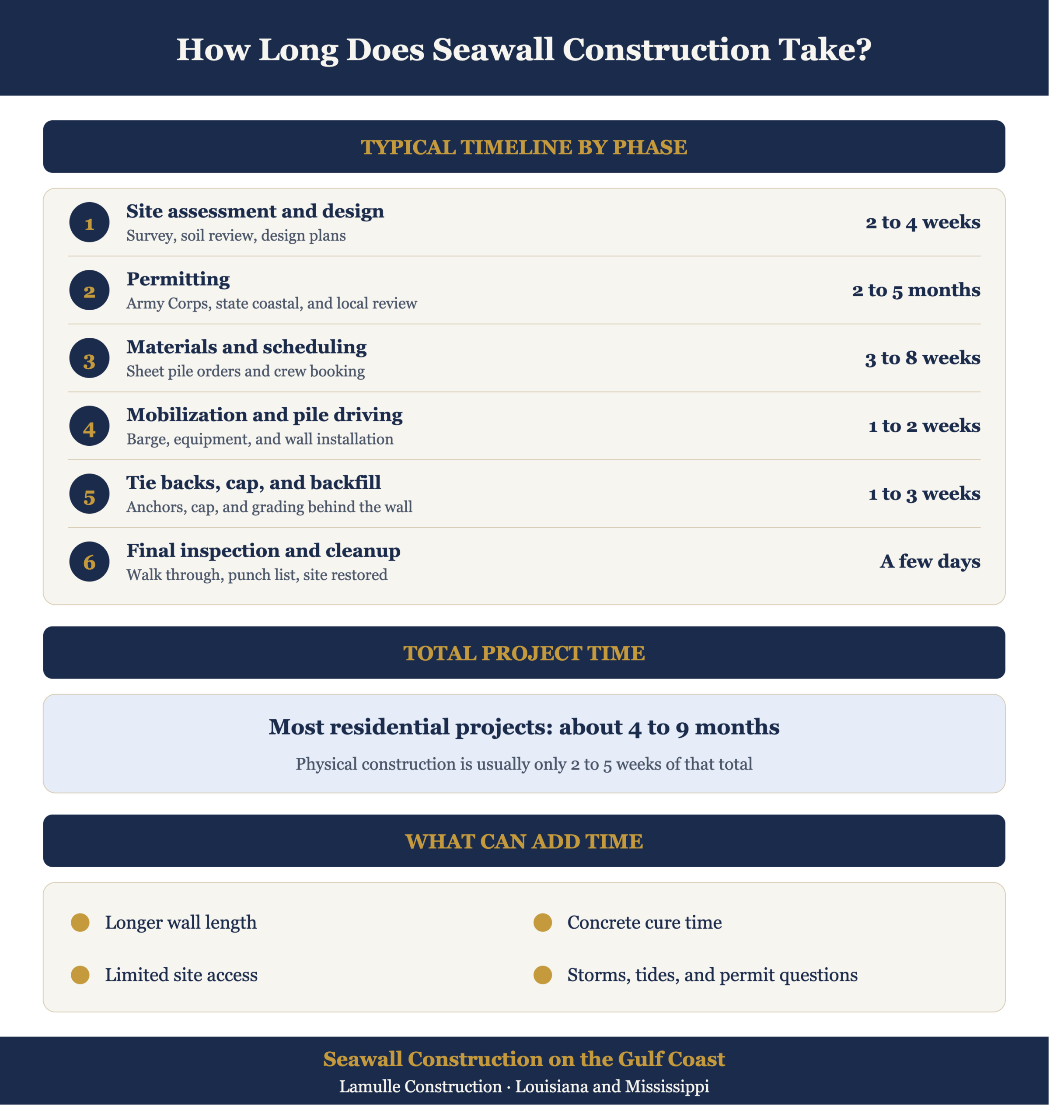
Most residential seawall projects on the Gulf Coast take about four to nine months from first site visit to finished wall. Permitting is the longest phase, often two to five months, while physical construction usually takes only two to five weeks. Wall length, material, site access, and weather all affect the schedule.
The table below shows how those months break down. Several phases overlap, so the total is shorter than the sum of the individual ranges.
|
Phase |
Typical Duration |
|---|---|
|
Site assessment and design |
2 to 4 weeks |
|
Permitting |
2 to 5 months |
|
Materials and scheduling |
3 to 8 weeks |
|
Mobilization and pile driving |
1 to 2 weeks |
|
Tie backs, cap, and backfill |
1 to 3 weeks |
|
Final inspection and cleanup |
A few days |
Phase 1: Site Assessment and Design (2 to 4 Weeks)
Every good seawall project starts with a site visit. The contractor walks the shoreline, takes depth soundings, evaluates the soil, measures the wall length, and talks through how you use the property. That information drives the design: the wall material, the piling depth, the anchor system, and the height of the cap.
Design takes a few weeks because the details matter. A wall designed from generic assumptions instead of site conditions is the kind that bows or settles within a few years. Time spent here is time saved later. Our seawall construction page explains how Lamulle approaches design for different shorelines.
Phase 2: Permitting (2 to 5 Months)
Permitting is the longest phase and the one most likely to surprise property owners. A seawall changes the shoreline, so it triggers review at several levels.
In Louisiana, that typically means authorization from the Army Corps of Engineers and a coastal use permit from the state, along with any parish or city requirements. In Mississippi, the Department of Marine Resources and the Corps are the main players. Each agency has its own review window, and an incomplete application can send the process back to the start.
A straightforward project with a clean application often moves faster, while a wall near sensitive habitat or one that extends beyond the existing shoreline line takes longer. Our permitting process page explains how Lamulle handles these applications so they are complete the first time.
Phase 3: Materials and Scheduling (3 to 8 Weeks)
This phase often runs alongside permitting, which is why the overall timeline is shorter than the sum of its parts. Once the design is set, the contractor orders materials and books a construction window.
Vinyl sheet pile is typically available within a few weeks, though large orders can take longer. Concrete panels, steel components, and custom cap forms can take longer still. Crew and equipment availability matters as well, since marine contractors schedule barges and pile driving rigs well in advance, especially in the busy fall and winter months.
Phase 4: Mobilization and Pile Driving (1 to 2 Weeks)
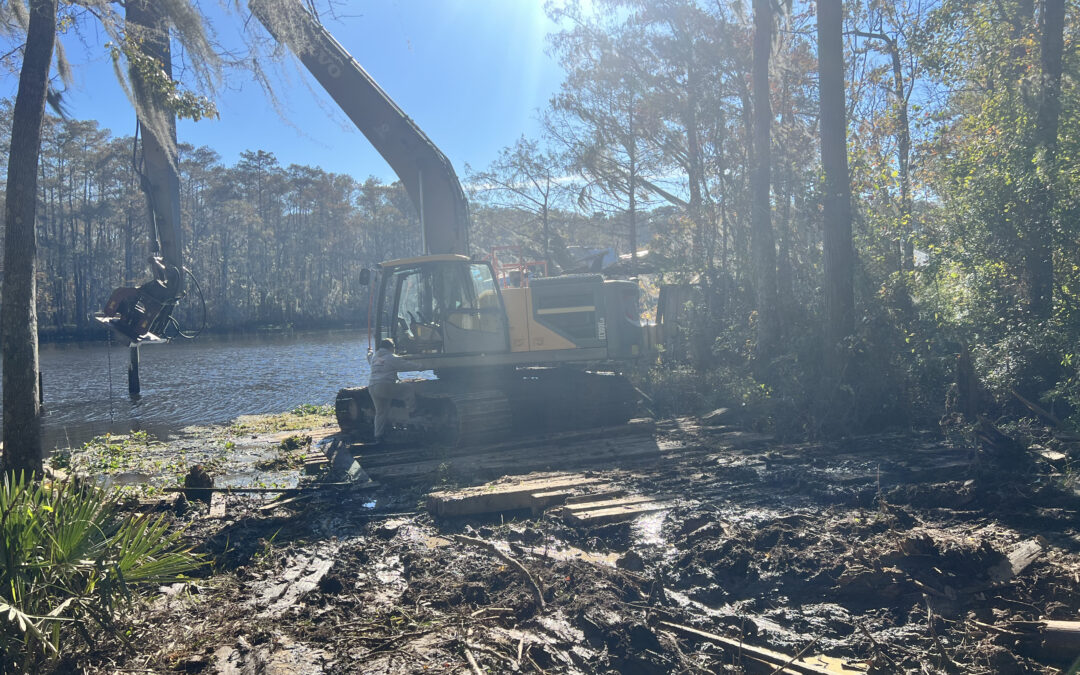
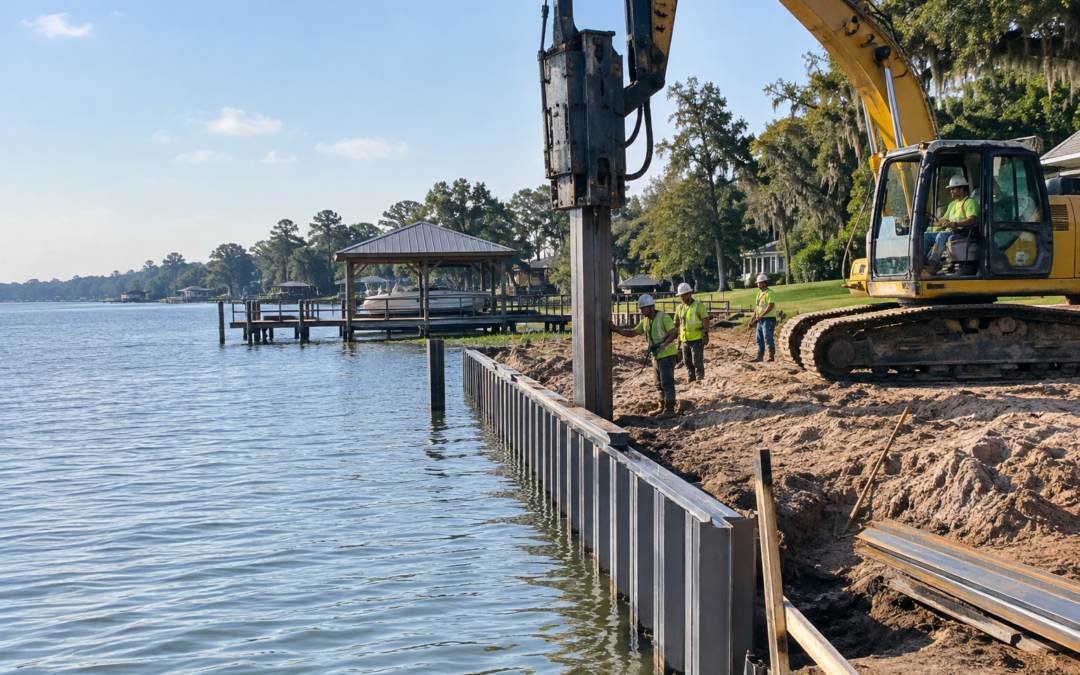
Construction begins when the equipment arrives. Many Gulf Coast sites require barge mounted equipment for waterside access, and getting that equipment in place takes time. Once it is set up, the crew drives the sheet piling or sets the panels along the planned wall line.
Pile driving moves faster than most people expect. A typical residential wall can often be driven in a matter of days. Hard clay, shell layers, or buried debris slow the work, and our pile driving page explains how bottom conditions affect installation.
Phase 5: Tie Backs, Cap, and Backfill (1 to 3 Weeks)
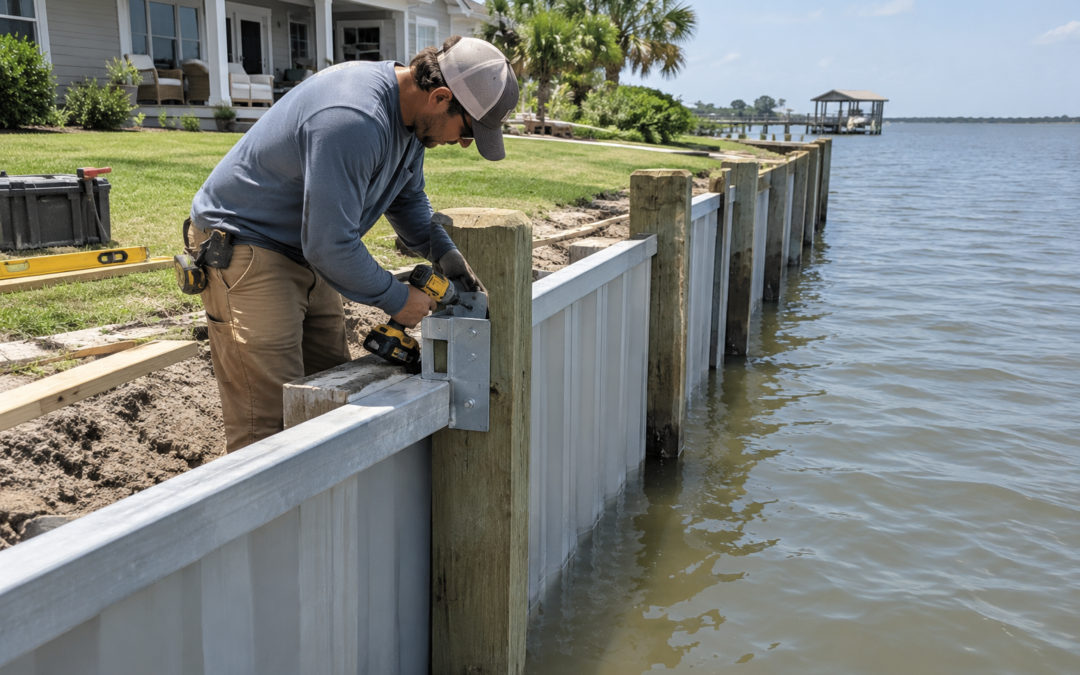
After the wall is in place, the crew installs the anchor system that holds it against soil pressure. Tie back rods run from the wall to anchors set in the soil behind it, and waler beams tie the system together along the wall face.
Next comes the cap, which is either poured concrete or a manufactured system that finishes the top of the wall. Backfill is placed and compacted behind the wall, drainage is set, and any scour protection is placed at the toe. Concrete work adds cure time, which is one reason concrete seawalls take longer than vinyl ones.
Phase 6: Final Inspection and Cleanup (A Few Days)
The last step is a walk through with the contractor. The crew checks the wall alignment, the cap, the drainage, and the grading behind the wall, then completes any punch list items and restores the site. Heavy equipment leaves, and you have a finished shoreline.
What Can Make a Seawall Project Take Longer
Several factors push a project outside the typical range.
Wall length. A 60 foot wall and a 300 foot wall are different projects. Longer walls need more materials, more driving time, and more backfill.
Material choice. Vinyl generally installs faster than concrete. Concrete walls need forming, pouring, and cure time, and precast systems need careful panel placement.
Site access. A lot with easy equipment access moves quickly. A property with trees, tight side yards, or shallow water that limits barge access takes longer to mobilize and work.
Soil and bottom conditions. Soft soils may need deeper piling or additional anchors, and obstructions in the bottom slow driving.
Weather and tides. Wind, storms, and high water can pause marine work for days. Hurricane season adds the possibility of longer delays.
Permit complications. Requests for additional information from an agency can add weeks or months to the approval step.
Timing Your Seawall Around Hurricane Season
Hurricane season shapes seawall scheduling along the Gulf Coast. Construction during the peak weeks of the season risks delays and exposes a half finished wall to storm conditions, so most property owners aim to finish before June or wait until the season winds down.
That makes the permitting phase the best place to get ahead. Starting the application in late summer or fall positions you to build in winter or early spring, when weather is steadier and contractor schedules tend to be more open. Starting in April and hoping to finish before storm season rarely works, because permitting alone can take longer than that window allows.
How to Keep Your Seawall Project on Schedule
You cannot control the weather, but you can control several things that affect your timeline.
Start early. The single best way to shorten the overall timeline is to begin the permit process as soon as you decide to build.
Choose a contractor who handles permitting. A builder who prepares complete applications avoids the delays that come with missing information.
Make decisions quickly. Material selection, wall height, and design approvals can slow the schedule if they sit on your desk. Give your contractor the answers they need as soon as you have them.
Clear the work area. Moving boats, trimming vegetation, and removing items near the shoreline before the crew arrives keeps the project moving.
Plan related work together. If you also want a dock or boat lift, coordinating them with the seawall saves mobilization and keeps everything inside one permit.
Start Your Seawall Timeline With a Site Visit
A seawall project runs on a predictable schedule once you know the phases. Most of the waiting happens before construction begins, which is why an early start matters. Lamulle Construction handles each phase from design and permitting through installation, so your timeline stays clear from the first call to the final walk through.
Contact Lamulle Construction to schedule a site visit and get a realistic timeline for your property.