Slidell sits at the northeastern corner of Lake Pontchartrain, where the lake narrows toward the Rigolets and a web of bayous, canals, and tidal creeks reaches into residential neighborhoods. For waterfront property owners here, a pier is more than a place to tie up a boat. It is how you reach deeper water, how you fish at sunrise, and how you turn a waterfront lot into something you can actually use.
Building a pier on these waters is not the same as building one on a quiet inland lake. Soft bottom soils, brackish water, tidal movement, and hurricane exposure all shape what a pier needs to be made of and how deeply it needs to be anchored. A pier that ignores those conditions will show it within a few seasons.
What Should You Know Before Hiring a Pier Builder in Slidell?
Before hiring a pier builder in Slidell, confirm they understand soft north shore soils, brackish water corrosion, and local permitting through the Army Corps of Engineers, Louisiana coastal agencies, and St. Tammany Parish. A qualified builder will assess your site, specify marine grade materials, manage permits, and design for storm loading, not just everyday use.
The sections below walk through each of those points so you can ask better questions and recognize a proposal that accounts for real site conditions.
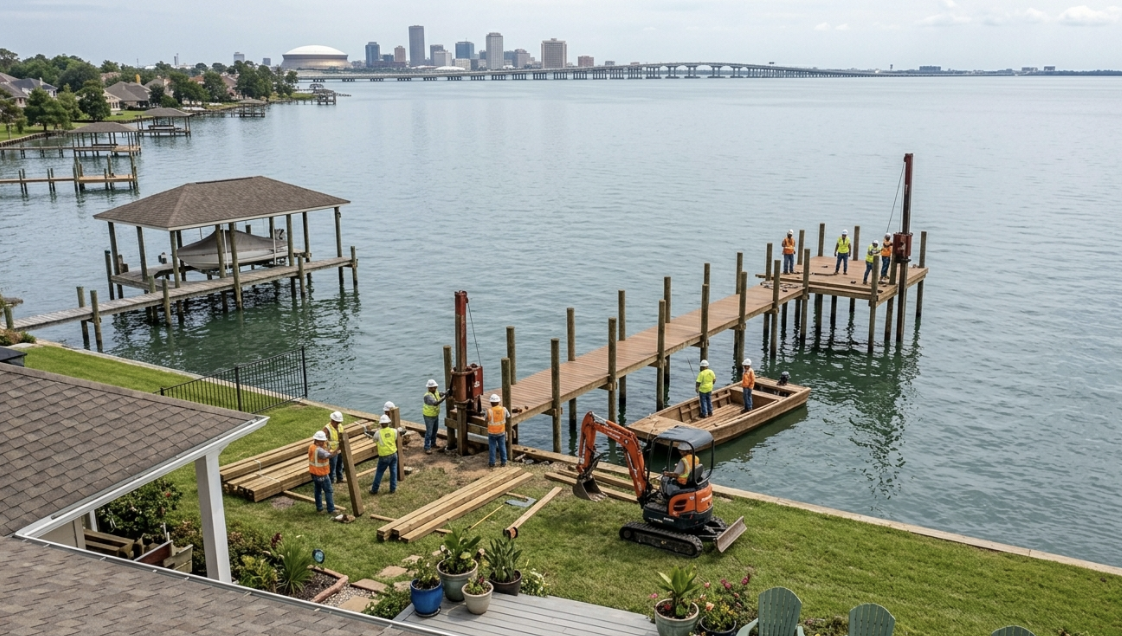
How Slidell’s Waterways Shape Pier Design
Soft bottom soils. Much of the Slidell shoreline sits on soft clay and silt. Pilings in that material need deeper embedment than they would in firmer ground to carry the same load, and a pier built with shortcuts on piling depth tends to settle or lean over time.
Brackish water. The lake and the Rigolets carry salinity that rises and falls with rainfall, wind, and tide. That chemistry corrodes standard hardware and shortens the life of lumber that was not treated for marine exposure.
Tidal flow and wake. Water exchanging through the Rigolets moves current through the bayous and canals around Slidell, and boat wake adds repeated lateral loading to pilings. Pier framing needs proper bracing so it handles that movement without working loose.
Storm exposure. Slidell sits within the hurricane surge zone. A pier here should be designed for storm loading, with adequate piling depth, secure framing connections, and decking fastened to resist uplift.
Pier Types That Work on the Slidell North Shore
The right pier design depends on your water depth, how you plan to use the structure, and how much exposure your shoreline sees. Four configurations cover most Slidell projects.
Fixed pile supported piers are the most common choice. Pilings are driven into the bottom, framing ties them together, and decking sits on top. This design stays stable in soft clay and handles wave loading well, and it can be built to almost any length.
L and T head piers run out from shore and then widen at the end. They reach deeper water while giving you room for boat slips or a seating area without extending the full pier width the entire distance.
Covered piers add a roof over part or all of the structure. The cover protects the boat, the decking, and anyone using the pier from sun and rain, and it extends the life of the materials underneath. If a cover is in your plans, design the pier for those roof loads from the start.
Fishing and viewing piers use a wider platform with railings and seating, built for casting a line or watching the sunset rather than mooring a vessel.
Materials That Hold Up in Brackish North Shore Water
Material choices are where many pier projects succeed or fail over the long run.
Pressure treated timber remains the standard for pilings and framing, but it must carry a marine or ground contact rating suited to aquatic exposure. Standard residential grade lumber will not last in these conditions.
Composite decking costs more at installation but resists moisture, UV, and biological growth, and it needs far less maintenance than wood. For owners planning to keep the property long term, it often lowers total cost of ownership.
Hot dipped galvanized and stainless steel hardware is essential. Zinc plated fasteners corrode quickly in brackish water, and failed hardware leads to structural problems that cost far more than the upgrade would have.
Concrete pilings are worth discussing for longer piers or those carrying heavy loads, since they resist corrosion and boring organisms that attack timber.
Foundation and Piling Considerations
The foundation is the one part of a pier you cannot easily fix later. In Slidell’s soft soils, piling length and spacing need to be set from actual site conditions, not generic assumptions. A pier that will carry a boat lift, a roof, or regular foot traffic needs heavier pilings and tighter spacing than a simple walkway.
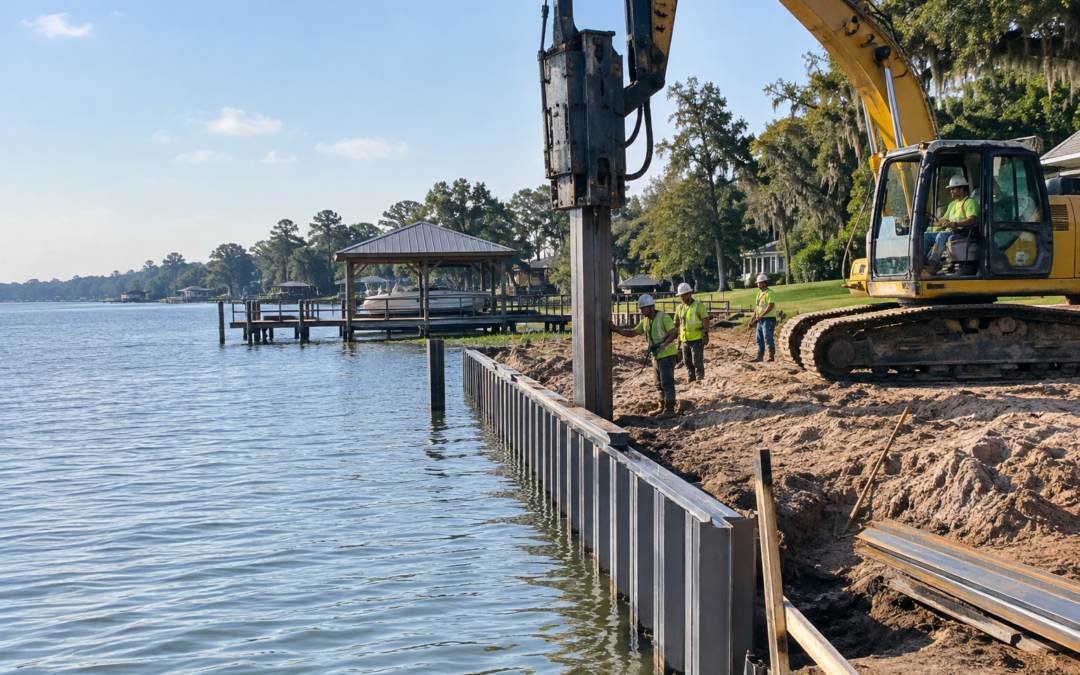
Installation method matters too. Vibratory and impact driving each suit different bottom conditions, and a contractor who works these waters regularly will know which approach fits your site. Our pile driving page explains how piling installation works and why depth specifications matter.
Permitting a Pier in Slidell
A pier extending into navigable water requires permits, and the process takes longer than the construction itself.
Army Corps of Engineers. Structures in navigable waters need Section 10 authorization. Many standard residential piers qualify for a streamlined Nationwide Permit rather than an individual application.
Louisiana coastal use permit. Construction in the coastal zone requires review under the state’s coastal program, and the application is typically handled alongside the federal permit.
St. Tammany Parish and the City of Slidell. Local building and floodplain requirements may apply depending on your address and the scope of work.
HOA and deed restrictions. Some waterfront subdivisions limit pier length, width, or style, so check your governing documents before finalizing a design.
A straightforward residential pier often takes 60 to 120 days to permit, and covered or larger structures take longer. Our permitting process page explains how Lamulle manages these applications for clients.
What Affects the Cost of a Slidell Pier
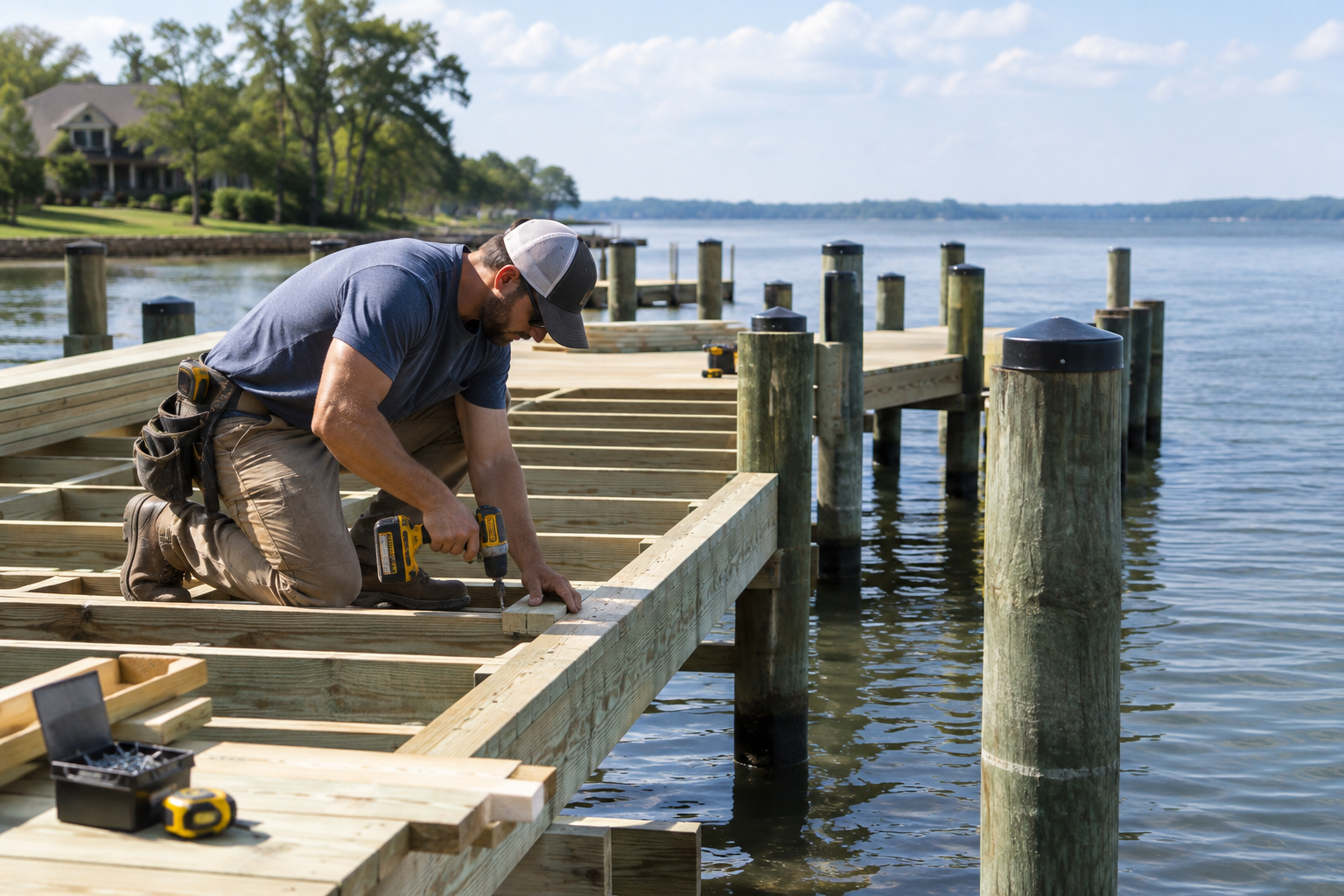
Pier pricing depends on site specifics, and the main drivers are consistent. Length is the largest factor, since every added foot needs pilings, framing, and decking. Water depth and bottom conditions set piling length and driving difficulty. Material grade, covered structures, boat lifts, electrical service, and site access all add to the total. Planning accessories at the start is almost always cheaper than retrofitting them later, and a site visit is the only way to get a number you can trust.
Choosing the Right Pier Builder in Slidell
Not every contractor who builds decks is equipped to build over water. When you compare proposals, look for these qualities.
Local experience. A builder who has worked Slidell’s waterways knows the bottom conditions, current patterns, and permitting expectations that apply here.
Licensing and insurance. Ask for proof of a Louisiana contractor license and appropriate liability and workers compensation coverage before you sign anything.
Permit handling. A qualified builder manages the permit applications for you. If a contractor expects you to handle permitting alone, treat that as a warning sign.
Written scope and references. The proposal should spell out piling count, material grades, and hardware specifications, and the builder should be willing to share photos and references from completed north shore projects.
Build Your Slidell Pier on a Foundation That Lasts
A pier built for Slidell’s soils, water, and storm exposure will serve you for decades. One built without regard to them will cost you far more over time. Lamulle Construction brings generations of Gulf Coast experience to every pier we build, and every project starts with a site visit and an honest conversation about what your waterfront needs.
Learn more on our Slidell marine construction page, or contact Lamulle Construction to schedule your pier assessment.