Every dock eventually shows signs of age. Boards start to feel soft underfoot, hardware develops rust streaks, and pilings that once stood perfectly straight begin to lean. When that happens, waterfront property owners face a genuine question: is this a repair situation, or is it time to replace the whole structure?
Getting this decision right matters, both for your budget and for your safety. Repairing a dock that has fundamentally reached the end of its structural life is a waste of money that will need to be spent again soon. Replacing a dock that only needed targeted repairs is an unnecessary expense that could have been avoided.
Lamulle Construction assesses docks across the Gulf Coast every year and helps property owners make this call based on an honest evaluation of the structure’s actual condition. This guide walks through how that decision gets made.
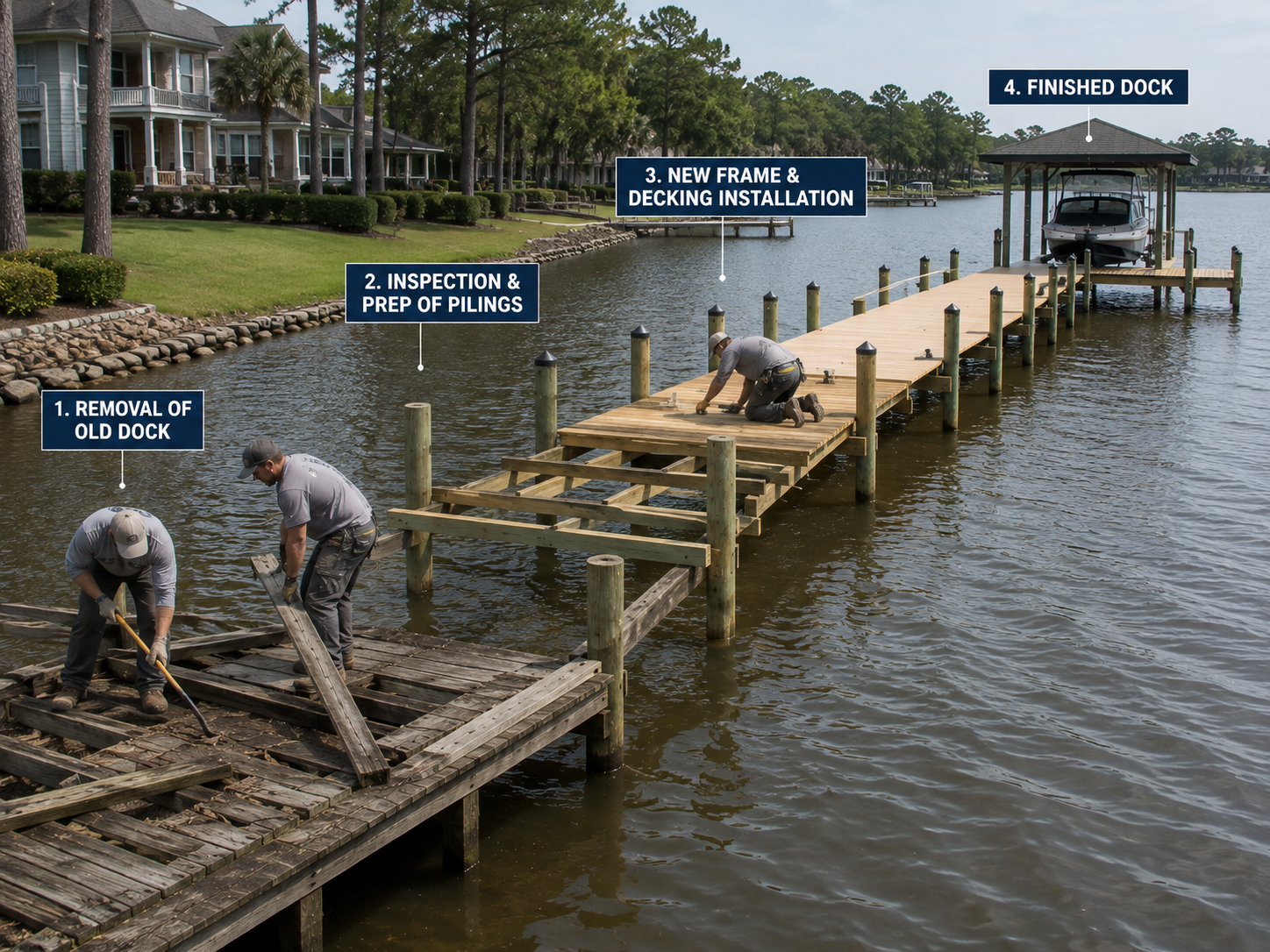
The Two Questions That Determine Repair vs. Replacement
Every dock assessment comes down to two fundamental questions: how extensive is the damage, and how much useful service life does the underlying structure have left. A dock with isolated, easily addressed problems and plenty of remaining structural life is a repair candidate. A dock with widespread deterioration or one that has already reached or exceeded its expected service life is a replacement candidate, even if it does not look catastrophically bad on the surface.
Signs That Point Toward Repair
Isolated deck board damage. Individual boards that have cracked, warped, or rotted while the surrounding boards and the underlying framing remain sound are a straightforward repair.
Loose or corroded surface hardware. Fasteners, cleats, and railings that have loosened or corroded can typically be replaced without addressing the underlying structure, provided the wood or material they are attached to is still sound.
A small number of damaged pilings among many sound ones. If an inspection finds one or two pilings with rot or damage while the majority of the pilings supporting the dock are structurally sound, replacing the affected pilings individually is usually more cost-effective than replacing the entire structure.
Cosmetic weathering without structural compromise. Graying wood, minor surface cracking, or faded finish are cosmetic issues that do not necessarily indicate the dock needs anything beyond cleaning, sealing, or refinishing.
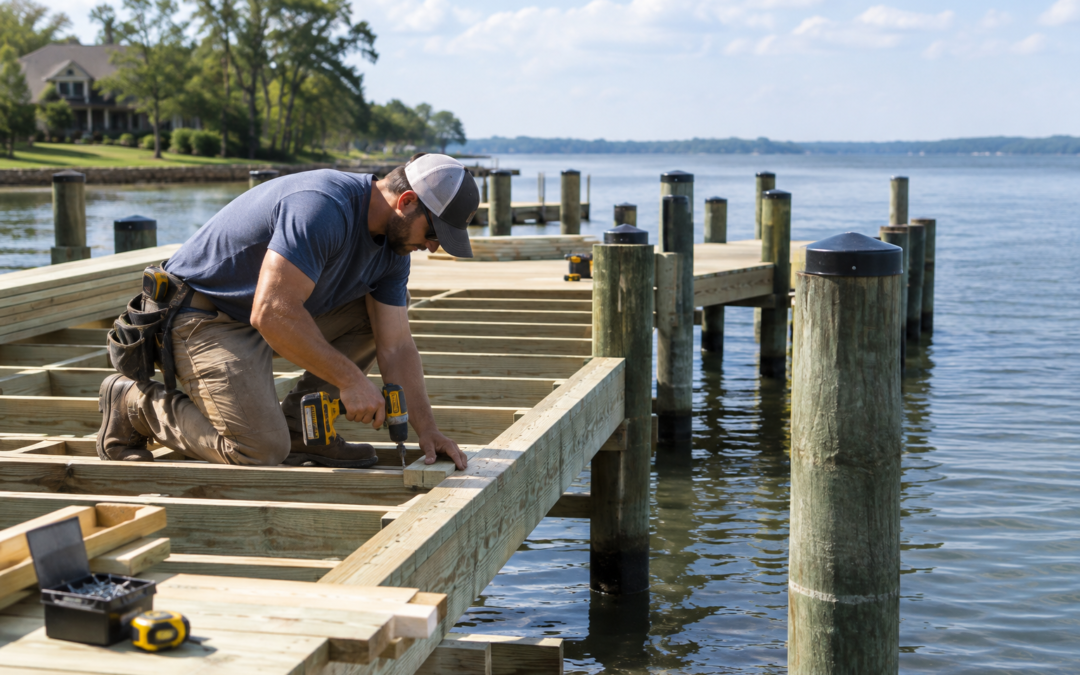
A dock that is well within its expected service life. A properly built pressure-treated wood dock has an expected service life of 20 to 30 years with routine maintenance. A dock showing isolated issues at year 10 is very different from one showing the same issues at year 28.
Signs That Point Toward Replacement
- Widespread structural deterioration. When rot, insect damage, or corrosion affects a significant portion of the pilings, framing, or decking rather than isolated sections, the cost of repairing everything piecemeal often exceeds the cost of a full rebuild.
- Pilings that are significantly out of plumb. Pilings that have shifted or leaned substantially indicate that the foundation itself has been compromised, often due to soil movement, marine borer damage, or impact.
- A dock that has reached or exceeded its expected service life. Even a dock that looks reasonably sound at 30 years old is a candidate for replacement, since the underlying materials have likely degraded beyond what is visible from a surface inspection.
- Repeated repair needs in a short time frame. If you find yourself repairing the same sections of your dock repeatedly within a few years, this often indicates an underlying issue that repair after repair will not resolve.
- Storm or impact damage affecting the primary structure. Significant damage from a storm event or vessel impact that compromises multiple structural elements at once often makes replacement the more sensible path.
- A design that no longer fits your needs. If your dock’s original design no longer accommodates your current boat, your family’s needs, or your desired features like a boat lift or covered structure, replacement provides an opportunity to build something that fits your life today. See our dock builder page for design options.
How Marine Borers Complicate the Decision
One factor that makes dock assessment more complicated than it might seem is marine borer damage. Certain marine organisms, including shipworms and gribbles, bore into submerged wood and can cause significant internal damage that is not visible from the exterior surface. A piling that looks solid above the waterline may be substantially compromised below it.
This is one of the reasons a professional inspection, which can include probing submerged sections, is important for an accurate assessment. Visual inspection alone can miss borer damage that significantly affects the repair versus replacement decision.
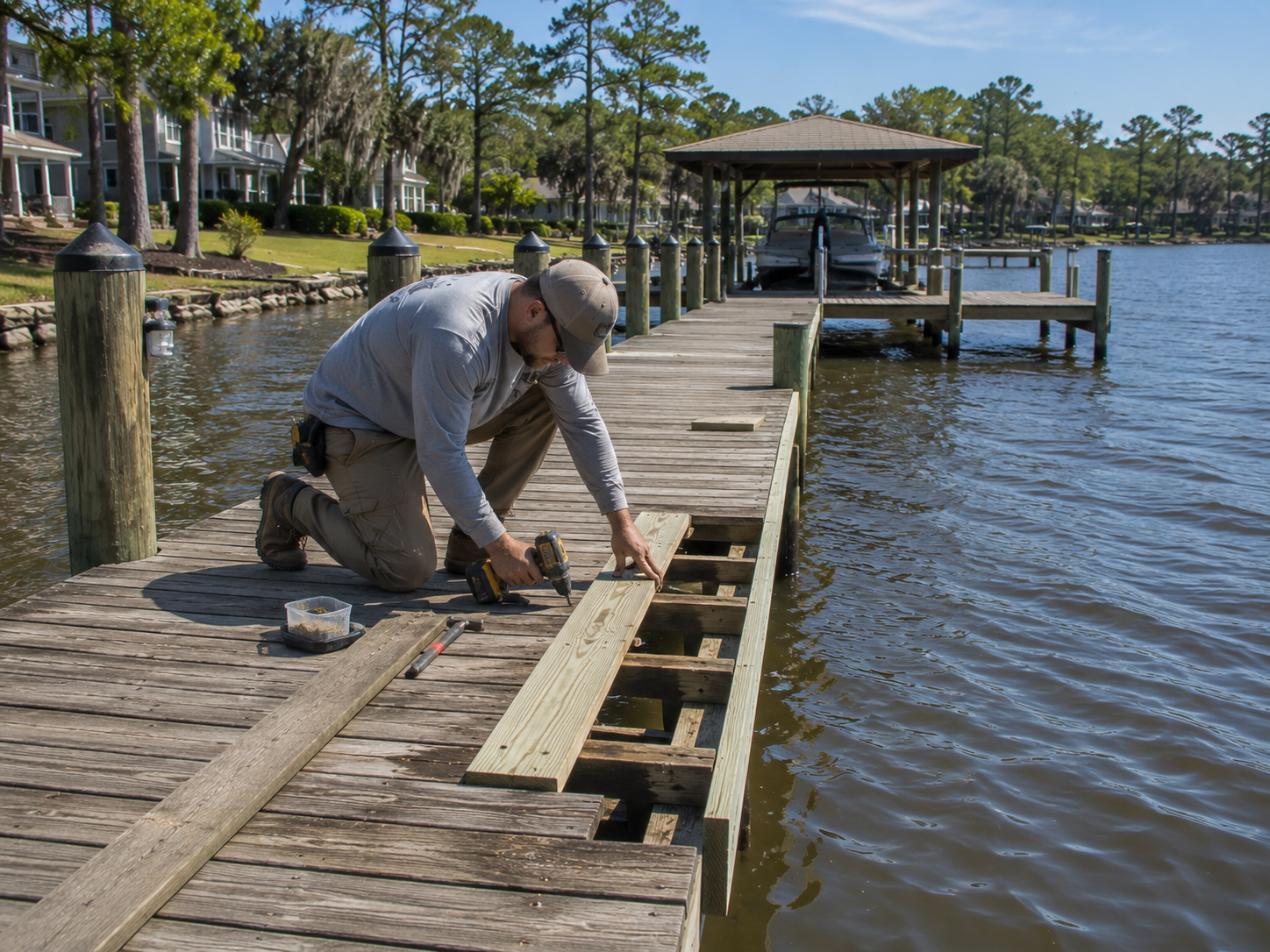
The Cost Comparison: Repair vs. Replacement
As a general guideline, if the cost of the repairs needed exceeds roughly 50 percent of what a full replacement would cost, replacement is usually the more sensible financial decision. This threshold accounts for the fact that a full replacement gives you an entirely new structure with a fresh service life, while extensive repairs to an aging structure still leave you with an older dock that may need further work sooner than a new one would.
That said, this is a general guideline rather than a strict rule. The specific circumstances of your dock, including how much of the structure is affected and what your long-term plans for the property are, should factor into the final decision.
Getting an Accurate Assessment
The only reliable way to determine whether your dock needs repair or replacement is a professional inspection by an experienced marine contractor. A thorough assessment examines the condition of pilings above and below the waterline, checks for marine borer damage, evaluates the framing and decking, and considers the dock’s age relative to its expected service life.
Be wary of any assessment that recommends full replacement without a detailed explanation of what was found to justify that recommendation, just as you should be cautious of a contractor who recommends extensive repairs on a dock that is clearly past its useful life.