Mandeville is one of the most desirable waterfront communities on the Louisiana Gulf Coast. Situated along the north shore of Lake Pontchartrain, it offers direct lake access, protected coves off the Tchefuncte River and its tributaries, and a waterfront lifestyle that draws boaters, anglers, and families who want to be on the water every day they can. For property owners here, a well-built dock is not just a nice addition. It is the feature that makes everything else about waterfront living actually work.
Building a dock in Mandeville is not complicated when you work with an experienced contractor who knows the lake. But it is also not something to approach without preparation. Lake Pontchartrain’s specific conditions, the permitting requirements for Louisiana coastal construction, and the range of design options all factor into the outcome. Property owners who understand the basics before they start the conversation with a contractor get better results, faster timelines, and fewer surprises.
What Does a Dock Builder in Mandeville Actually Do?
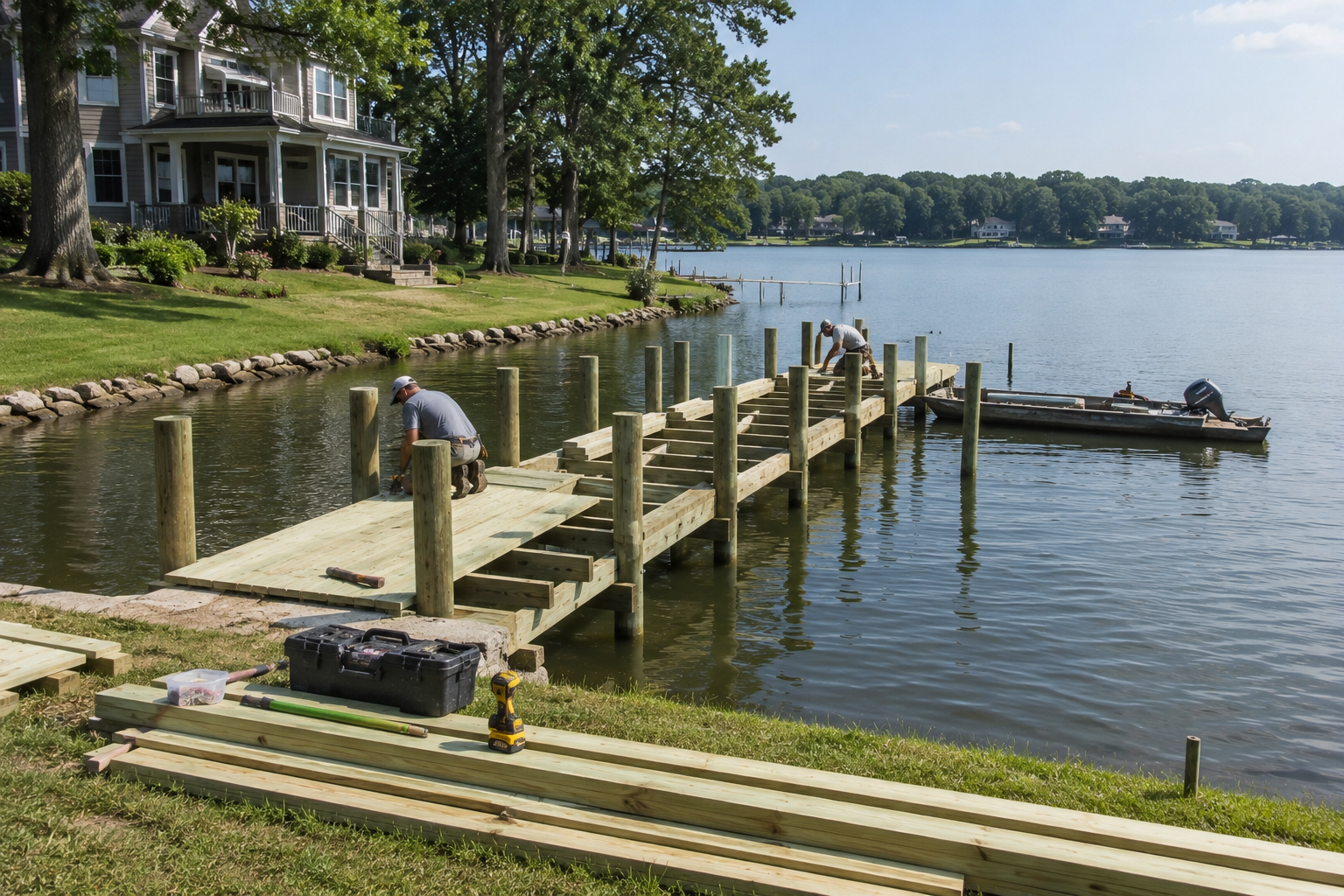
A dock builder in Mandeville handles the full scope of waterfront dock construction: site assessment, design, permitting, piling installation, framing, decking, and any accessory features such as boat lifts, boat slips, and covered structures. A qualified marine contractor is not just a carpenter who works near water. They understand soil and bottom conditions, water depth profiles, tidal and wave loading, and the regulatory environment that governs what can be built and where.
On Lake Pontchartrain specifically, that expertise matters. The lake’s shallow depth, its brackish water chemistry, and its exposure to wind-driven waves from the south and west all influence how a dock should be designed and what materials will hold up over time. A contractor who primarily builds docks in calm freshwater lakes is not the right fit for a Mandeville waterfront project.
Understanding Lake Pontchartrain’s Conditions for Dock Construction
Lake Pontchartrain presents a specific set of conditions that every Mandeville dock project has to account for.
Shallow water depth. Most of the north shore near Mandeville has relatively shallow water, often 2 to 6 feet within a reasonable distance of the shoreline. This shallowness means docks frequently need to extend farther from shore to reach navigable depth, which affects both the cost and the structural requirements of the project. It also means that floating dock systems, which require adequate water depth to function properly, are less common here than fixed pile-supported structures.
Brackish water chemistry. Lake Pontchartrain is a brackish estuary, meaning its water salinity varies between nearly fresh and measurably salty depending on rainfall, tidal exchange through the Rigolets and Chef Menteur passes, and seasonal patterns. That brackish chemistry is corrosive to untreated wood, standard steel hardware, and certain composite materials. Every material choice for a Mandeville dock needs to account for this chemistry or you will be replacing components well ahead of schedule.
Wind-driven wave exposure. The lake covers nearly 640 square miles, and wind from the south and southwest can build significant wave energy across that fetch before it reaches the north shore. Mandeville properties on open stretches of shoreline see regular wave action that places real structural loads on dock piling and framing. Pilings need to be driven to adequate depth, framing connections need to be properly fastened, and decking needs to be secured to handle the lateral movement that wave loading creates.
Storm surge. Lake Pontchartrain is within the Gulf Coast hurricane surge zone. A dock designed with surge awareness will have a much better chance of surviving the next major event.
Dock Design Options for Mandeville Waterfront Properties
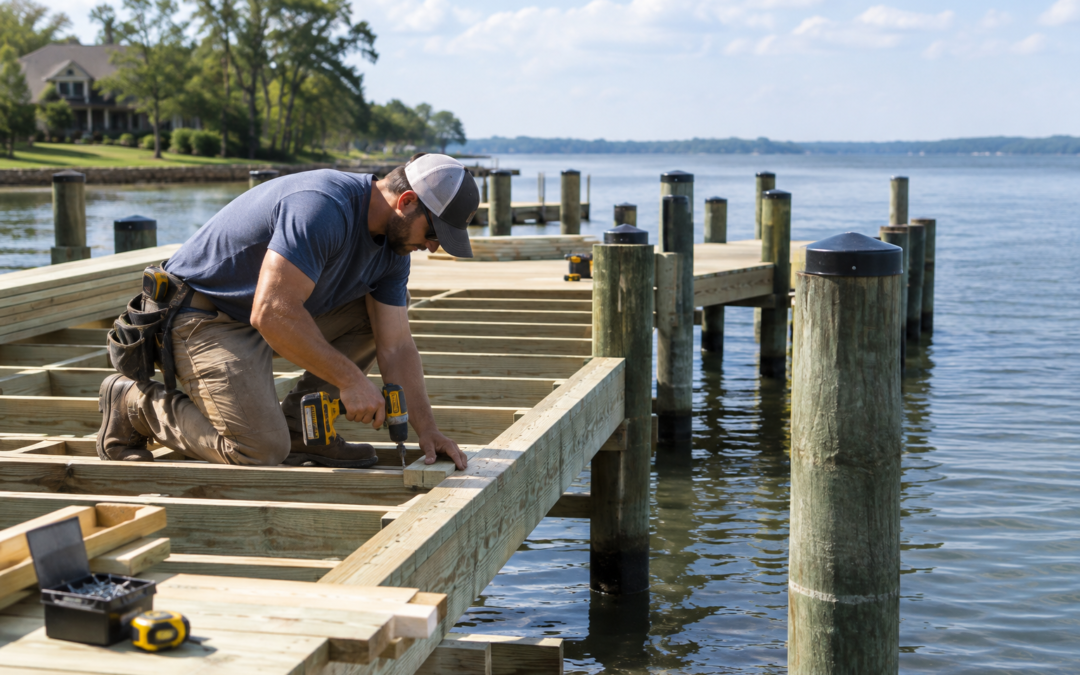
Fixed pile-supported docks are the most common type on the Mandeville north shore. Pilings are driven into the lake bottom, framing is attached to the pilings, and decking is laid on top. This creates a stable, permanent structure that handles wave loading and does not depend on a minimum water depth to function. Fixed docks can be built at virtually any length, can accommodate boat slips along their sides, and can support covered structures and boat lifts.
L-shaped and T-shaped docks extend perpendicular to the shoreline and then turn at the end to create additional slip space or to reach deeper water while keeping the dock length manageable. An L or T configuration is common for properties where the water is shallow close to shore but deepens quickly at a certain distance.
Floating docks attach to fixed pilings but the deck surface floats on the water and rises and falls with the water level. In the shallow north shore areas near Mandeville, fixed docks are generally more practical.
Covered docks and boathouses add a roof structure over part or all of the dock, protecting the boat and the dock surface from UV exposure and weather. If a boathouse is in your long-term plans, it is worth designing the initial dock with that addition in mind from the start.
Materials That Hold Up on Lake Pontchartrain
Pressure-treated lumber remains widely used for dock framing and decking. For Lake Pontchartrain’s brackish environment, marine-grade or ground-contact treatment rated for aquatic exposure is the appropriate specification. Standard residential-grade treated lumber is not adequate for submerged or splash-zone applications.
Composite decking has become increasingly popular for dock surfaces. Composite materials resist moisture absorption, UV degradation, and biological growth that attacks wood surfaces near the waterline. The tradeoff is higher upfront cost and the need to specify a composite rated for marine use rather than standard residential decking.
Galvanized and stainless steel hardware is essential for any dock in brackish water. Hot-dipped galvanized hardware provides adequate protection for most connections above the waterline. Stainless steel is appropriate for connections at or below the waterline where corrosion exposure is highest.
Concrete pilings are used for some larger or more exposed dock installations. For most residential docks on the Mandeville north shore, pressure-treated timber pilings remain the standard, but for longer structures or higher wave exposure sites, concrete is worth discussing with your contractor.
Permitting for Dock Construction in Mandeville
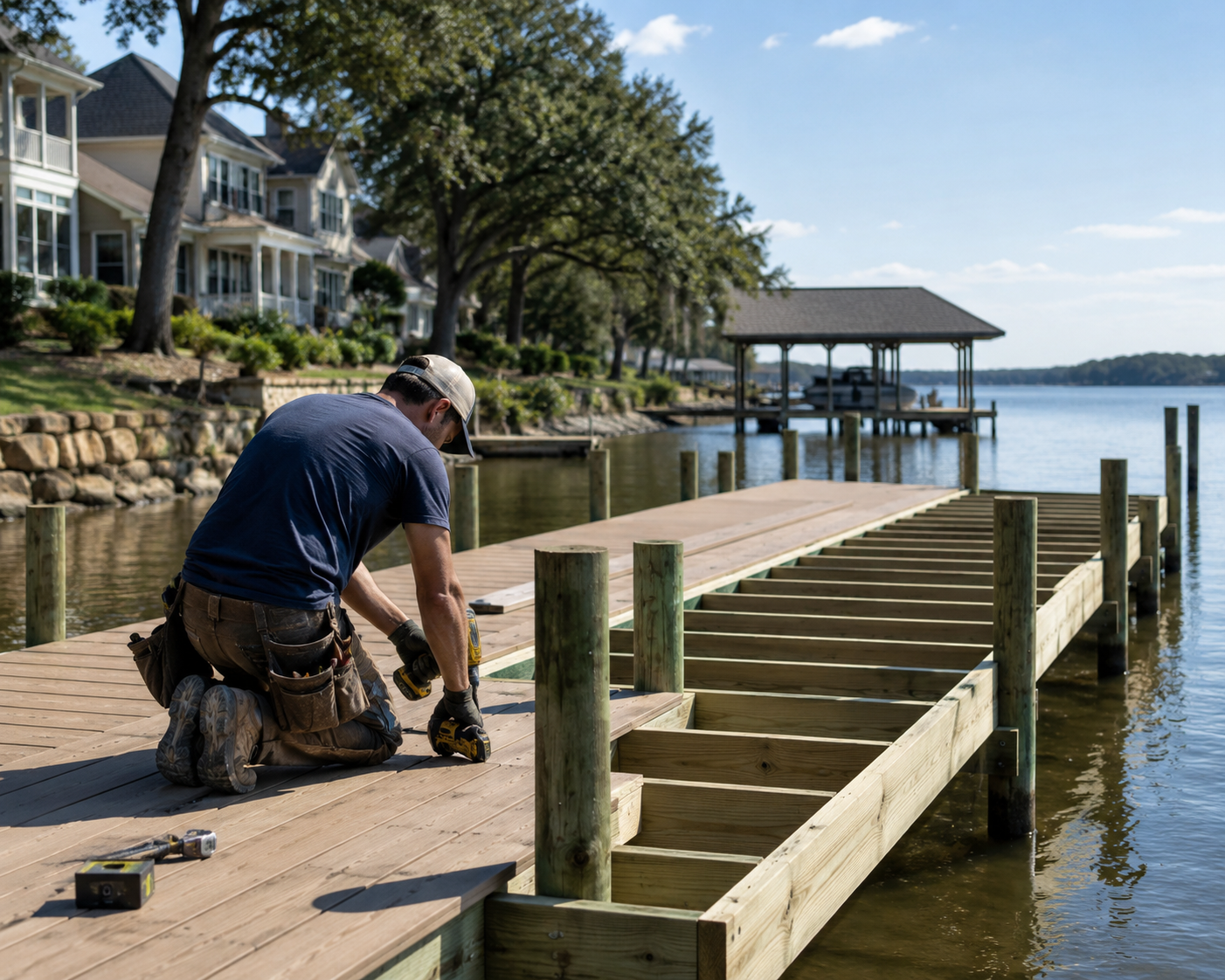
Army Corps of Engineers. Any dock that extends into navigable waters requires a Section 10 permit from the Army Corps of Engineers. For most standard residential docks, this falls under the Nationwide Permit program, which is a streamlined process.
Louisiana Department of Natural Resources. The Louisiana Coastal Resources Program has jurisdiction over construction in the coastal zone. A coastal use permit is typically required for dock construction in this zone.
Local permits. The City of Mandeville and St. Tammany Parish may have additional permit requirements for waterfront construction. Your contractor should be familiar with the local requirements for your specific address.
HOA and deed restrictions. Some Mandeville waterfront subdivisions have HOA rules or deed restrictions that govern dock construction. Check your HOA documents before finalizing your design.
The permitting process for a straightforward residential dock typically takes 60 to 120 days from application to approval. Lamulle’s team manages the permitting process on behalf of our clients. See our Mandeville marine construction page for more on how we work in this community.
What a Dock Project in Mandeville Actually Costs
Length and width. The primary cost driver for any dock is its square footage. A longer dock reaching deeper water costs more than a short dock in shallow conditions.
Piling count and depth. Sites with soft or unstable bottom conditions may require longer pilings or a closer spacing interval, which increases cost.
Material grade. Composite decking and stainless steel hardware cost more upfront but reduce maintenance costs over the dock’s life.
Covered structures. Adding a roof or boathouse structure to a dock adds significant cost but also significant value.
Boat lifts and accessories. Integrated boat lifts, finger piers, cleats, lighting, and electrical service all add to the project cost and should be included in your initial scope if you know you want them.
Choosing the Right Dock Builder in Mandeville
Local experience. A contractor who has built multiple docks on the Lake Pontchartrain north shore understands the specific soil conditions, water depth profiles, wave exposure patterns, and permitting requirements that apply here.
Licensing and insurance. Louisiana requires contractors to hold a state contractor’s license. Ask for proof before signing anything.
Permitting capability. A qualified dock builder in Mandeville should be able to manage the permitting process for you, including the Army Corps of Engineers application and the Louisiana coastal use permit.
References and portfolio. Ask to see photos of completed dock projects in the Mandeville area and request references from past clients.