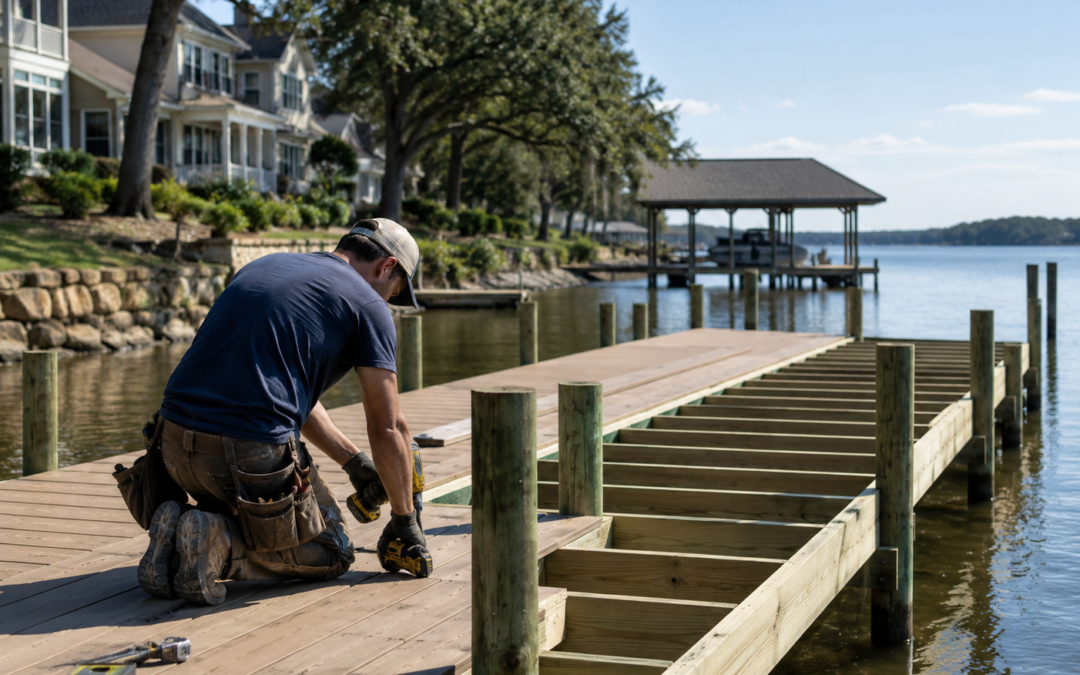
Building a dock is one of the most significant improvements you can make to a waterfront property. It gives you direct, functional access to the water: a place to moor your boat, fish with the grandkids, watch the sunset, or tie up after a day on the lake. Done right, a residential dock also adds measurable value to your property and reflects the character of the waterfront lifestyle you’ve invested in.
Done wrong, a dock becomes an ongoing source of maintenance headaches, permitting problems, or structural issues that cost far more to correct than they would have to prevent. The difference usually comes down to planning, material selection, and the experience of the contractor who builds it.
What Is Residential Dock Construction?
Residential dock construction is the process of designing, permitting, and building a private dock structure on a waterfront property for personal use. The process includes site assessment, permit applications, pile driving, framing, decking, and installation of any accessories such as boat lifts, railings, lighting, and electrical service. Most residential dock projects on the Gulf Coast take eight to sixteen weeks from initial assessment to completion, with permitting being the primary timeline variable.
Types of Residential Docks
Not all docks are created equal. The right dock design for your property depends on your waterfront conditions, your intended use, and your budget. The main residential dock types are:
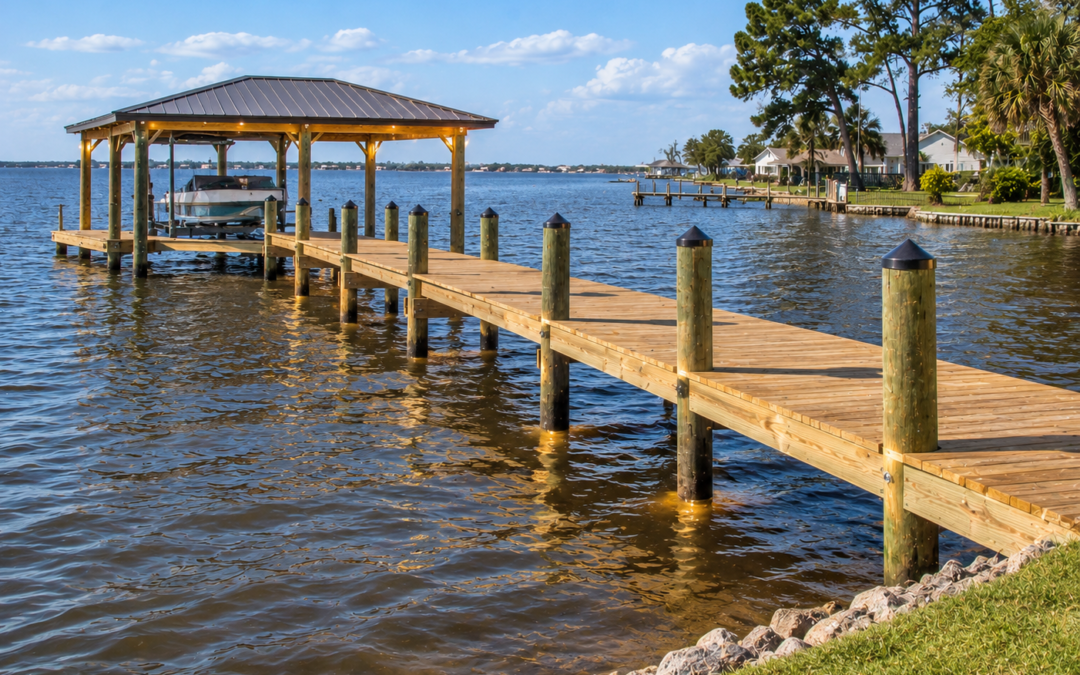
Fixed piling docks are the most common on the Gulf Coast. They’re built on pressure-treated timber or composite pilings driven into the waterway bottom, with a fixed deck height above the water. Fixed docks are sturdy and well-suited to moderate tidal ranges and protected or semi-protected water conditions. Most residential dock projects on the north shore of Lake Pontchartrain and the Tchefuncte River use fixed piling designs.
Floating docks use a buoyant platform, typically foam-filled or air-filled pontoon sections, that rises and falls with the water level. They’re better suited to locations with significant tidal fluctuation or where water levels vary seasonally. Floating docks require less extensive piling installation but need good mooring points and regular inspection of flotation components.
T-head and L-head docks add a perpendicular platform at the end of the main walkway. T-heads and L-heads provide additional mooring space and are popular for properties where multiple boats need to be docked simultaneously. They also create a natural gathering space at the water’s edge.
Combination designs incorporate elements of fixed and floating sections, or include covered sections and boathouse structures. These are typically larger projects with more involved engineering and permitting requirements.
Key Design Decisions
Several design decisions will shape your dock project from the earliest planning stage:
- Dock width. Residential dock walkways are typically four to six feet wide for a standard access pier, and six to ten feet or wider for a platform or entertaining area at the end. Width affects both cost and the permit footprint.
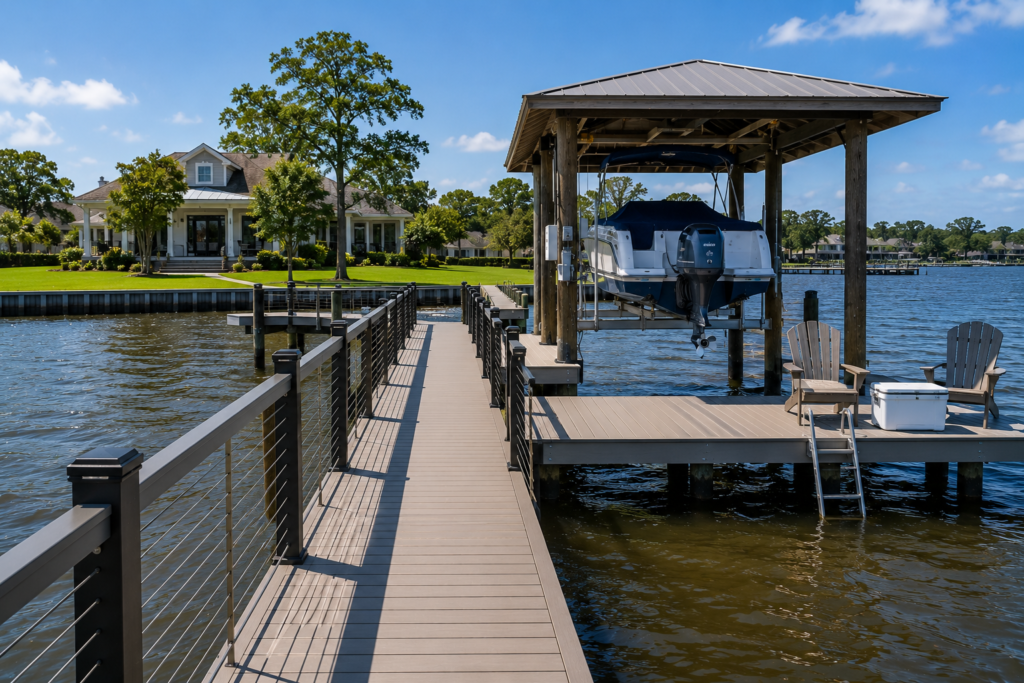
- Deck material. Pressure-treated lumber is the traditional choice and remains cost-effective. Composite decking carries a higher upfront cost but holds up better in Gulf Coast sun and heat, doesn’t splinter, and requires significantly less maintenance over its lifespan. For most new dock builds, composite decking for the walking surface is worth the investment.
- Railing type. Railings are required on elevated dock sections and are a safety consideration regardless of what the code requires. Aluminum cable rail or powder-coated aluminum railing systems perform better than painted wood in a marine environment and require far less ongoing maintenance.
- Boat lift integration. If you plan to add a boat lift (https://lamulle.com/boat-lift-installation/) now or in the future, the dock pilings and framing need to be sized for that load from the beginning. Retrofitting a lift onto an undersized dock requires more work than designing for it from the start.
- Electrical service. Dock lighting and shore power for boats are practical additions that need to be planned at the framing stage. Running conduit after the decking is installed is a much more involved process.
The Permitting Process
Residential dock construction in Louisiana and Mississippi requires permits from state and federal authorities. The Joint Permit Application process through the US Army Corps of Engineers, combined with Louisiana Department of Natural Resources or Mississippi state approvals, covers most Gulf Coast dock projects.
Permit timelines vary. A simple dock in a non-sensitive area may be approved in several weeks. Projects in wetland-adjacent areas, navigable channels, or locations that require a public comment period can take considerably longer. Starting the permitting process well before your target construction date, sometimes three to six months ahead, is the only reliable way to avoid delays.
Your dock builder should handle the permit application as part of their service. If a contractor doesn’t discuss permitting or treats it as something you manage independently, that’s a red flag. Experience navigating the permitting process for your specific waterway is a meaningful part of what you’re paying for.
The Construction Process
Once permits are in hand, residential dock construction follows a clear sequence:
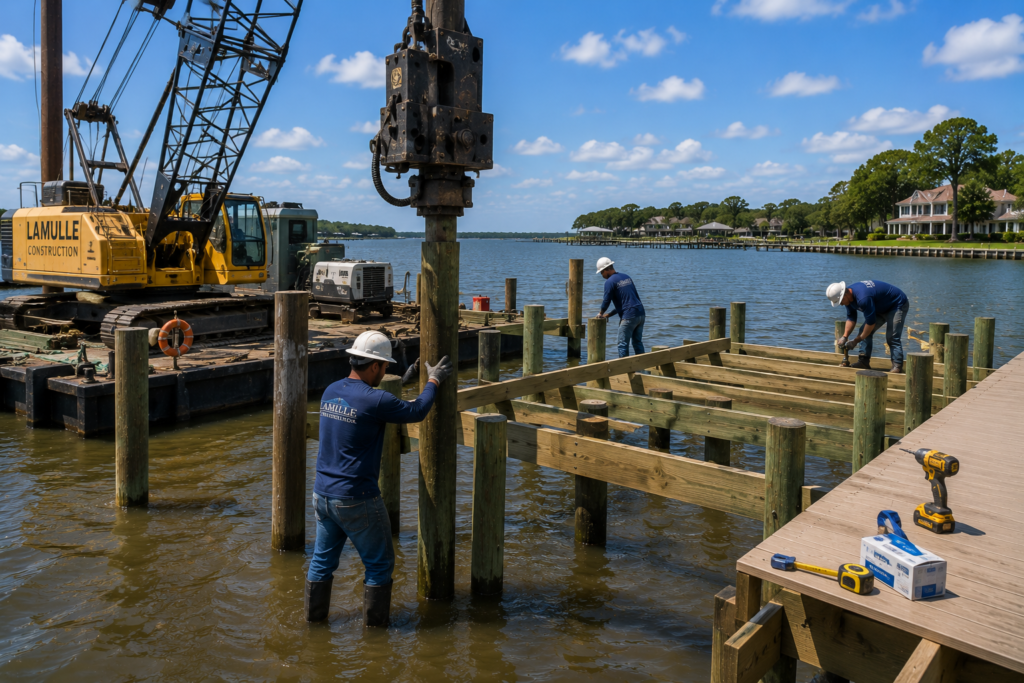
- Pile driving is first. The dock pilings are driven to the required embedment depth based on site soil conditions. In the soft soils common to Louisiana coastal waterways, pilings often need to go deeper than the standard tables suggest to achieve adequate bearing capacity. Our pile driving team handles this foundation work with the equipment and local knowledge needed to get it right.
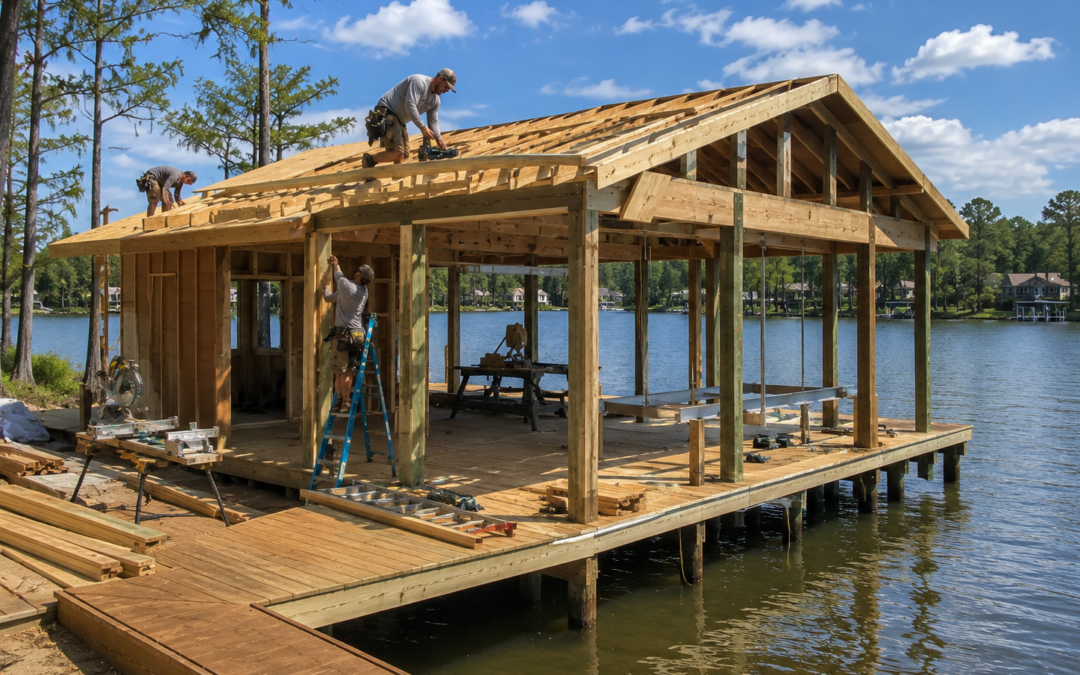
- Framing follows pile driving. Stringers and joists connect the pilings and create the structural system that supports the deck. All framing connections use galvanized or stainless steel hardware. Electrical conduit is roughed in at this stage.
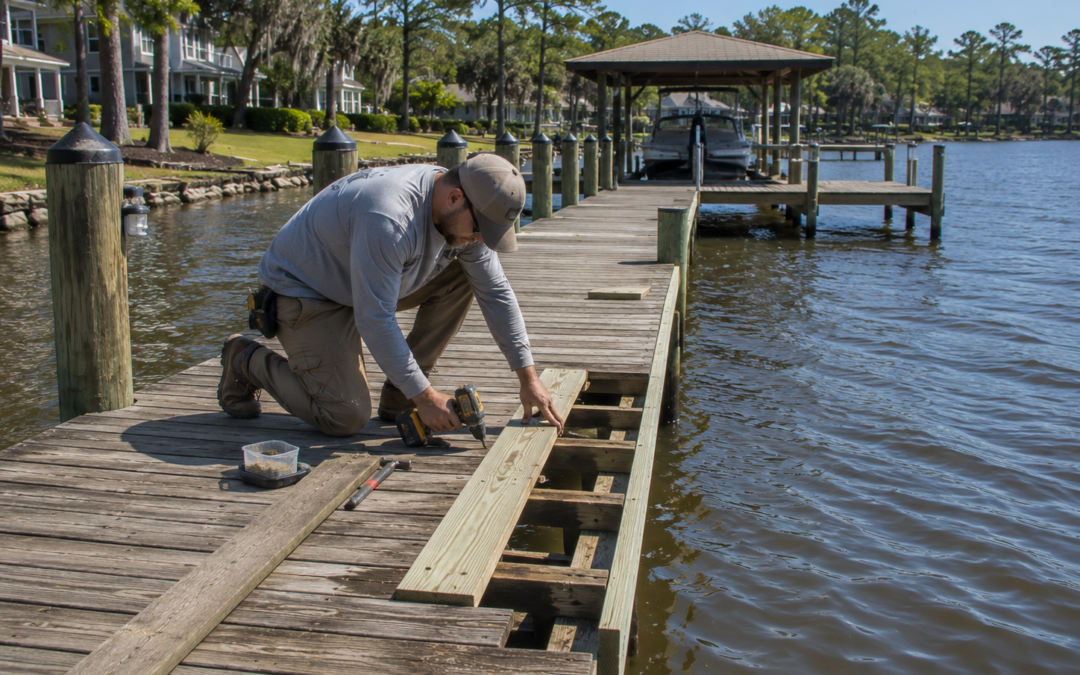
- Decking is installed over the completed framing. Boards are laid with proper gap spacing for drainage and fastened with stainless screws or hidden clip systems depending on the material.
Accessories and finishing work completes the project. Railings, cleats, lighting, electrical connections, boat lift hardware, and any covered structure elements are installed and inspected before final walkthrough.
How Much Does Residential Dock Construction Cost?
Residential dock construction costs vary considerably based on dock length, width, materials, water depth, bottom conditions, and the features included. A basic fixed dock in favorable conditions might start around $15,000 to $25,000. A larger dock with composite decking, aluminum railings, electrical service, and an integrated boat lift can run significantly higher.
The main cost drivers are length (more linear footage means more pilings, framing, and decking), depth (difficult bottom conditions require longer pilings or special installation methods), materials (composite vs. treated lumber, aluminum vs. wood railings), and features (boat lifts, covered sections, electrical service, and accessories all add to project cost).
For a detailed breakdown of the cost factors involved in dock construction, see our guide to how much it costs to build a dock.
Choosing the Right Dock Builder
Your dock builder’s experience with your specific waterway and water conditions matters more than a low initial quote. Gulf Coast dock construction involves site-specific variables, including soil behavior, tidal patterns, and permitting requirements, that vary considerably from one waterway to the next. A contractor who has built dozens of docks in Mandeville or Madisonville brings knowledge to your project that a general contractor simply doesn’t have.
Ask for references from completed projects in your area, verify licensing and insurance, and make sure the contractor discusses permitting up front. A written contract with a detailed scope of work and material specifications is essential before work begins.