Most people hire a marine construction company once, maybe twice in their lives. A new dock before retirement. A bulkhead replacement after the old one finally gives out. A boathouse that has been on the wish list for years. It is not the kind of project most property owners have any previous experience with, which means the process itself, including the steps, the timeline, and the decisions, is often just as unfamiliar as the technical details.
That unfamiliarity creates anxiety for a lot of clients, and understandably so. You are spending real money on a structure that sits in the water, has to survive hurricanes, and involves permits from multiple agencies. The more you understand about how the process works from start to finish, the better prepared you will be to make good decisions, ask the right questions, and know what is normal when things do not move as quickly as you expected.
This is a straightforward guide to what actually happens during a marine construction project, written from the perspective of what property owners experience, not what contractors do in the background.
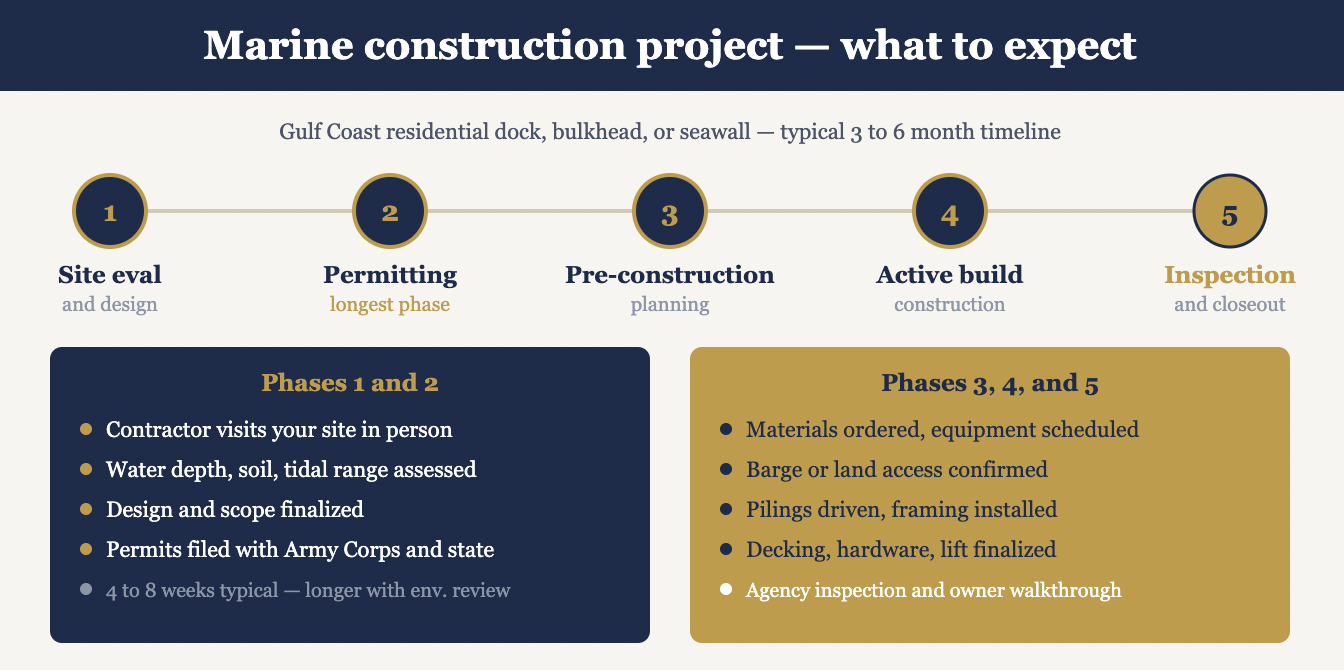
What Happens During a Marine Construction Project?
A residential marine construction project moves through five main phases: site evaluation and design consultation, permitting, pre-construction planning, active construction, and final inspection and closeout. From initial contact to finished structure, a typical residential dock or bulkhead project takes three to six months when permitting moves smoothly, with permitting itself often representing the longest single phase of that timeline.
Phase 1: Site Evaluation and Design Consultation
Every project starts with a conversation and a site visit. Before any drawings are produced or materials are ordered, a qualified marine contractor needs to look at the property directly, including the shoreline, the water depth, the soil conditions, the existing structures, and anything adjacent that might affect design or access.
What a contractor is evaluating during a site visit includes:
- Water depth and bottom conditions at the project location
- Soil type at the shoreline, since soft marsh clay behaves very differently from compacted sandy soil, and both are common along the Louisiana and Mississippi Gulf Coast
- Tidal range and typical wave exposure at the site
- Presence of existing structures that need to be worked around or removed
- Access for equipment, including barge access, road access for pile-driving equipment, and any constraints that affect how the work can be done
- Setbacks and boundary conditions relative to neighboring properties
After the site visit, the contractor develops a project scope and design. For a simple dock or bulkhead, this may be relatively straightforward. For larger projects such as a boathouse, a combined dock and lift system, or a seawall with significant shoreline coverage, the design phase may involve engineering drawings and take several weeks to complete.
This is the phase where decisions about materials, dimensions, and layout are made. It is worth taking time here. Decisions made during design are far less expensive to change than decisions that become apparent during construction. The questions to ask a marine construction company guide on lamulle.com is useful preparation for this conversation.
Phase 2: Permitting
Permitting is the phase that surprises most first-time clients, not because it is complicated, but because of how long it takes. On the Gulf Coast, a marine construction project in Louisiana or Mississippi typically requires review and approval from some combination of the following agencies:
- U.S. Army Corps of Engineers, required for most structures that extend into navigable waters
- Louisiana Department of Natural Resources or the Mississippi Department of Marine Resources, depending on the project location
- Local municipal or parish authorities, covering setback requirements, local zoning, and sometimes separate local permits
- Louisiana Coastal Management Program, for projects in coastal zone areas, which covers most of Lamulle’s service area
The exact combination depends on the project type, the waterbody, and the jurisdiction. Your contractor handles the permit applications, but the agencies set the review timelines. On straightforward residential projects with no environmental complications, permitting can move in four to eight weeks. On projects that require additional environmental review, involve sensitive habitat, or fall into a higher regulatory category, it can take several months.
The most important thing property owners can do during permitting is be patient and avoid making commitments that depend on a specific completion date. Permit timelines are not entirely within the contractor’s control. For a detailed look at what Gulf Coast permitting involves, the permitting process page on lamulle.com covers the specifics, and the Louisiana vs. Mississippi permitting comparison is useful if your property sits near the state line.
Phase 3: Pre-Construction Planning
Once permits are in hand, there is usually a brief period of pre-construction coordination before work begins. This involves finalizing material orders, scheduling equipment, confirming access logistics, and doing a pre-construction walkthrough of the site with the property owner.
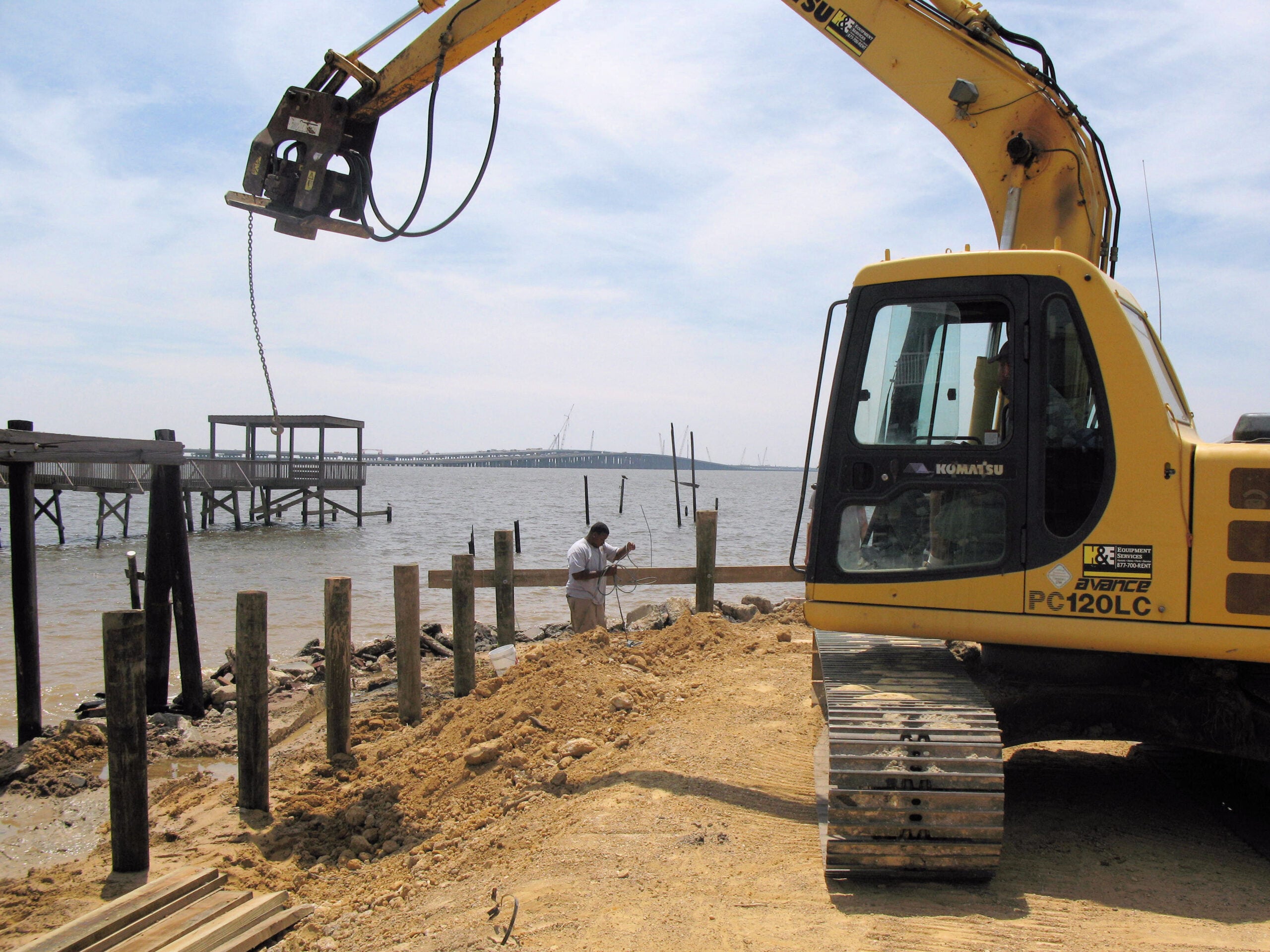
For waterfront projects, equipment logistics matter. Pile driving requires either a barge-mounted rig or land-based equipment with suitable access, and on many Gulf Coast properties, the water approach is the only practical option. Knowing this in advance allows for scheduling without surprises.
This is also the time to walk the site with your contractor and confirm any details about the finished scope, such as exactly where the dock terminates, which direction the boat slip faces, and the elevation of the finished deck relative to the existing grade. Small alignment questions that seem minor on paper can make a real difference in the usability of the finished structure.
Phase 4: Active Construction
The active construction phase is what most property owners are thinking about when they ask how long a project takes. For a typical residential dock, bulkhead, or boat lift installation, construction itself, once equipment is mobilized and on site, often moves faster than people expect.
The general sequence for most dock and pier projects:
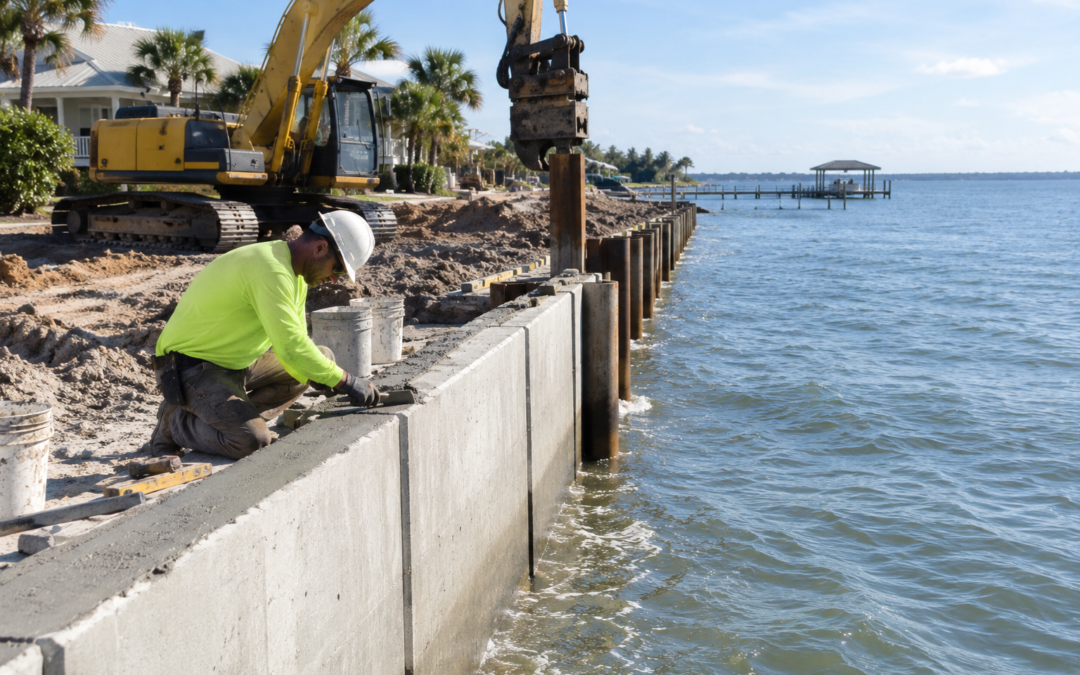
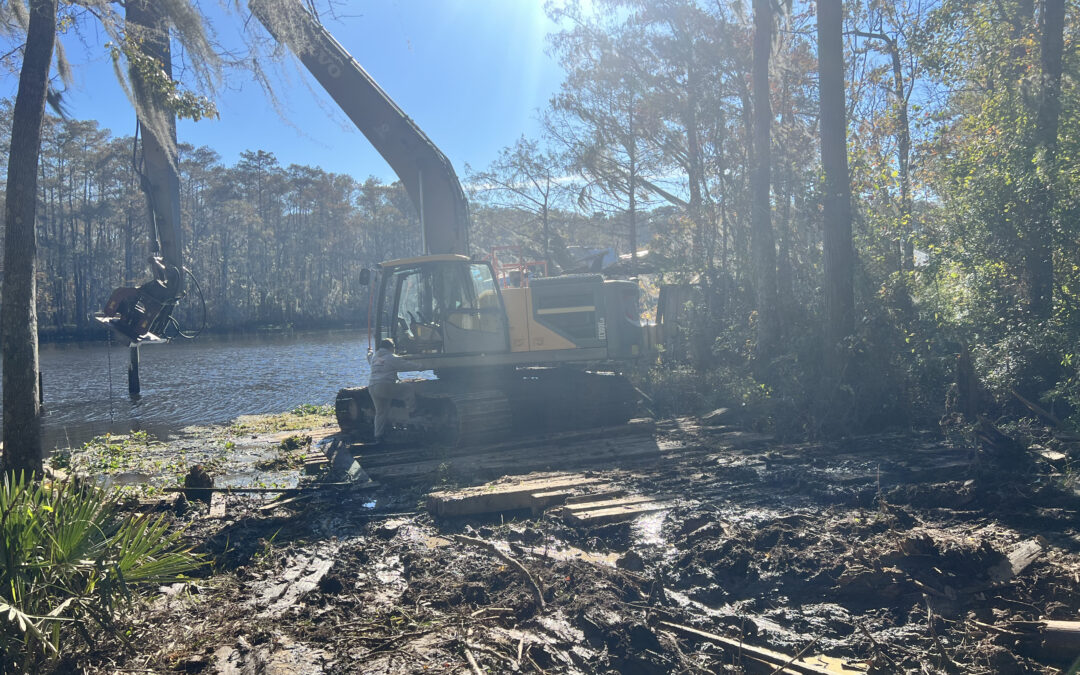
Site preparation and pile driving. Pilings are the foundation of most marine structures. For projects requiring pile-driven support, a pile-driving rig is deployed to set each piling to the required depth and bearing. This is the most equipment-intensive phase and also one of the most visible. The pile driving page covers how the process works and what affects the depth and spacing requirements for different soil conditions.
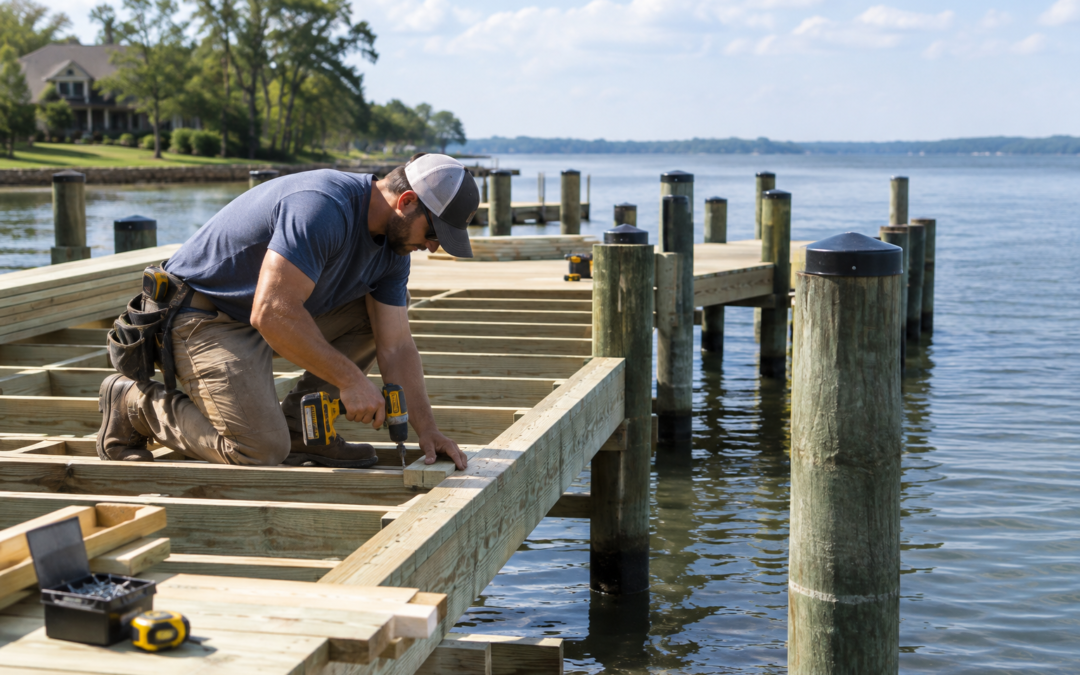
Framing and structural installation. Once pilings are set, the structural framing, including beams, stringers, and joists, is installed. This establishes the skeleton of the structure and determines its final geometry.
Decking, hardware, and finishes. Decking boards are installed across the framing, followed by hardware, cleats, railings, and any integrated accessories like lighting or kayak launches. Boat lift installation, if included in the project, typically happens during this phase as well.
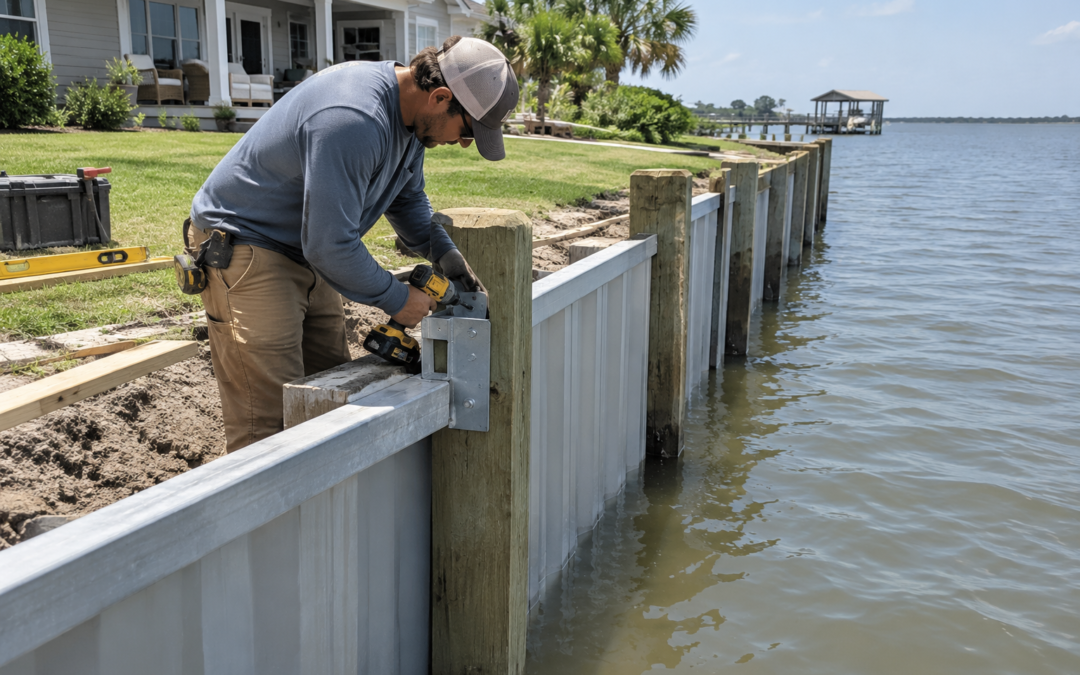
Bulkhead and seawall work. For bulkhead or seawall projects, the sequence is somewhat different, covering sheet pile or panel installation, cap forming and pouring, tieback installation, and backfill. These projects require careful attention to sequencing because the wall and anchor system need to be installed in the right order to function as designed.
Throughout active construction, most contractors will keep the property owner informed of progress and flag any field conditions that differ from what was expected during design, such as water depth variations, unexpected soil conditions, or changes in material availability. Good communication during construction is worth asking about when you are selecting a contractor. Our process page describes how Lamulle Construction approaches this.
Phase 5: Inspection, Closeout, and Handoff
Most marine construction projects require a final inspection before they are considered complete. Depending on the permit conditions, this may involve a representative from one or more of the agencies that issued permits, verifying that the structure was built per the approved plans and that any required conditions were met.
After inspection approval, the contractor does a final walkthrough with the property owner. This is the time to walk every part of the finished structure, confirm that everything is as specified, and ask about maintenance expectations. A good marine contractor will tell you what to watch for over the first season, what regular maintenance looks like, and when to call if something does not look right.
For most residential projects, that maintenance conversation is brief. Marine construction does not require the kind of ongoing hands-on involvement that a boat or a house requires. But knowing the basics of what to look for on your dock, bulkhead, or boat lift in the first year sets you up to take care of the investment you have made.
Common Questions About Timeline
How long does the whole process take? For a straightforward residential dock or bulkhead in Louisiana or Mississippi, allow three to six months from initial contact to finished structure. Permitting is typically the longest single phase. Projects with more complex scope, sensitive site conditions, or regulatory complications can take longer.
When is the best time to start planning? As early as possible before your target completion date. If you want to be on the water by summer, starting the planning and permitting process in January or February is not too early. Spring and early summer are peak seasons for marine construction on the Gulf Coast, and contractors’ schedules fill up accordingly. The when to start a marine construction project guide covers the seasonal considerations in more detail.
What causes delays? Permitting timelines are the most common source of delays, particularly when agency review times are longer than expected or when additional environmental documentation is required. Weather can also delay active construction, especially for barge-based work in rough conditions. Material lead times, particularly for specialized hardware or custom components, can occasionally affect scheduling.
Working With Lamulle Construction
Lamulle Construction has been helping property owners along coastal Louisiana and the Mississippi Gulf Coast navigate exactly this process for generations. The company was founded after World War II by EJ Lamulle, who brought pile-driving experience from Pacific dock construction home to Louisiana. That institutional knowledge of local soils, tidal conditions, permit agencies, and what works in this specific environment is what has kept the company family-owned and operating ever since.
If you are planning a dock, bulkhead, seawall, boathouse, or any other waterfront structure and want to understand what the process looks like for your specific property, contact us for a consultation. We are straightforward about timelines, honest about what permits will require, and focused on building structures that hold up in one of the most demanding coastal environments in the country.