A seawall is designed to hold back water, resist erosion, and protect the property behind it through years of tidal fluctuation, boat wake, and ordinary weather. But a hurricane is not ordinary weather, and understanding what actually happens to a seawall during a major storm, and in the weeks that follow, is essential knowledge for any Gulf Coast waterfront property owner.
Some of what a hurricane does to a seawall is visible within hours of a storm passing. The rest is hidden: voids behind the wall, loosened anchor systems, hairline cracks in panels, and erosion at the base that will not become obvious until the next heavy rain or high tide cycle. Knowing what to look for, and when, is what separates property owners who catch problems early from those who face expensive reconstruction.
What Does a Hurricane Do to a Seawall?
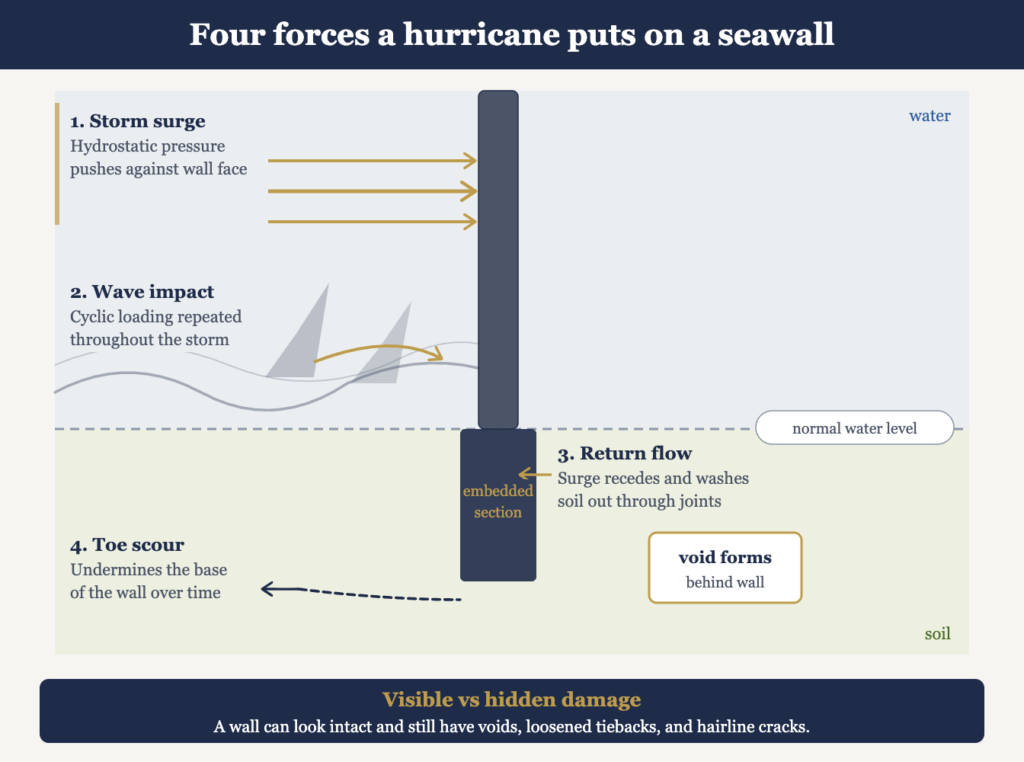
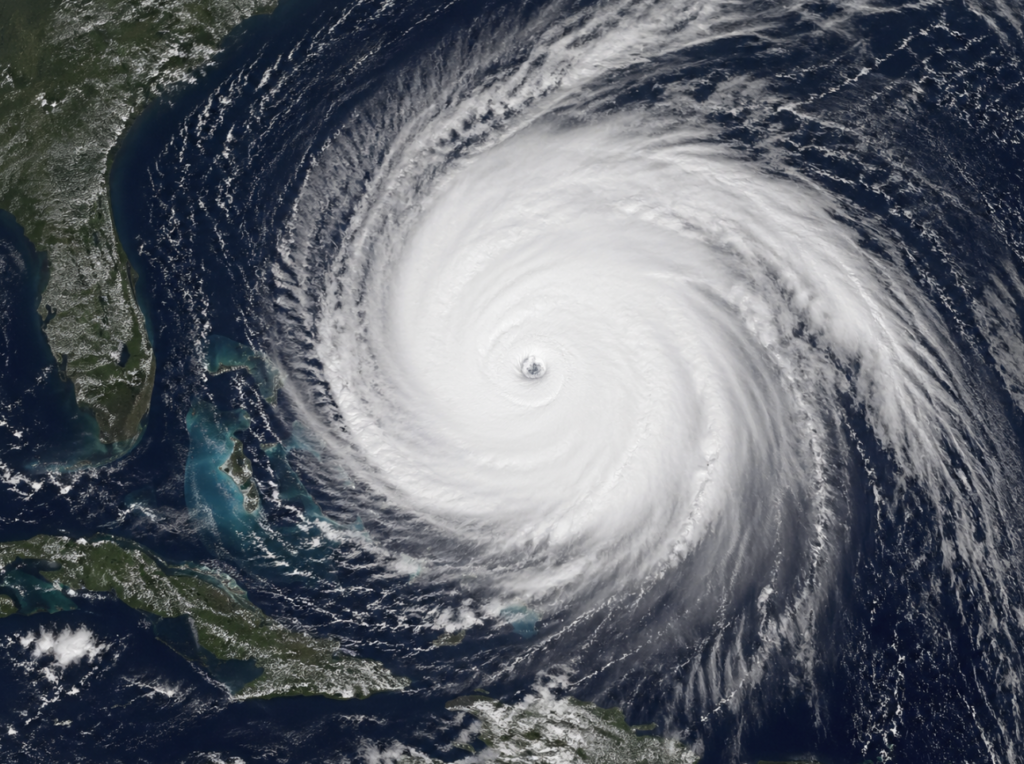
During a hurricane, seawalls face storm surge, sustained wave impact, debris strike, and bidirectional pressure loads, all forces that exceed anything the structure experiences in normal conditions. Storm surge is typically the most destructive element, pushing large volumes of water against the seaward face of the wall while simultaneously eroding the soil on the landward side if surge overtops the structure. The combination can crack panels, fail tieback systems, and scour the base of the wall in hours.
The Four Main Forces Acting on a Seawall During a Hurricane
1. Storm Surge
Storm surge is the storm-driven rise in water level above normal tide, and it is consistently the leading cause of seawall damage and failure during Gulf Coast hurricanes. When surge pushes water against the seaward face of the wall, it creates direct hydrostatic pressure, which is the force of the water mass against the structure. This load can be substantially higher than anything a well-designed wall experiences during ordinary weather.
But the damage from surge is not only about direct pressure on the wall face. Surge also overtops walls that are not tall enough, and when water runs over the top and behind the wall, it erodes the soil fill on the landward side. Lose enough fill material, and the wall loses the lateral support it depends on. The soil mass behind the wall is part of the structural system; it is not just background.
Louisiana’s Gulf Coast geography compounds this problem. The shallow continental shelf and low coastal elevation mean surge events can push water farther inland and to greater heights than the same storm would produce on a steeper coastline. A storm that produces a modest surge impact in some regions can generate severe seawall loads along the northern Gulf.
2. Wave Impact and Cyclic Loading
Storm surge raises the water level, and then waves ride on top of it. This combination of elevated water plus active wave energy means waves can strike a seawall higher on its face than they ever do during normal conditions. The impact loads from breaking waves are sudden and intense, and they are applied repeatedly throughout the duration of the storm.
Cyclic loading is what makes this especially damaging. A wall might survive a single large impact without visible failure. But the same wall subjected to repeated wave strikes over 12 to 24 hours of storm conditions accumulates stress in the panels, at connections, and in the anchor system. Cracks that form under this cyclic loading may not be immediately visible but can open further under subsequent weather events.
3. Scour at the Base and Toe
While surge and waves attack the wall face, current and turbulence scour the bottom, which is the area at the base of the wall where it meets the sea floor or bank material. This zone is called the toe, and undermining it is one of the most serious forms of hurricane damage a seawall can experience.
When soil is scoured from beneath the embedded portion of the wall, the base loses support. The wall then acts as a longer unsupported beam, and the bending stress on the panels increases dramatically. A wall that was properly embedded and stable before a storm can have its entire structural geometry changed by toe scour, even if the panels above water look intact after the storm passes.
4. The Return Flow Problem
One of the less-discussed aspects of hurricane damage to seawalls is what happens as surge recedes. When water that has overtopped and flooded the landward area begins to drain back toward the water, it flows out through any available path, including through joints, cracks, or beneath the panels. This return flow accelerates soil loss behind the wall and can widen small openings into significant gaps.
This is why seawall damage is often a two-phase event. The storm surge loads the wall. The return flow washes soil out through weaknesses created by the surge. The result is voids behind the wall that may not show at the surface for days or weeks, until a section of yard suddenly drops, pavers crack, or a visible sinkhole forms near the base of the structure.
Visible vs. Hidden Damage After a Hurricane
This distinction is one of the most important things Gulf Coast property owners need to understand about post-hurricane seawall assessment. Visible damage is straightforward: cracked or displaced panels, sections that have leaned or separated, cap damage, obvious breaches. These get attention immediately.
Hidden damage is more dangerous precisely because it does not look like anything at first. After a hurricane, a seawall can appear intact while experiencing:
- Voids behind the panels where soil has been washed out through joints or cracks
- Loosened or failed tieback connections where the surge load stressed the anchor system without causing visible movement at the wall face
- Hairline cracks in concrete panels that will allow water penetration and rebar corrosion to proceed
- Undermined base material from scour, leaving the lower portion of the wall without proper support
- Joint separation where panels have shifted slightly out of alignment, creating pathways for future soil loss
A wall that looks fine from the yard after a storm may be significantly compromised. This is why professional post-hurricane inspection matters. It is not about confirming visible damage but about finding what is not visible.
Warning Signs to Watch for After a Storm
If your property has experienced a hurricane or tropical storm, check your seawall for these indicators before concluding everything is fine:
- Small sinkholes or depressions in the ground behind the wall, which signal voids from soil loss
- New cracks in the cap or panels that were not there before the storm
- Any section of wall that appears to lean, bow, or have shifted position
- Rust staining on concrete panels, which can indicate water has reached the reinforcing steel
- Standing water behind the wall that persists after normal tides recede
- Widened gaps at panel joints, particularly near the base of the wall
- Settlement or cracking in any hardscape such as pavers, concrete slabs, or walkways near the wall
Any of these signs warrants a professional evaluation. For an overview of what seawall repair involves and when repair versus replacement makes more sense, Lamulle’s seawall resources cover that decision in detail.
What Makes a Seawall More Likely to Survive a Hurricane
Not all seawalls respond the same way to hurricane conditions. Several factors determine how well a wall holds up.
Wall height relative to expected surge. A wall that is overtopped by surge faces dramatically different loading than one that contains the surge. Design height matters, and walls built to older standards may not account for the surge levels associated with current storm patterns.
Material and construction quality. Concrete seawalls with properly embedded reinforcing steel generally perform better under cyclic wave loading than older timber or thin vinyl systems. The quality of the original construction, including embedment depth, panel thickness, and tieback spacing and specification, all influence hurricane performance.
Tieback and anchor system integrity. A wall with a properly designed and maintained deadman anchor system resists the rotational loads of surge far better than a cantilevered wall or one with corroded or undersized tiebacks. Anchor system failure is a leading cause of post-hurricane seawall collapse.
Maintenance history. Walls with unrepaired joint separation, existing cracks, or known soil loss behind them enter a hurricane in a compromised condition. The storm does not cause those issues; it reveals and accelerates them. For a full look at what well-maintained seawall systems look like, seawall construction and concrete seawall construction cover the standards that make the difference.
The Gulf Coast Context
The northern Gulf Coast presents specific seawall challenges. Soft soils, high tidal influence, and the combination of surge and wave energy in shallow coastal water create loading conditions that differ significantly from a protected inland lake or a deep-water marine environment.
Seawalls along Lake Pontchartrain, the Mississippi Sound, coastal bayous, and tidal marsh waterways in Louisiana all face this environment. Many of the seawalls in this region were built decades ago to standards that did not account for current storm frequencies or the cumulative effects of coastal subsidence and sea level change on effective wall height.
If your seawall is more than 20 years old and has not been professionally evaluated in the last several years, the period before hurricane season is the right time to schedule that inspection. Lamulle Construction has been building and evaluating seawall and hurricane and flood protection systems along this coast for generations. If you have questions about your wall’s condition or want it assessed before storm season, contact us to schedule an evaluation.