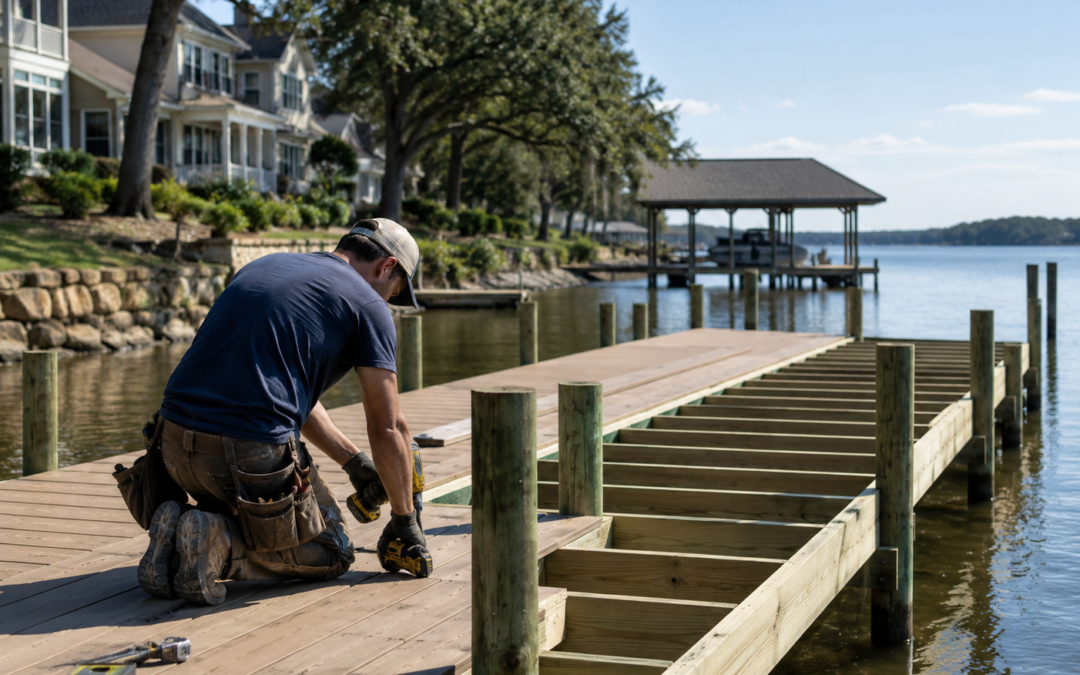
Pile driving is one of the most critical, and often misunderstood, parts of building strong foundations, especially in coastal and soft soil environments. Whether you’re constructing a dock, home, bulkhead, or commercial structure, the stability of everything above depends on what’s driven below.
At Lamulle Construction, pile driving isn’t just theory, it’s daily work shaped by Louisiana’s tides, marsh soils, and storm exposure. Understanding how it works helps property owners make better decisions about durability, safety, and long-term performance.

What Is Pile Driving in Construction?
Pile driving is the process of installing long, vertical structural elements (called piles) deep into the ground to support buildings or waterfront structures.
These piles transfer loads from the structure above into deeper, more stable soil or bedrock layers, preventing shifting, settling, or collapse. In simple terms, pile driving creates a solid foundation where surface soils alone aren’t strong enough to hold weight.
How Does the Pile Driving Process Work?
The pile driving process involves several key steps, each critical to ensuring long-term structural integrity.
1. Site Evaluation
Before any piles are driven, soil conditions are assessed. Along the Gulf Coast, this often means dealing with soft clay, sand, or marshland.
2. Selecting the Right Pile Type
Contractors choose between timber, concrete, or steel piles depending on the structure and environment.
3. Positioning the Pile
The pile is set vertically using guides or a template to ensure proper alignment.
4. Driving the Pile
Using specialized equipment, the pile is driven into the ground until it reaches the required depth or resistance.
5. Load Testing and Verification
Engineers may test the pile to confirm it can support the intended load.
Types of Pile Driving Methods
Different conditions call for different pile driving techniques. The method used can significantly affect performance, cost, and environmental impact.
Impact Pile Driving
This is the most traditional method, using a heavy hammer to drive piles into the ground.
- Best for dense soils
- High driving force
- Common in marine and structural work
Vibratory Pile Driving
This method uses vibrations to reduce soil resistance, allowing the pile to slide into place.
- Ideal for sandy or loose soils
- Faster and quieter than impact driving
- Common for sheet pile driving
Press-In (Hydraulic) Methods
Used in sensitive environments where noise and vibration must be minimized.
- Low noise
- Minimal soil disturbance
- Slower but precise
Types of Piles Used in Construction
Choosing the right material is just as important as the driving method.
Timber Piles
- Common in residential and marine construction
- Cost-effective
- Naturally resistant to water when treated
Concrete Piles
- High strength and durability
- Ideal for heavy loads
- Resistant to corrosion
Steel Piles
- Extremely strong
- Used in deep foundations and commercial projects
- Ideal for challenging soil conditions
Sheet Piles
- Interlocking panels used for retaining walls and bulkheads
- Common in coastal and waterfront construction
Pile Driving Equipment Explained
Pile driving equipment varies depending on the job, but most systems include these core components.
Pile Driving Hammer
The hammer delivers the force needed to drive the pile into the ground.
Types include:
- Diesel hammers
- Hydraulic hammers
- Air/steam hammers
Leads and Rig
These guide the pile and hammer, ensuring vertical alignment during driving.
Crane or Excavator
Used to position piles and operate the hammer system.
Vibratory Drivers
Specialized equipment used for vibratory pile driving and sheet piles.
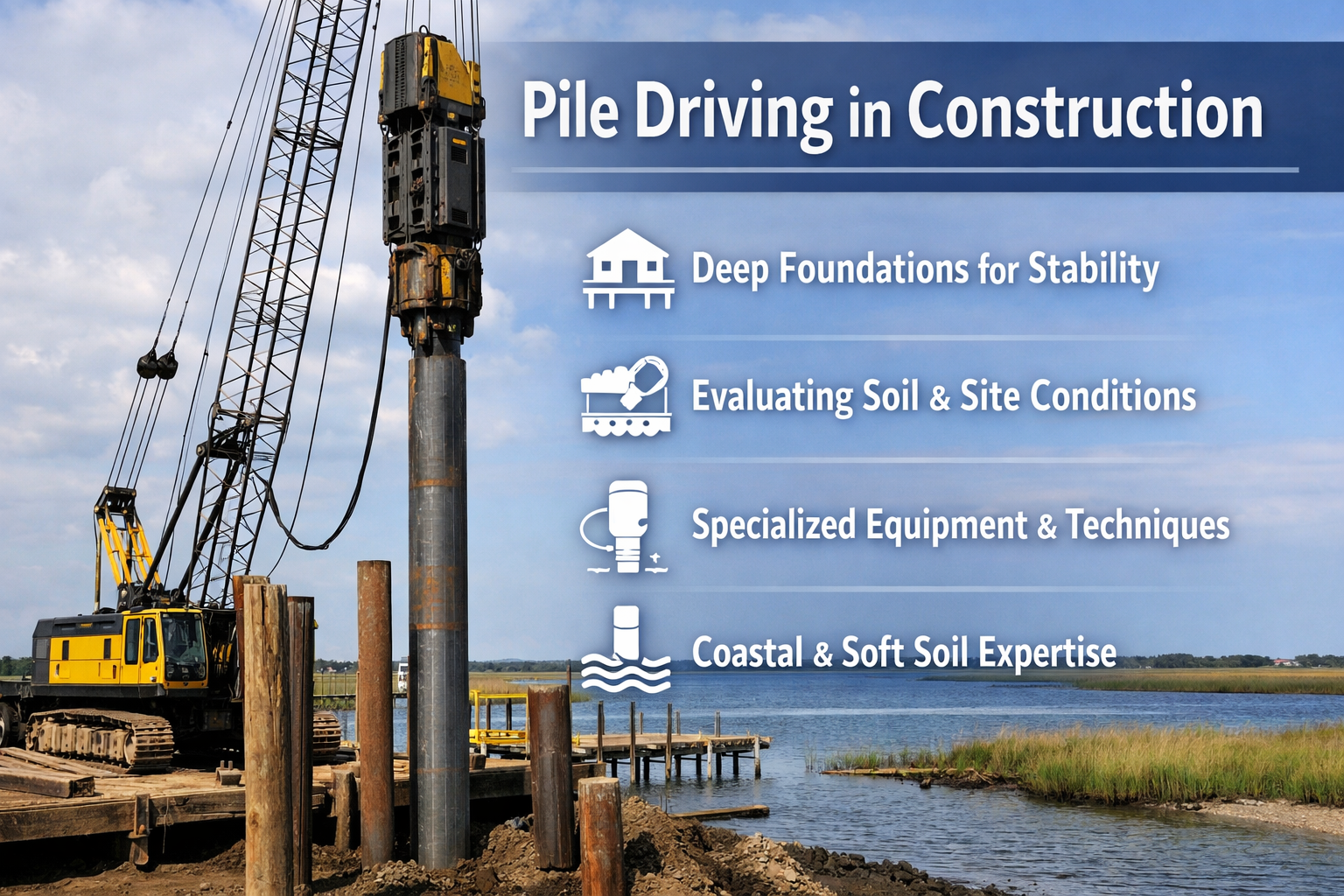
Marine and Coastal Pile Driving
Marine pile driving presents unique challenges that inland construction doesn’t face.
Key Considerations:
- Tides and water levels
- Wave action and storm surge
- Corrosion from saltwater
- Soft, shifting soils
Along Louisiana’s coast, piles must be driven deeper and often spaced strategically to withstand hurricanes and long-term erosion.
This is where experience matters, knowing how soil behaves in marshes versus open water can make the difference between a structure that lasts decades and one that fails early.
Pile Driving in Soft Soil Conditions
Soft soil is one of the most common reasons pile driving is required in the first place.
Challenges:
- Low load-bearing capacity
- High water content
- Settlement risk
Solutions:
- Driving piles deeper to reach stable layers
- Using longer or wider piles
- Selecting appropriate driving methods (often vibratory or impact)
In coastal Louisiana, this is the norm—not the exception.
Residential vs. Commercial Pile Driving
Pile driving isn’t just for large infrastructure projects. It’s widely used in residential construction, especially along the water.
Residential Pile Driving
- Elevated homes and camps
- Private docks and piers
- Boat lifts
Commercial Pile Driving
- Bridges and highways
- Ports and marinas
- Industrial facilities
The principles are the same, but scale, engineering requirements, and equipment differ.
Pile Driving Techniques That Improve Longevity
Experienced contractors don’t just drive piles, they optimize for durability.
Key Techniques:
- Proper spacing and alignment
- Driving to refusal (maximum resistance)
- Using treated or coated materials
- Accounting for future erosion or sea-level changes
These details aren’t always visible, but they determine how long a structure lasts.
Pile Driving Cost: What to Expect
Pile driving costs can vary widely depending on several factors.
Major Cost Factors:
- Type of pile (timber, steel, concrete)
- Soil conditions
- Water access and location
- Equipment required
- Depth and number of piles
Typical Cost Ranges:
- Residential projects: moderate cost per pile
- Marine projects: higher due to access and complexity
- Commercial jobs: significantly higher due to scale
While it may be tempting to cut costs, foundation work is not the place to compromise. Repairs are far more expensive than doing it right the first time.
Choosing the Right Pile Driving Contractor
Not all pile driving companies are equal, especially when it comes to coastal construction.
What to Look For:
- Experience in similar soil conditions
- Marine construction expertise
- Proper equipment and crews
- Understanding of local regulations and permits
A contractor familiar with Gulf Coast conditions brings knowledge you won’t find in a generic construction company.
Lamulle Construction traces its roots back to post-WWII rebuilding efforts after the 1947 hurricane, when pile driving expertise was essential to restoring homes and waterfront structures.
Common Applications of Pile Driving
Pile driving is used across a wide range of construction projects:
- Dock and pier construction
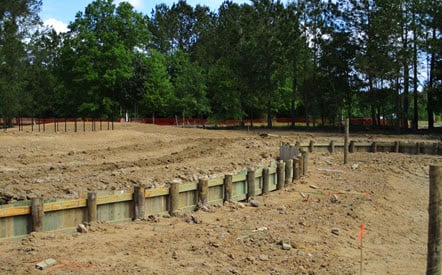
- Bulkheads and retaining walls
- Elevated homes
- Bridges and infrastructure
- Industrial marine facilities
If the ground isn’t stable, pile driving is often the solution.
Pile driving is a foundational construction process that installs deep structural supports to stabilize buildings in weak or coastal soils. It involves evaluating site conditions, selecting appropriate pile materials, and using specialized equipment to drive piles to a stable depth. Different methods and materials are used depending on soil type, environmental conditions, and project scale, especially in marine and soft soil environments. When done correctly by experienced contractors, pile driving ensures long-term durability, safety, and resistance to settling or structural failure.