One of the first questions every property owner asks when considering a pier is what it will cost. It is also one of the hardest questions to answer without a site visit, because pier construction costs on the Gulf Coast vary enormously based on factors specific to each property. Two piers that look similar from the shore can cost dramatically different amounts once you account for water depth, bottom conditions, materials, and permitting requirements.
Understanding what actually drives pier construction pricing helps you have a more productive conversation with your contractor, budget realistically, and avoid the frustration of a quote that seems disconnected from what you expected. This guide breaks down the real cost drivers behind pier construction on the Louisiana and Mississippi Gulf Coast.
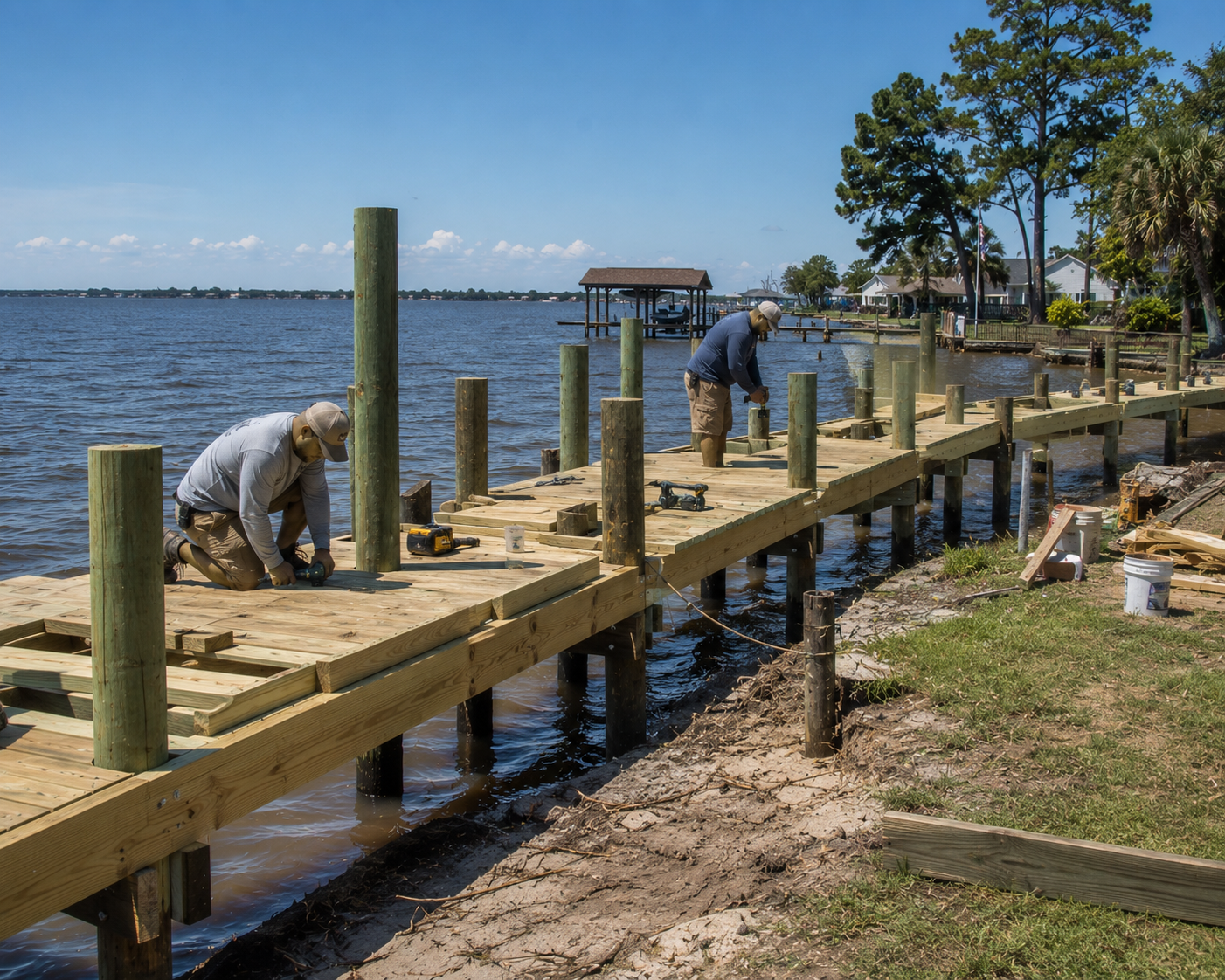
What Is the Difference Between a Pier and a Dock?
Before getting into cost, it helps to clarify terminology, since pier and dock are often used interchangeably even though they describe somewhat different structures. A pier is typically a fixed structure that extends from the shore over the water, often supported on pilings, and is used for walking, fishing, or providing access to deeper water. A dock is generally understood as a structure specifically designed for mooring and accessing boats, though it may share the same basic construction as a pier.
In practice, many Gulf Coast waterfront structures serve both functions, and the cost drivers discussed here apply to both types of construction. For more on the distinction, see our pier versus dock comparison.
Cost Driver 1: Length and Overall Size
The most straightforward cost driver is simply how much structure you are building. A longer pier requires more pilings, more framing material, and more decking than a shorter one. On much of the Gulf Coast, particularly the shallow north shore of Lake Pontchartrain, piers often need significant length to reach water deep enough for practical use, which directly increases material and labor costs.
Width also matters. A narrow pier intended primarily for walking access costs less per linear foot than a wider structure designed to accommodate multiple people, furniture, or a covered structure.
Cost Driver 2: Water Depth and Bottom Conditions
The depth of water at your site and the composition of the lake or bay bottom significantly affect construction cost. Pilings need to be driven to sufficient depth below the mudline to achieve stable embedment, and that required depth varies with soil type. Soft mud and silt, common throughout much of coastal Louisiana, require deeper pile penetration than firmer sand or clay bottoms to achieve the same load-bearing capacity.
Sites with unusually soft or unstable bottom conditions may require specialized piling techniques, additional bracing, or longer pilings than a standard installation, all of which add to the project cost.
Cost Driver 3: Piling Material and Count
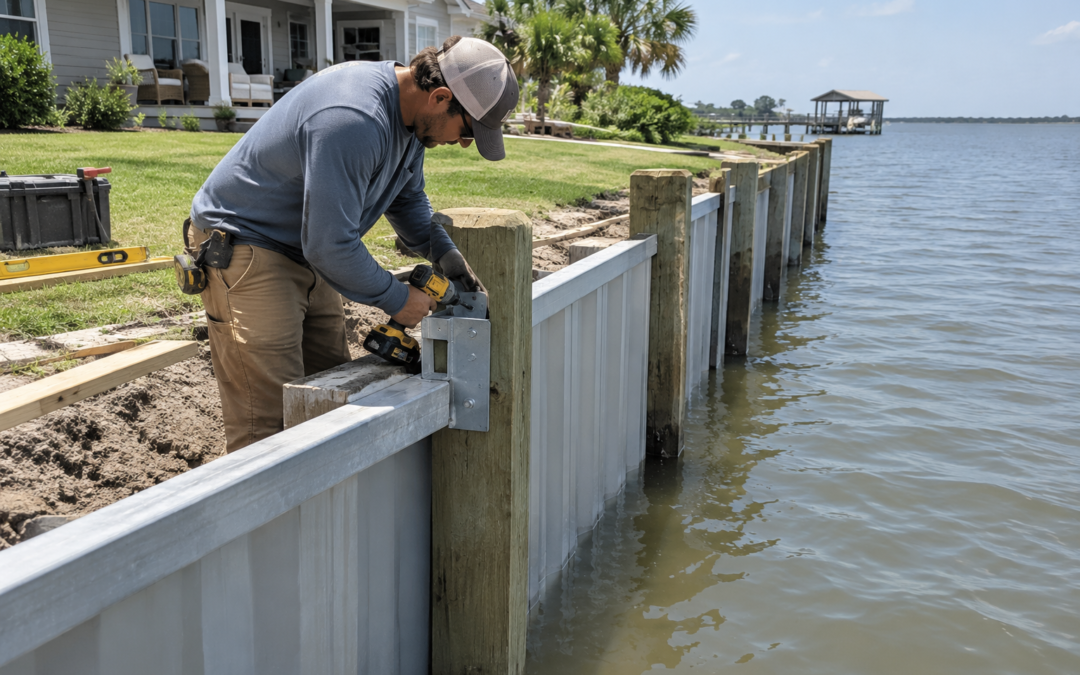
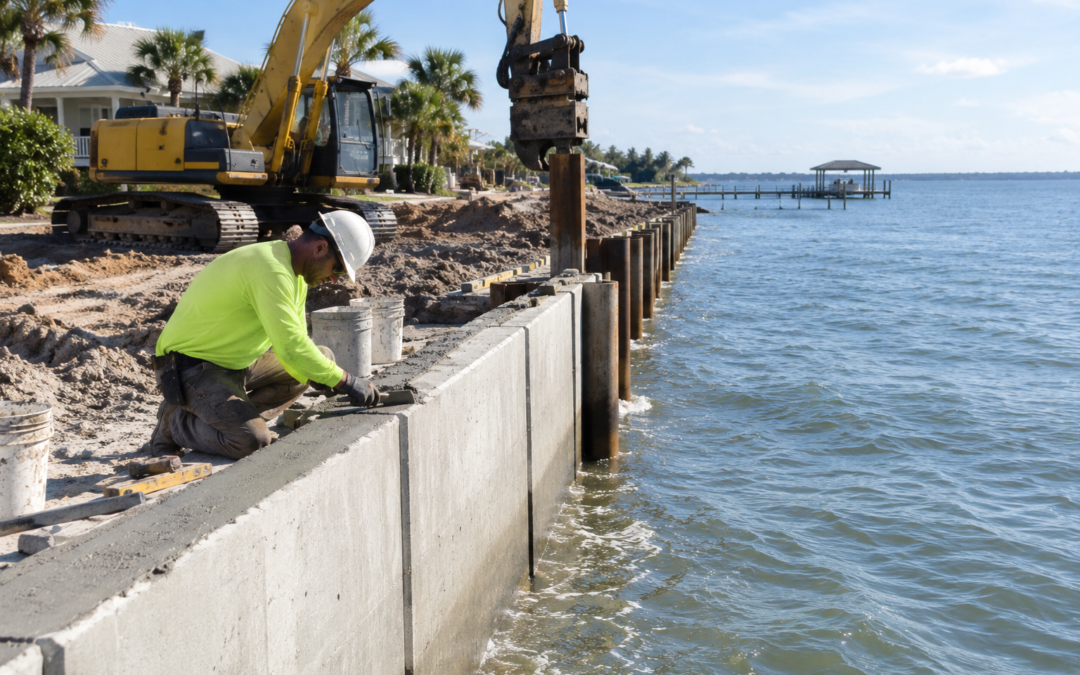
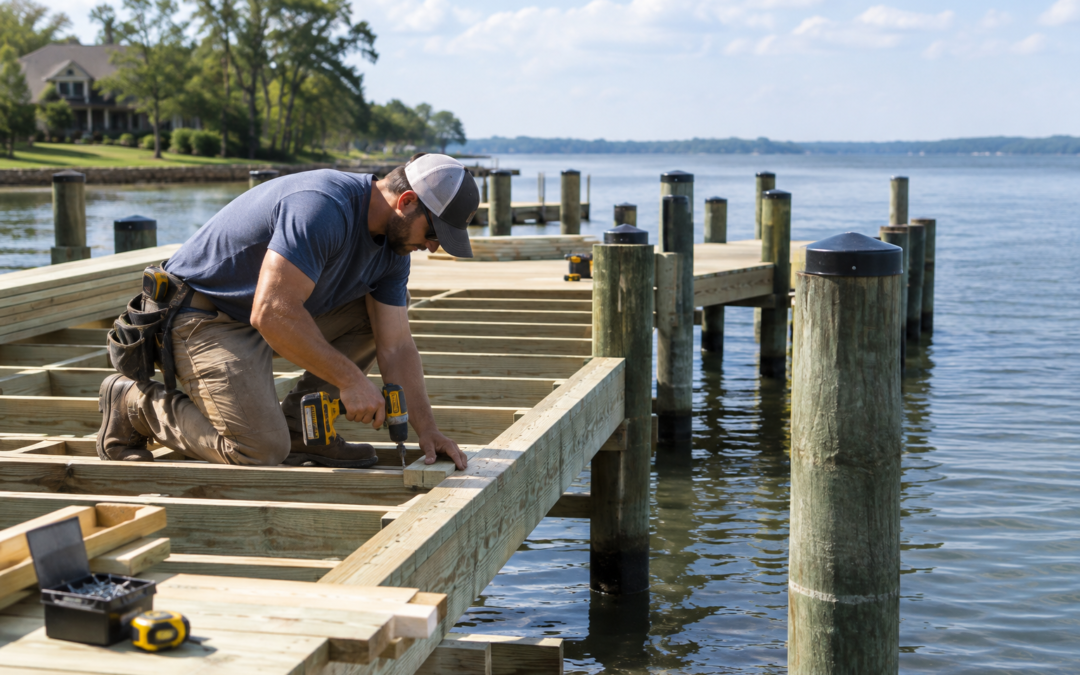
Pilings can be timber, concrete, steel, or in some cases helical piles, and each material carries a different cost profile. Pressure-treated timber pilings remain the most common and generally most economical choice for residential pier construction. Concrete pilings cost more but offer greater durability and load capacity for larger structures or higher-exposure sites.
The number of pilings required depends on the pier’s length, width, and the load it needs to support. Piers designed to support heavier loads, such as a covered structure or a boat lift, require additional pilings or a more robust piling layout than a simple walking pier.
Cost Driver 4: Decking and Framing Material Choices
Pressure-treated lumber is the standard, cost-effective choice for pier decking and framing. Composite decking materials cost significantly more upfront but require less ongoing maintenance and resist the UV and moisture degradation that wood surfaces experience over time in the Gulf Coast climate.
The framing hardware also matters. Galvanized fasteners cost less than stainless steel but have a shorter service life in brackish or saltwater environments.
Cost Driver 5: Site Access and Equipment Mobilization
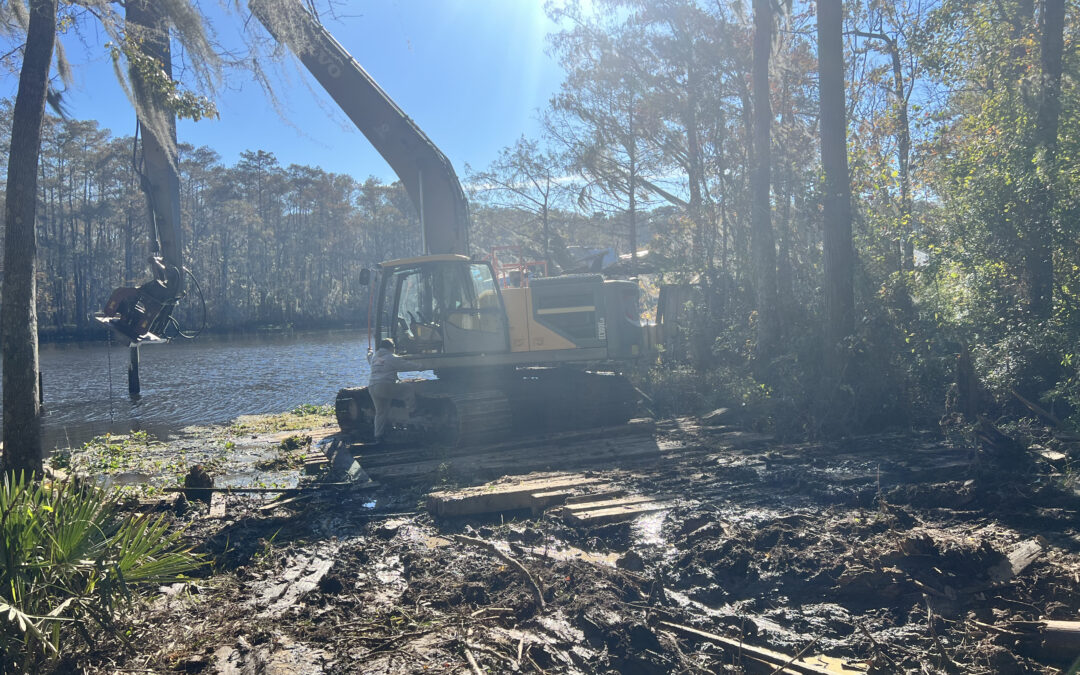
How easily equipment can reach your construction site affects cost. Properties with good land access for equipment typically see lower mobilization costs than properties requiring barge-based construction access. Remote or difficult-to-reach sites add mobilization expense that is reflected in the overall project cost.
Cost Driver 6: Permitting Requirements
Permitting costs are not always included in a contractor’s construction estimate, but they are a real cost of the project. Army Corps of Engineers permits, state coastal use permits, and local building permits may all apply depending on your location and the scope of work. Permit application fees, required engineering documentation, and the time investment in managing the permitting process all factor into the total project cost.
Cost Driver 7: Accessory Features
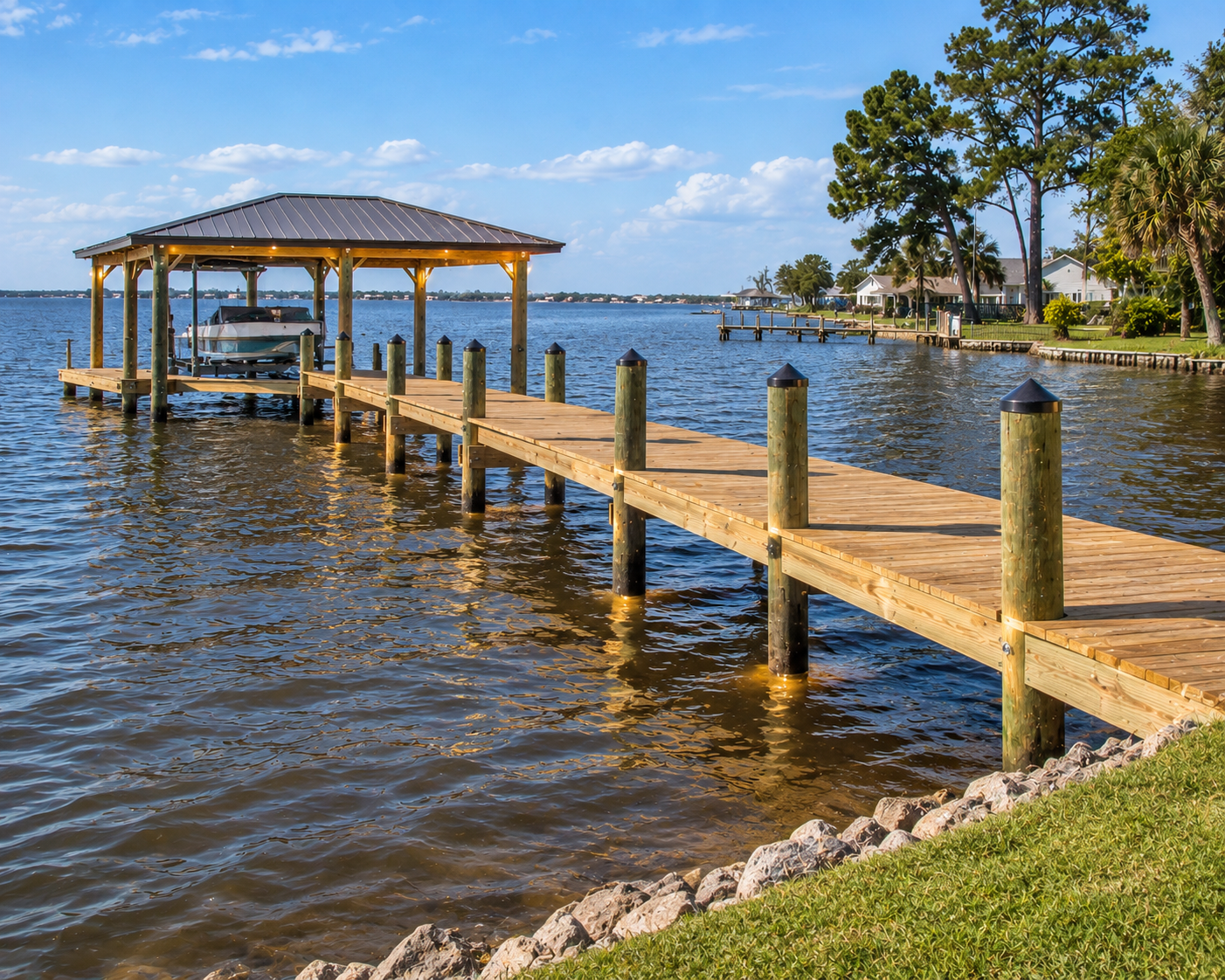
Additions such as boat lifts, covered structures, built-in seating, lighting, electrical service, or finger piers all add to the base cost of pier construction. If you know you want these features, including them in your initial design and construction scope is typically more cost-effective than adding them as a separate project later.
How to Get an Accurate Cost Estimate
Given how many variables affect pier construction cost, the only way to get an accurate number for your specific project is a site assessment. A qualified contractor will evaluate your water depth, bottom conditions, access, and design goals, and provide a detailed estimate based on your property’s actual conditions rather than a generic per-foot price.
Be cautious of quotes that seem significantly lower than others for a similar scope of work. Low bids sometimes reflect lower-grade materials, undersized piling specifications, or a scope that does not fully account for site conditions.
Build Your Pier with a Team That Knows the Gulf Coast
Pier construction pricing depends on real variables specific to your property, and the only way to get a number you can trust is a contractor who actually assesses your site rather than quoting off a generic per-foot rate. Lamulle Construction has been building piers and docks across the Louisiana and Mississippi Gulf Coast since the company was founded post-WWII by EJ Lamulle, and today David and John Lamulle bring that same firsthand knowledge of local water depths, bottom conditions, and permitting requirements to every project. Contact us for a site visit and a straightforward estimate built around what your property actually needs.