Hurricane season officially runs through the end of November, and by September, Gulf Coast property owners have typically already weathered several named storms. Whether your dock experienced a direct hit or simply endured months of elevated wave action, tidal surge, and heavy weather, the end of the active season is the right time to give it a thorough look.
The challenge with dock damage after a storm is that it is not always obvious. A dock can appear completely normal from a casual glance while carrying structural stress that will show up as a failure months later.
Why Post Storm Dock Inspection Matters
A dock that survives a hurricane without visible damage has not necessarily survived without stress. Wave action, surge, and wind loading place forces on pilings, framing connections, and hardware that exceed anything the structure experiences during normal use. Delaying assessment means small issues have more time to worsen before you catch them.
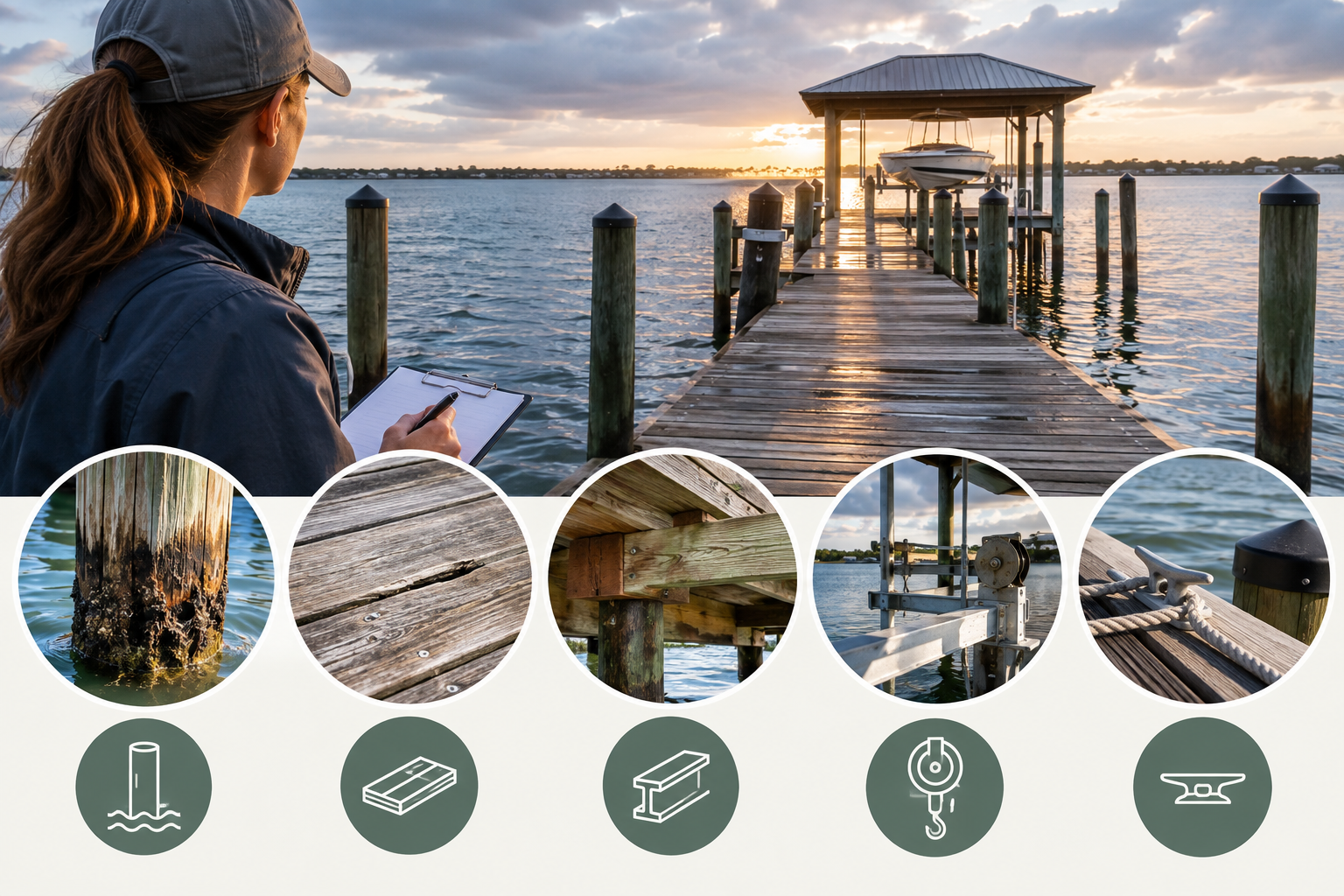
Step 1 – Inspect the Pilings
Walk the length of your dock and visually inspect each piling above the waterline for cracking, splitting, or damage. For a thorough check, use a boat to approach pilings from the water and probe them at and below the waterline with a screwdriver. Wood that has softened due to rot or boring organism activity will allow the tool to penetrate easily. Check also for pilings that have shifted position or are no longer plumb.
Step 2 – Check All Structural Connections
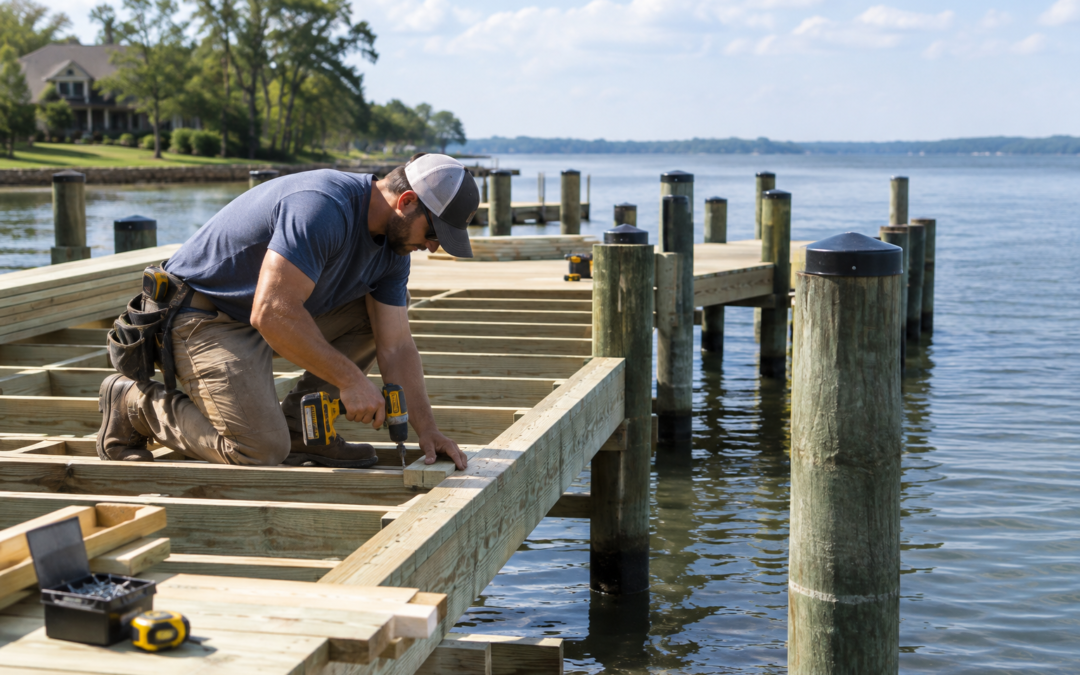
Inspect every visible connection point for loosened bolts, cracked wood around fasteners, or separation between framing members. Pay particular attention to connections near the shoreline end of the dock and at any point where the dock changes direction or width.
Step 3 – Examine the Decking
Look for boards that have cracked, split, or pulled away from their fasteners. Check for boards that feel spongy or soft underfoot, which indicates water intrusion and the start of rot. Check the underside of decking for debris damage if your dock experienced surge or wave overtopping.
Step 4 – Assess Hardware and Fasteners
Cleats, brackets, and any metal hardware should be checked for looseness, corrosion, or damage. Boat lift hardware deserves particular attention, including cable systems, pulleys, and mounting brackets.
Step 5 – Look for Signs of Shoreline Erosion
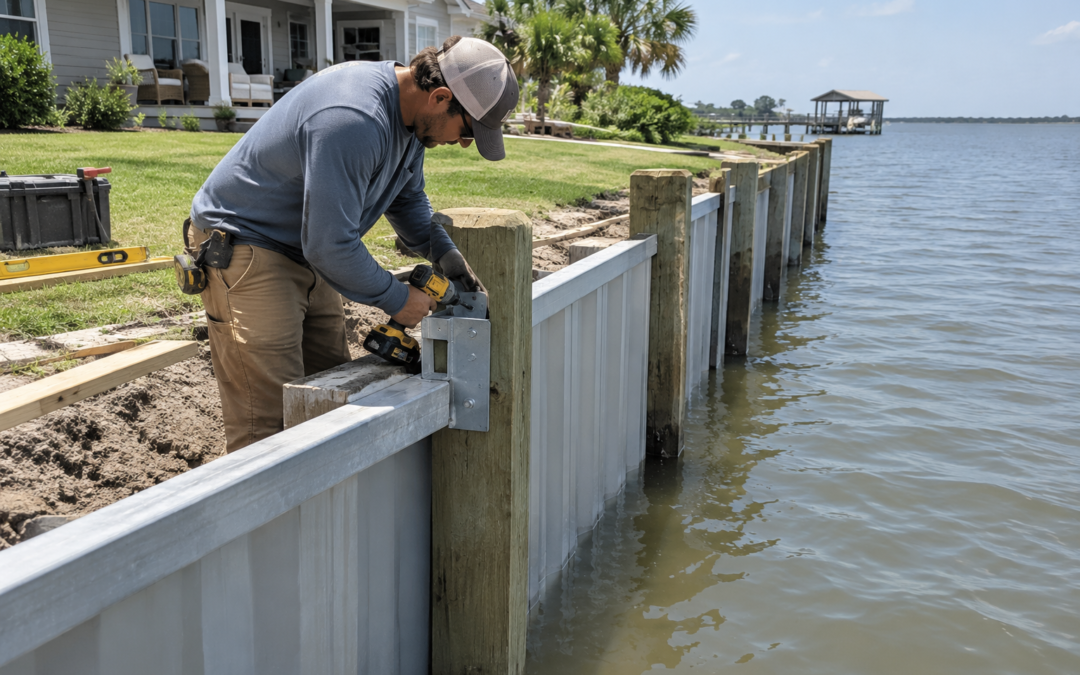
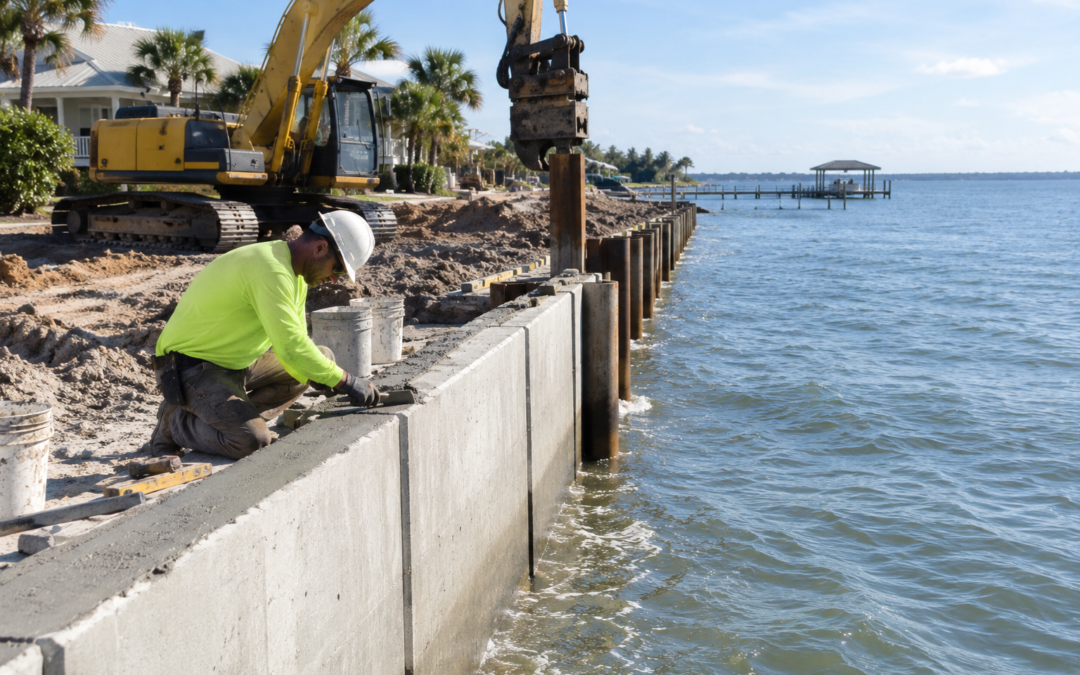
Check the area around where your dock meets the shore for erosion, exposed pilings that were previously buried, or changes in water depth. If your property has a seawall or bulkhead, check it at the same time using our seawall repair (https://lamulle.com/seawall-repair/) guide.
Step 6 – Check Boat Lift Function and Alignment
Cycle the lift through its full range of motion and listen for unusual sounds, watch for uneven movement, and confirm that the lift is still level and properly aligned.
Step 7 – Document Everything You Find
Photograph any damage or areas of concern with the date visible. Compare your findings against any pre storm photos or inspection records you have.
When to Call a Professional
Pilings that probe soft below the waterline, structural connections that have separated, or a dock that feels less stable than before the storm season began all warrant a call to a qualified marine contractor. Our dock repair team conducts thorough post storm assessments across the Gulf Coast.