Biloxi sits on a narrow peninsula between the Mississippi Sound to the south and Back Bay to the north, making it one of the most water-surrounded communities on the Gulf Coast. That geography is exactly what draws people here: beach access, bay access, boating, fishing, and a waterfront lifestyle that is hard to replicate inland. It is also what makes seawall maintenance a non-negotiable part of owning waterfront property in this city.
Biloxi’s waterfront structures face pressure from two directions simultaneously. The Sound side delivers direct wave energy, tidal fluctuation, and storm surge exposure. The Back Bay side deals with tidal pressure, boat wake from the busy marine traffic corridor, and the slower but persistent erosion that brackish bay water inflicts on unprotected or poorly maintained shoreline structures.
Most seawalls and bulkheads do not fail overnight. They deteriorate gradually, giving property owners a window to catch problems early and repair them before they become full replacements. This guide covers what seawall repair in Biloxi actually involves, when it makes sense versus replacement, and what to look for when assessing your structure.
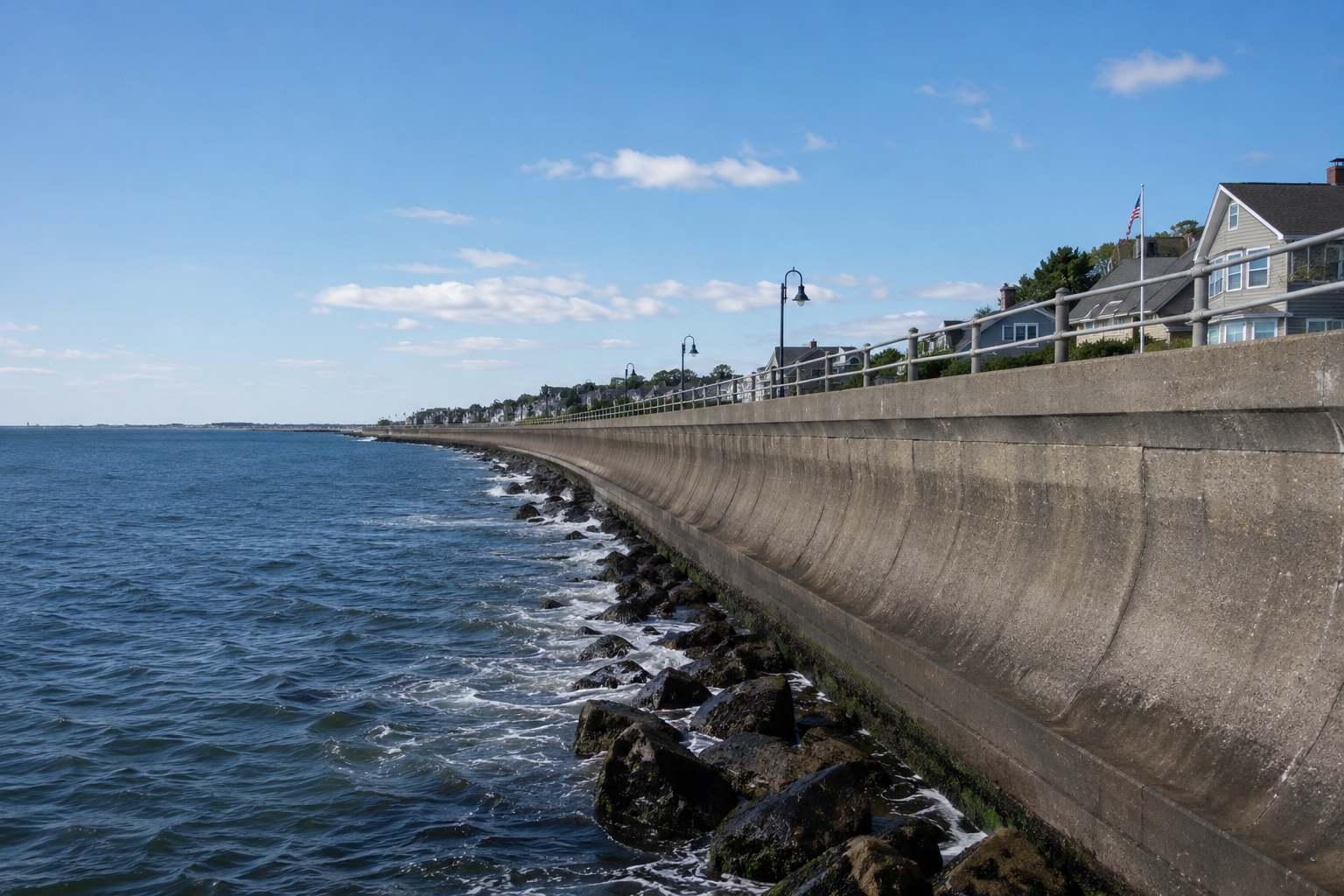
Why Biloxi Seawalls Deteriorate Faster Than Most
Double-sided exposure. A property on the peninsula is often catching tidal movement and wave energy from both the Sound and the bay. This means seawall structures experience more loading cycles per day than a single-exposure site. More cycles equals more wear, and it equals more opportunities for water to find and exploit weaknesses in the wall.
High vessel traffic. Biloxi’s position on the Gulf Coast, combined with its active casino and commercial waterfront, generates significant vessel traffic in Back Bay and along the Sound shoreline. That traffic creates consistent boat wake that works against any seawall not built to handle it.
Post-Katrina construction age. Like Pass Christian, much of Biloxi’s waterfront infrastructure was rebuilt after Hurricane Katrina in 2005. Walls built in 2006 and 2007 are now approaching 20 years of service, within the window where first-generation repairs are often needed.
Sand and shell substrate. Biloxi’s coastal substrate is a mix of sand, shell, and soft sediment. This substrate erodes readily under wave and tidal action and provides less lateral resistance for wall anchoring systems than clay-rich soils. Scour at the base of walls is common.
Common Seawall Repair Types in Biloxi
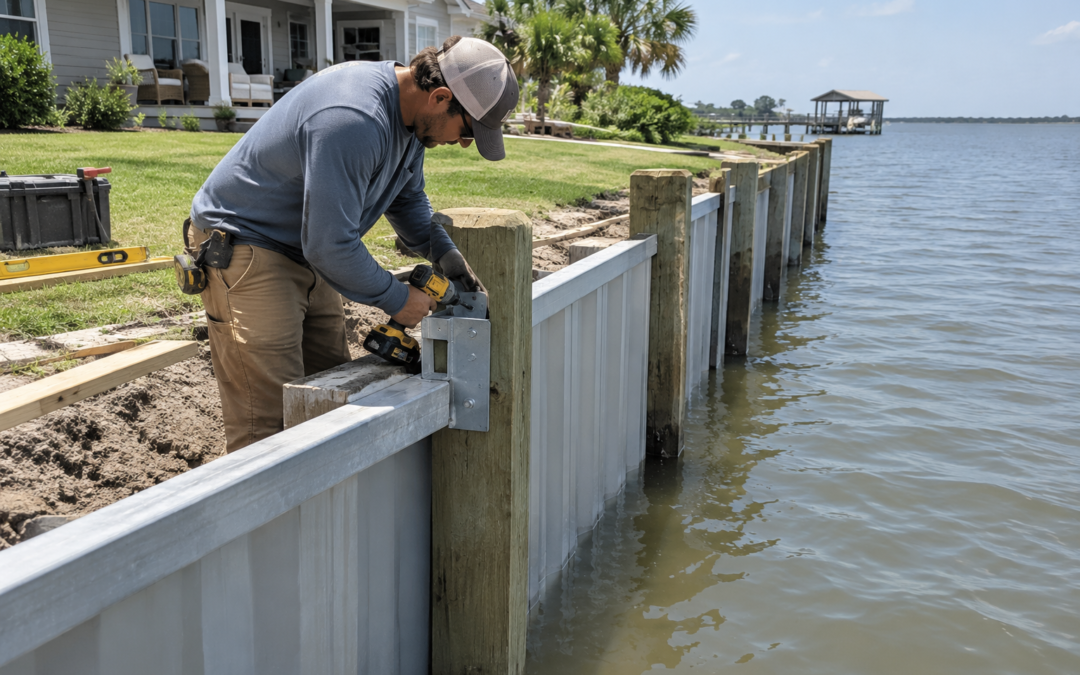
- Tie-back anchor replacement and reinforcement. The tie-back system is what holds the wall against the lateral pressure of the soil behind it. In Biloxi’s sandy substrate, original tie-backs can lose holding capacity over time as the surrounding soil shifts or the hardware corrodes. New helical tie-back anchors can be installed to restore the wall’s resistance to bowing without requiring full panel replacement.
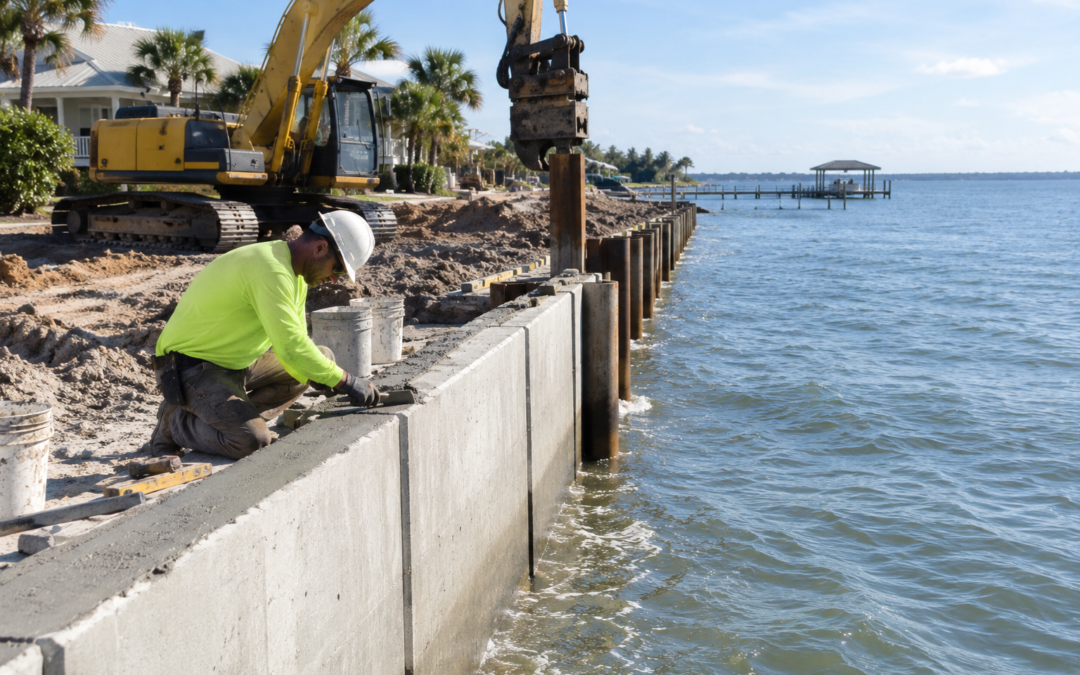
- Panel crack repair and joint sealing. For concrete seawalls, isolated panel cracking can be addressed with epoxy injection or surface patching. Failed joints between panels, which allow water and soil to migrate through the wall, can be sealed with flexible sealant appropriate for the marine environment.
- Scour protection installation. For walls showing signs of toe scour, placing riprap or articulated concrete mat at the base of the wall stops the undermining process. Biloxi’s sandy substrate makes scour protection a common addition to any seawall repair project here.
- Cap replacement. The wall cap is the top section that sits above the waterline, and it takes the most weather exposure of any component. Replacing a deteriorated cap while leaving the structural sheet piling in place is a targeted repair that extends the wall’s overall service life at moderate cost.
- Drainage restoration. Weep holes in seawalls can become clogged with silt, debris, or biological growth over time. Blocked drainage causes hydrostatic pressure to build behind the wall, which accelerates bowing and joint failure. Our seawall repair team addresses drainage as part of every full-wall assessment.
When Repair Is the Right Call and When It Is Not
Repair makes sense when:
– The damage is localized to one section of the wall rather than distributed across the full length
– The sheet piling or concrete panels are still structurally sound below the damaged area
– The wall is within the first two thirds of its expected service life
– The anchor system failure is the primary issue and the wall face itself is in good condition
Replacement makes sense when:
– Deterioration is widespread across the full length of the wall
– The wall material has reached or exceeded its service life
– Multiple failure types are present simultaneously
– The original construction used materials no longer appropriate for the environment
– A storm event has caused collapse or severe structural compromise in multiple sections
Our seawall construction team handles both repair and full replacement and will give you a straightforward recommendation based on what your wall actually needs.
The Seawall Repair Process in Biloxi
Step 1: Site assessment. The process starts with a thorough inspection of the wall from both the water and land side, examining for cracking, rust staining, bowing, voids, and scour.
Step 2: Permitting. Depending on the scope of the work, permits may be required from the Mississippi Department of Marine Resources, the Army Corps of Engineers, or the City of Biloxi.
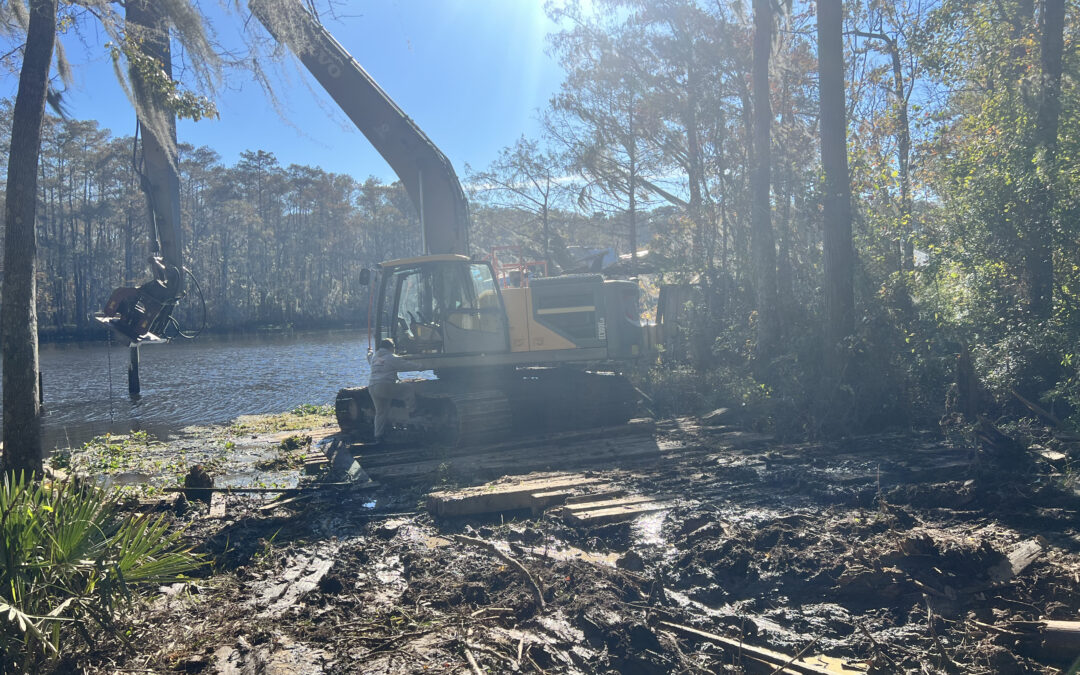
Step 3: Mobilization and access. Seawall repair in Biloxi typically requires barge-mounted equipment for waterside access, particularly for tie-back installation, scour protection, and any work below the waterline.
Step 4: Structural repairs. Tie-back installation, panel patching, joint sealing, and scour protection are completed in sequence, with each element stabilizing the wall before the next repair is addressed.
Step 5: Cap and drainage restoration. Cap replacement and drainage clearing are typically completed after structural work is done.
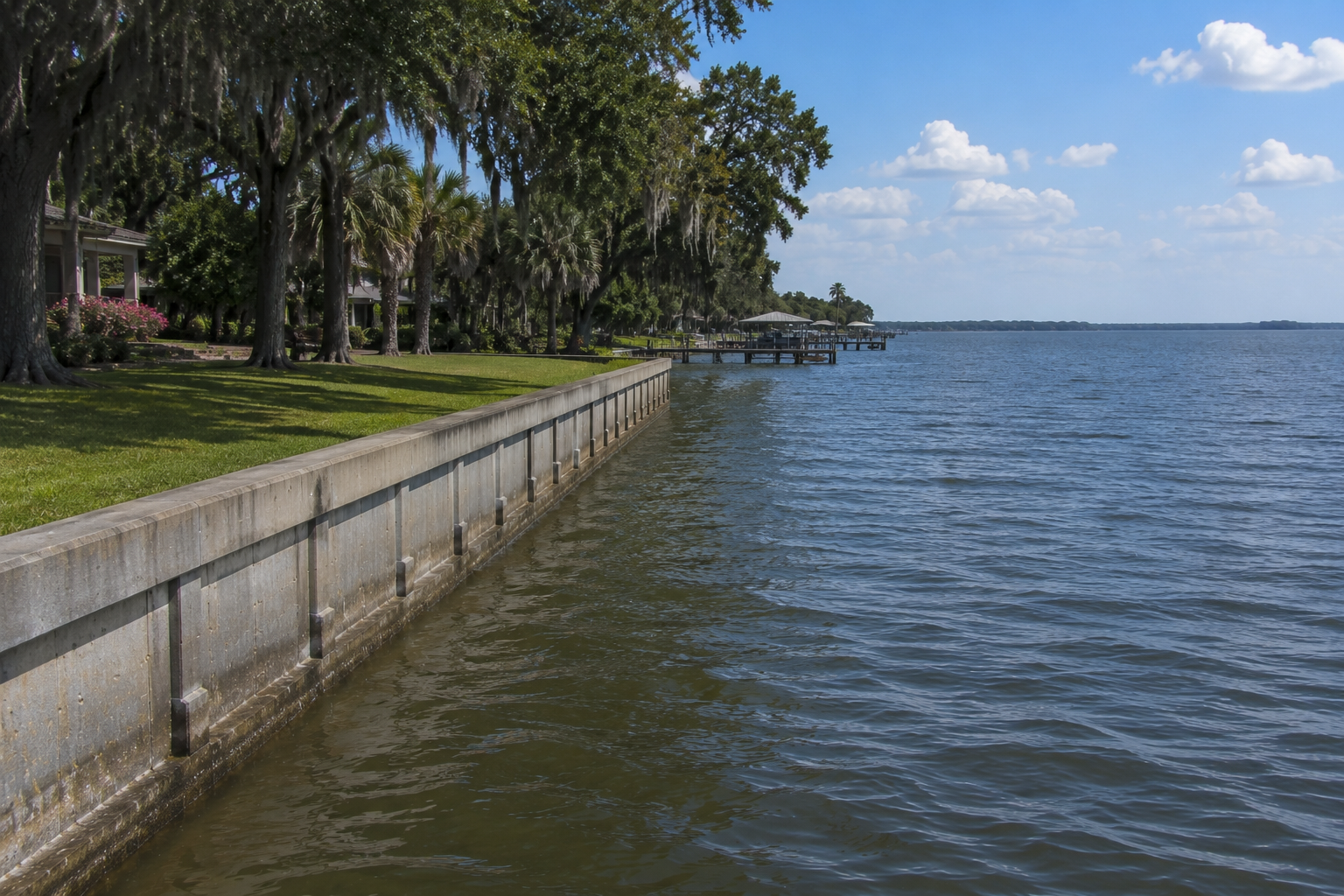
Protecting Your Biloxi Waterfront Investment Long-Term
For Biloxi waterfront properties specifically, the annual inspection window before hurricane season, roughly February through April, is the right time to assess your seawall and complete any needed repairs.
Lamulle Construction serves the Biloxi waterfront and the broader Mississippi Gulf Coast. If your seawall is due for an inspection or if you’ve spotted signs of deterioration, reach out to schedule an assessment before the next storm season.