New Orleans sits at one of the most geographically complex points on the Gulf Coast. The city is surrounded by water on nearly every side: Lake Pontchartrain to the north, the Mississippi River to the south, and a network of canals, bayous, and backwater channels threading through every neighborhood. For waterfront property owners in this environment, shoreline protection is not optional. It is the foundation everything else is built on.
Bulkheads are the primary tool for that protection. A properly built and maintained bulkhead holds your shoreline in place, deflects wave energy, and prevents the kind of slow-motion land loss that has swallowed entire neighborhoods across coastal Louisiana. Without one, your property is losing ground every day, sometimes visibly and sometimes in ways you won’t notice until the damage is already severe.

What Are Bulkheads and Why Do New Orleans Properties Need Them?
A bulkhead is a retaining wall built along a shoreline to hold soil in place and resist the lateral pressure of water. It creates a defined edge between your land and the water, preventing erosion, wave wash, and the gradual undermining of structures built near the water’s edge. New Orleans waterfront properties need bulkheads because the combination of subsidence, boat wake, tidal fluctuation, and storm surge creates erosion pressure that bare shorelines simply cannot withstand over time.
The Unique Erosion Challenges Facing New Orleans Waterfront Properties
New Orleans presents a set of erosion challenges that are unlike almost anywhere else in the country. Understanding them is the first step toward choosing the right solution for your property.
- Land subsidence. Much of New Orleans sits below sea level and continues to sink slowly each year. This subsidence shifts the relationship between your property and the waterline constantly. A bulkhead that was perfectly positioned five years ago may now be sitting lower relative to the water than it was originally designed for. Regular inspection and occasional adjustment are part of ownership here.
- Boat wake. The canals and waterways running through New Orleans and its surrounding neighborhoods carry significant vessel traffic. Every boat that passes your property generates wake, and that wake hits your shoreline repeatedly throughout the day. Over time, the cumulative effect of wake erosion on an unprotected bank is dramatic. A well-built bulkhead absorbs and deflects that energy before it can eat into your soil.
- Tidal and storm surge flooding. Southeast Louisiana is subject to regular tidal fluctuation and, during storm events, significant surge. A bulkhead built to the correct height with proper drainage provisions keeps surge water from topping the wall and saturating the soil behind it. Without that protection, even moderate storm events can shift large volumes of soil and undermine your dock, yard, and any structures near the water.
- Saltwater intrusion. The waterways around New Orleans range from brackish to nearly full saltwater depending on location and season. Saltwater is harder on both soil structure and construction materials than freshwater. It accelerates corrosion of metal components, degrades untreated wood, and can destabilize certain soil types over time. Material selection for a New Orleans bulkhead has to account for this chemistry.
Types of Bulkheads Used on New Orleans Waterfront Properties
Not every bulkhead material performs equally in New Orleans conditions. The right choice depends on your specific waterway, the level of wave and wake exposure, your budget, and how long you intend to hold the property.
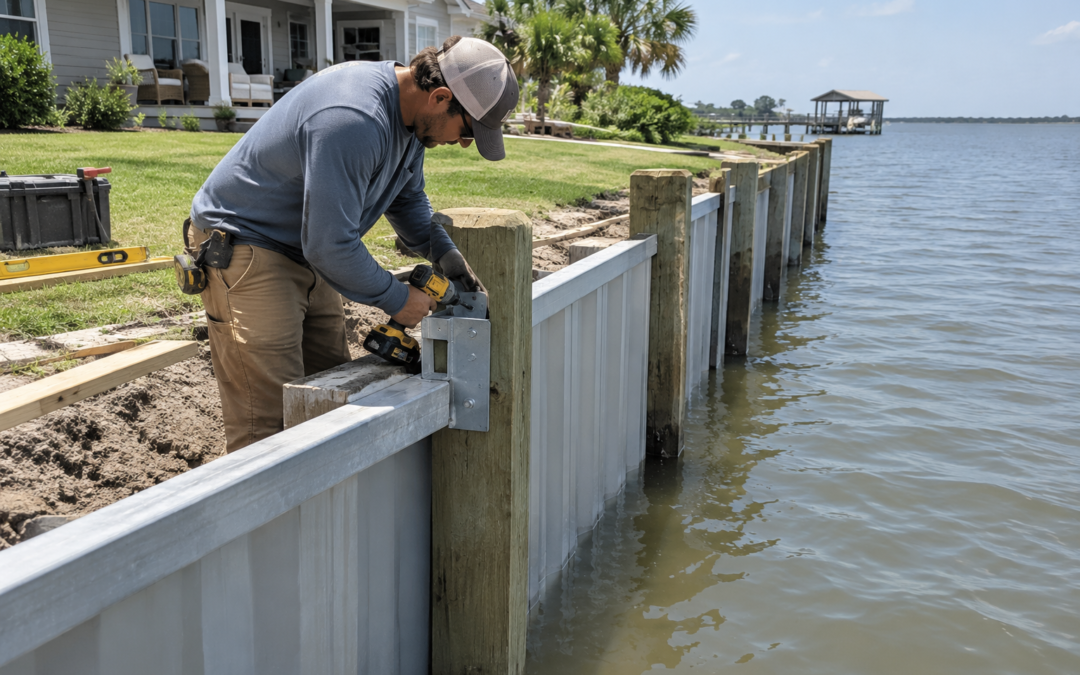
Vinyl sheet pile bulkheads are the most common choice for residential waterfront properties in the New Orleans area today. Vinyl is impervious to the saltwater corrosion that destroys steel and untreated wood over time. It does not rot, does not rust, and requires minimal maintenance once installed. Vinyl sheet pile systems can be installed relatively quickly and are available in a range of profiles and colors. For most residential canals and bayou-front properties, vinyl is the practical long-term solution.
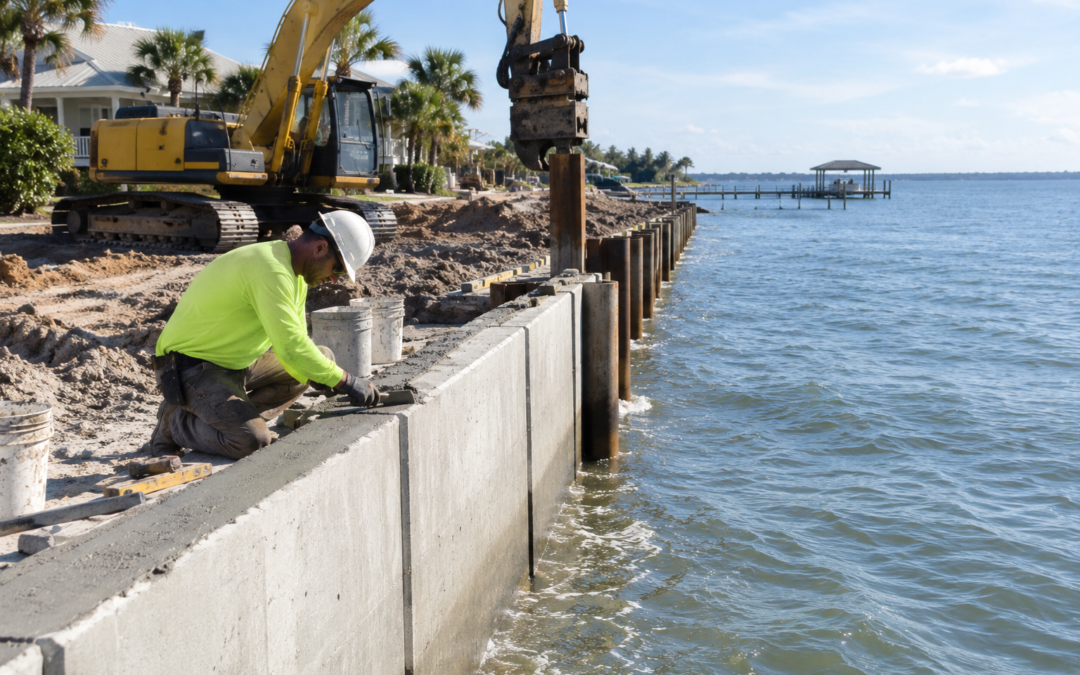
Concrete bulkheads are the heavy-duty option for properties facing more aggressive wave or surge exposure. Poured concrete or precast concrete panel systems are extremely durable and carry significant mass that resists both water pressure and impact. They cost more to install but have a longer service life and require less maintenance than most other materials. Properties on Lake Pontchartrain’s southern shore or on exposed canals with heavy traffic are strong candidates for concrete.
Steel sheet pile bulkheads are used in commercial applications and in situations where the soil conditions or loading requirements exceed what vinyl can handle. Steel is strong but requires corrosion protection in saltwater environments, typically through coating or cathodic protection systems. Residential use of steel is less common but appropriate in specific circumstances.
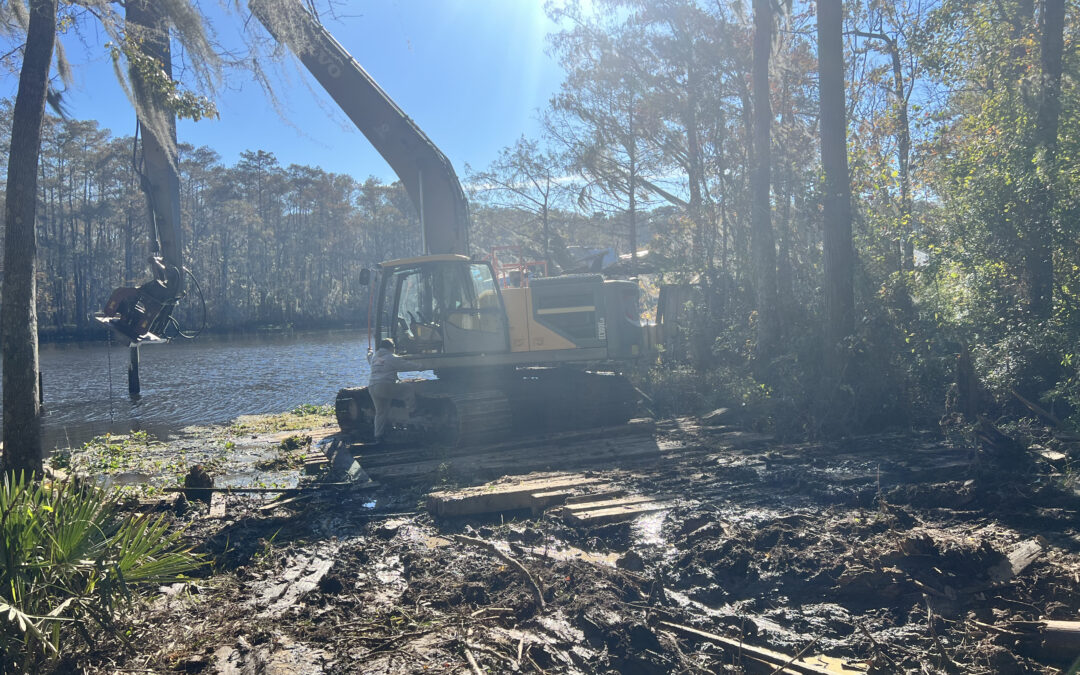
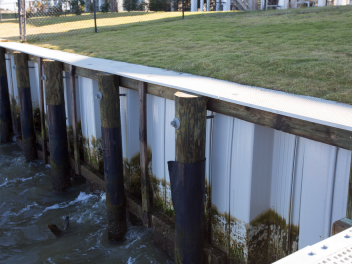
Timber bulkheads are increasingly uncommon for new construction due to their relatively short service life in saltwater and brackish conditions, but they remain in service on many older properties throughout the area. If your property has an existing timber bulkhead, the question is typically whether to repair it or replace it with a more durable material. Our bulkhead repair team can assess the condition of an existing timber wall and give you an honest recommendation.
How Bulkheads Protect Your Property Value
A deteriorating or absent bulkhead is a liability that shows up on every appraisal, inspection, and insurance review for a waterfront property. Banks are increasingly cautious about lending on properties with visible shoreline erosion or failing retaining walls. Buyers factor the cost of bulkhead repair or replacement into their offers, often aggressively.
A bulkhead in good condition does the opposite. It signals that the property has been well maintained, that the shoreline is stable, and that the buyer won’t be facing a five-figure repair bill in the first few years of ownership. In a competitive New Orleans waterfront market, that distinction matters.
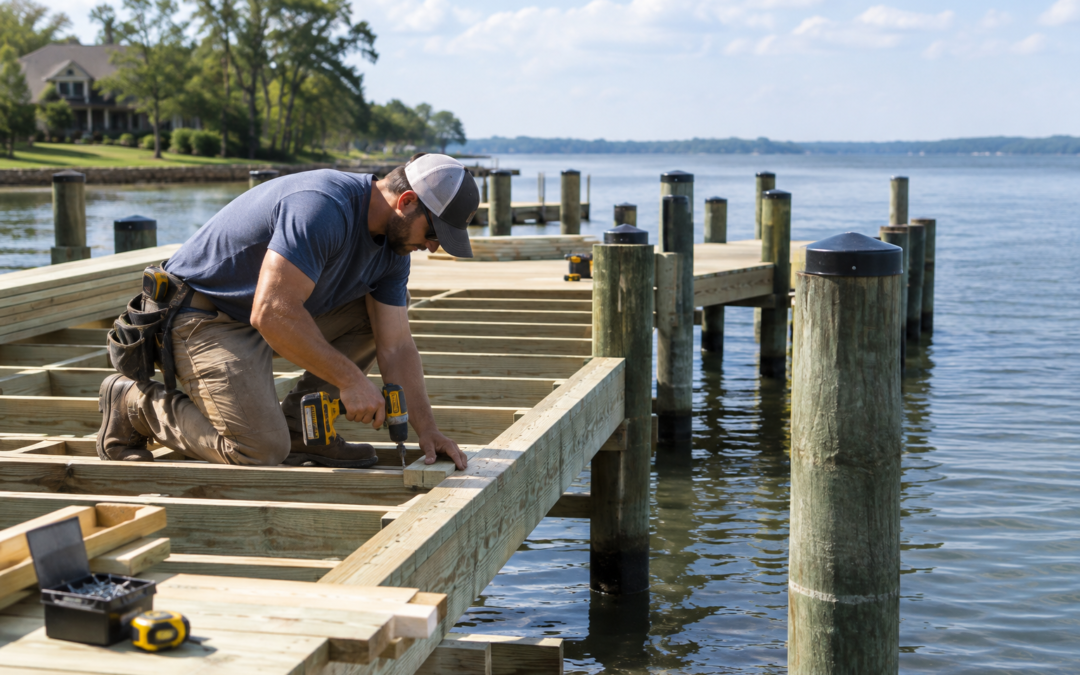
Beyond resale value, a functional bulkhead protects the investments you’ve already made. Your dock, your boathouse, your yard, and any structures near the water all depend on a stable shoreline beneath them. When the bank erodes, those investments erode with it. See how bulkheads and shoreline protection intersect with broader New Orleans marine construction on our locations page.
Signs Your New Orleans Bulkhead Needs Attention
Most bulkhead failures don’t happen overnight. They develop over months or years, giving you time to catch and address problems before they become catastrophic. Watch for these warning signs:
Bowing or leaning. A bulkhead that is no longer vertical is under more lateral soil pressure than it was designed to handle. This can result from soil saturation after heavy rain, from changes in the water table, or from the gradual failure of the anchor system holding the wall in place. A leaning bulkhead should be inspected immediately.
Voids or sinkholes behind the wall. If soil is washing through gaps or joints in the bulkhead, you’ll see depressions or voids forming in the ground behind the wall. This is a sign that the wall’s integrity is compromised and that soil loss is already underway.
Rust staining or cracking. On older steel or concrete walls, rust staining indicates that the internal reinforcement is corroding and expanding, which will eventually crack the wall from the inside. Cracks in concrete panels should be sealed and inspected for depth and structural significance.
Settlement of adjacent structures. If your dock, yard, or any structures near the water are settling unevenly or pulling away from the bulkhead, the soil beneath them may already be moving. This is a late-stage warning sign that requires immediate attention.
Water seeping through the wall. Some weep holes are intentional and necessary for drainage. Water pushing through cracks or joints that were not designed as drainage points is a sign of failure.
Bulkhead Repair vs. Replacement: How to Decide
Many property owners put off addressing bulkhead problems because they assume any work will be expensive. In reality, the cost comparison between repair and replacement is usually straightforward: catch it early and repair, wait too long and replace.
A bulkhead with isolated cracking, minor bowing, or localized joint failure can often be stabilized and repaired at a fraction of the cost of full replacement. Repair options include helical tie-back anchors to stabilize a leaning wall, panel patching and joint sealing for concrete systems, and cap replacement for walls where the top section has deteriorated while the lower section remains sound.
Full replacement makes sense when the wall has reached the end of its service life, when the deterioration is widespread rather than localized, or when the property owner wants to upgrade to a more durable material.