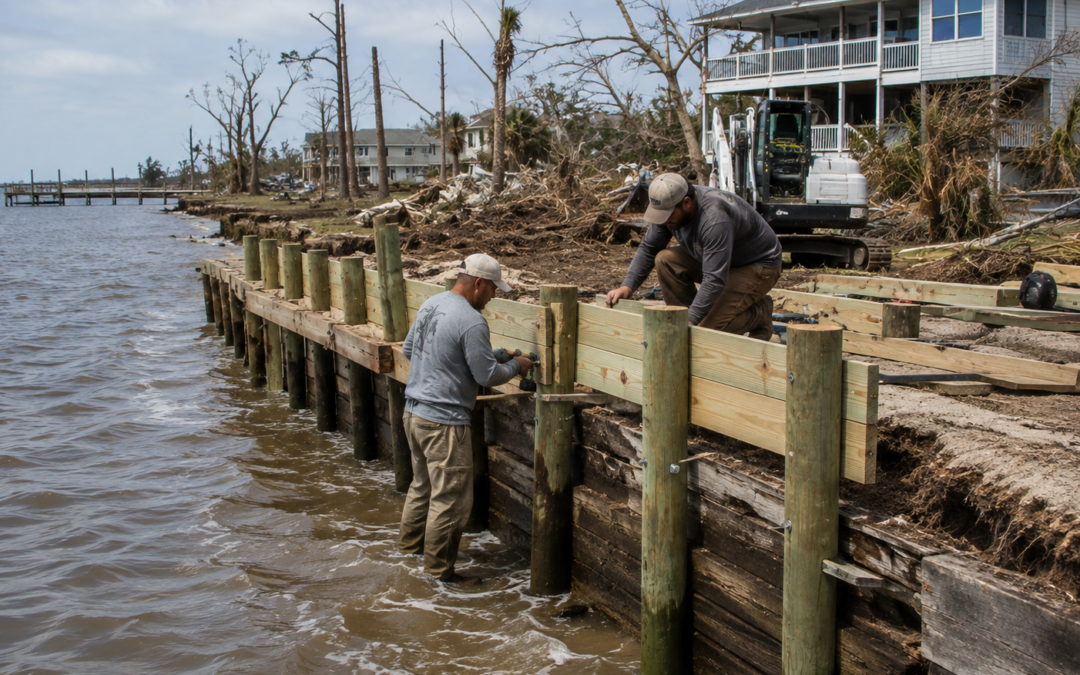
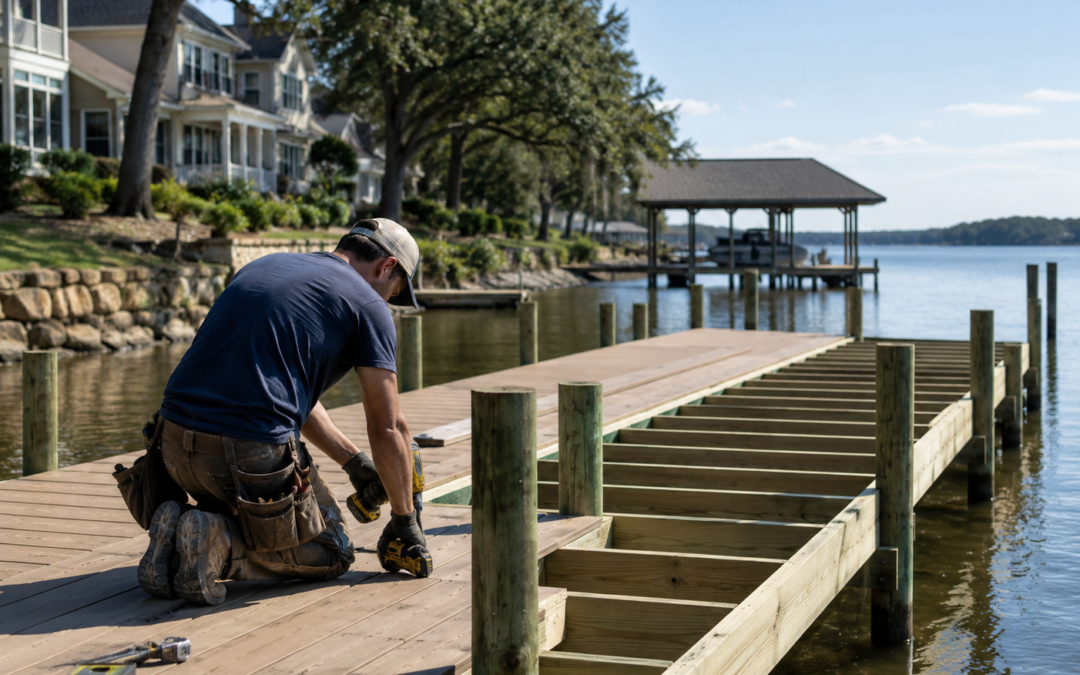
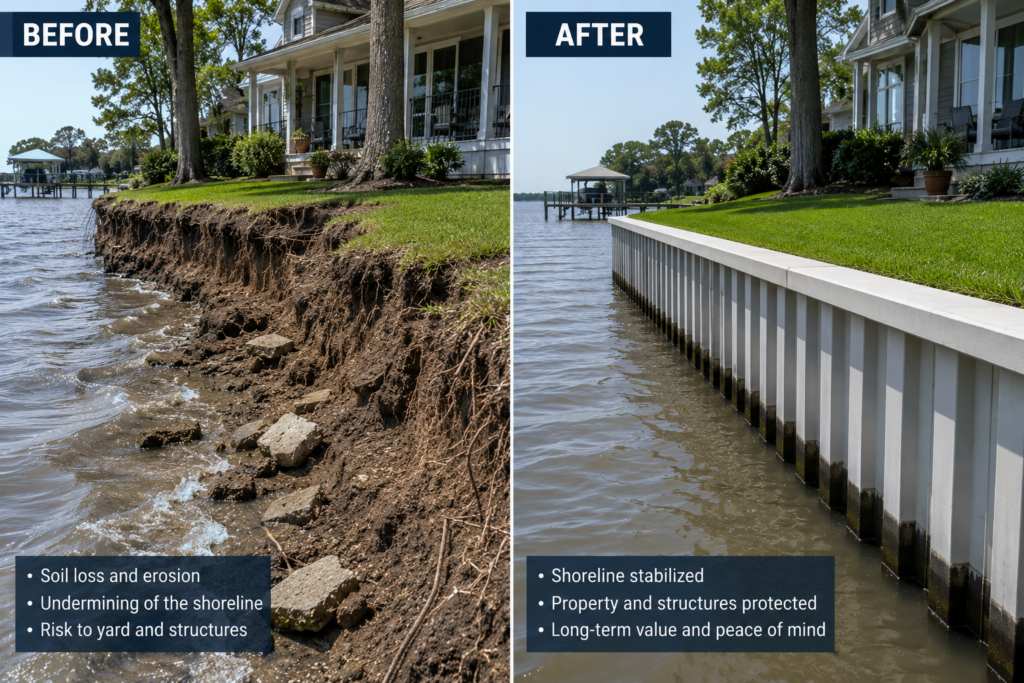
A seawall is one of the most critical structures on a waterfront property. It holds the land in place, protects against erosion and storm surge, and keeps your yard, foundation, and investment from slowly sliding into the water. When a seawall fails, the damage is rarely limited to the wall itself: soil loss, foundation undermining, and coastal erosion can affect structures well beyond the waterline.
That makes choosing the right seawall contractor one of the most consequential decisions a waterfront property owner will make. The Gulf Coast market includes contractors with vastly different levels of experience, licensing, and familiarity with local conditions. Not all of them will give you an honest assessment of what your seawall actually needs, and some will recommend more work than necessary, or less.
Lamulle Construction has been building and repairing seawalls along the Louisiana and Mississippi Gulf Coast since EJ Lamulle founded the company after World War II. This guide shares what we’ve learned about what separates a contractor you can trust from one you should avoid.
What Should You Look for in a Seawall Contractor?
A qualified seawall contractor should have proven experience with the specific coastal conditions in your area, a track record of permitted work, knowledge of local soil and tidal conditions, and the equipment to do the job properly. References from nearby waterfront property owners, familiarity with Louisiana and Mississippi permitting requirements, and transparent assessment practices are all markers of a contractor worth hiring.
Verify Experience with Your Specific Conditions
Marine construction is not a uniform discipline. A contractor who primarily builds inland lake structures may not have the right experience for Gulf Coast seawall work, where conditions include saltwater or brackish exposure, significant tidal range, wave action, and the soft, compressible soils common to Louisiana’s coastal zone.
Ask specifically about projects the contractor has completed in your waterway or in comparable conditions. A good contractor can point to seawall work in Lake Pontchartrain, Slidell, the Mississippi Sound, or the other waterways where Lamulle regularly operates. Someone who can’t name nearby reference projects should raise a flag.
Soil conditions deserve particular attention. Louisiana’s coastal soils are often highly compressible organic material. The anchoring systems, piling depths, and wall designs that work in sandy Gulf beaches or rocky New England coastlines often need significant adjustment for Louisiana conditions. Local experience with that specific soil behavior is genuinely valuable, not just a sales point.
Check Licensing and Insurance
Any contractor doing seawall work in Louisiana should hold a current Louisiana State Licensing Board for Contractors license for the appropriate classification. In Mississippi, licensing requirements are governed by the Mississippi State Board of Contractors.
Beyond the license, verify that the contractor carries general liability insurance and workers’ compensation coverage. Ask for certificates of insurance and verify they’re current before signing anything. If a worker is injured on your property and the contractor’s workers’ comp coverage has lapsed, you could be exposed to liability.
This is not a formality. Unlicensed or uninsured contractors operating without proper credentials are more common in the marine construction market than in general residential construction, partly because the work is specialized enough that homeowners don’t always know what to look for.
Ask About Permitting
Seawall construction and major repair work in coastal Louisiana and Mississippi requires permits from state and federal agencies. A contractor who doesn’t discuss permitting, or who suggests you can skip it, should not be trusted with your project.
Required permits typically include a Joint Permit Application through the US Army Corps of Engineers and approvals from the Louisiana Department of Natural Resources or the Mississippi Department of Environmental Quality, depending on your location. Work in wetland-adjacent areas or on navigable waterways may involve additional requirements.
A competent contractor handles permitting as part of their service, not as something you figure out on your own after they’ve given you a proposal. If a contractor’s quote doesn’t mention permitting at all, ask directly. If their answer is vague or dismissive, move on.
Evaluate Their Assessment Process
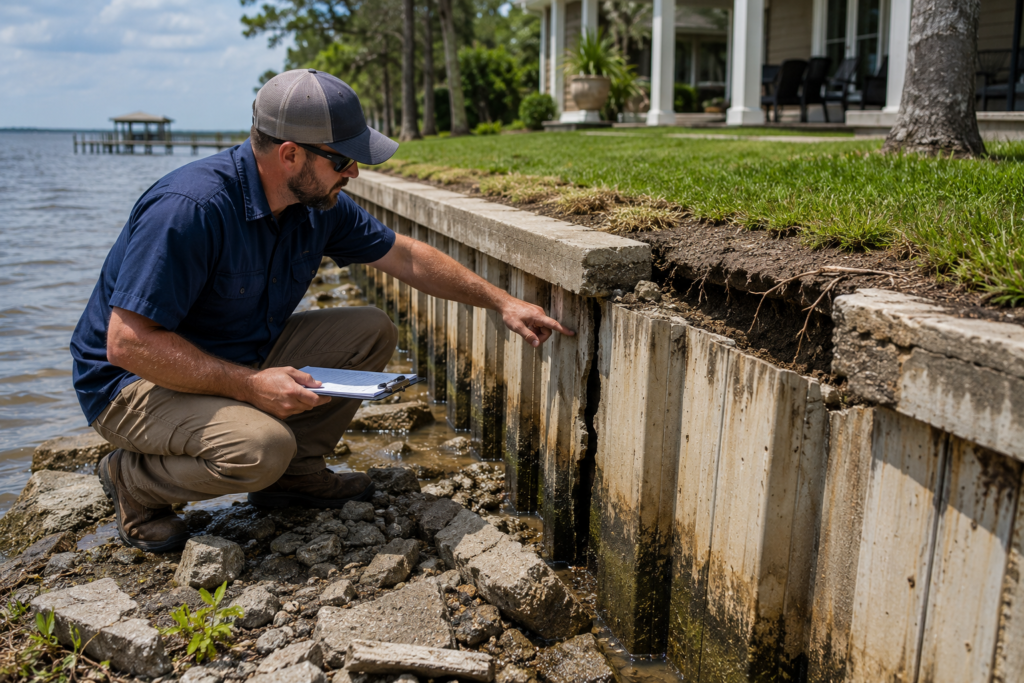
How a contractor assesses your seawall before giving you a recommendation tells you a great deal about how they operate. A thorough assessment should include a visual inspection of the wall face for cracks, bowing, or displacement, an evaluation of the area behind the wall for soil loss or settlement, examination of tiebacks or anchor systems where accessible, and a look at drainage patterns that may be contributing to hydrostatic pressure behind the wall.
An honest contractor will tell you what they actually found and give you a clear explanation of why specific repairs or replacement are warranted. They won’t lead with the most expensive option without explaining why less extensive work won’t address the problem. They also won’t minimize significant issues to win the job at a lower price and then come back for more money.
Compare what different contractors say after their assessments. If one contractor recommends complete replacement and another says minor repairs will suffice, ask both to explain their reasoning in detail. The right answer is the one grounded in what the assessment actually found, not the one that matches your budget preference.
Understand the Materials They Use
Seawalls on the Gulf Coast are built from several different materials: vinyl sheet pile, concrete, steel, timber, and combinations of these. Each has trade-offs in cost, durability, and suitability for different water conditions.
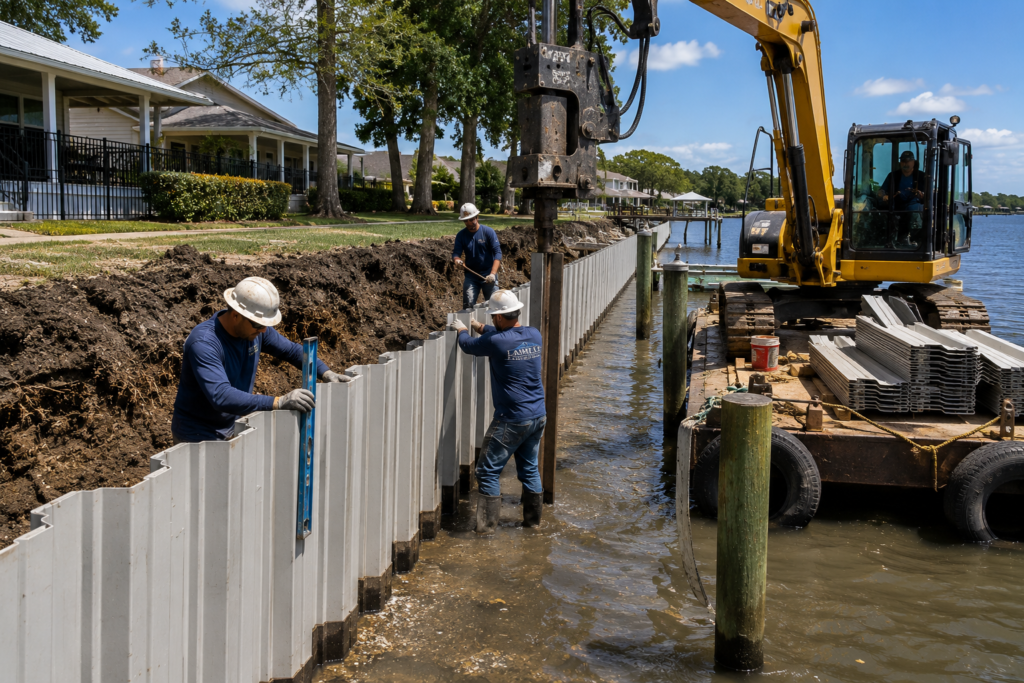
Vinyl sheet pile has become one of the most common materials for residential seawall construction and replacement in Louisiana coastal environments. It resists the corrosion and marine borer damage that eventually affects steel and timber walls, installs efficiently, and holds up well in the brackish conditions common to Lake Pontchartrain and the north shore waterways.
Concrete seawalls (https://lamulle.com/seawall-construction/) offer high durability and are appropriate for high-energy environments but carry higher construction costs. Timber seawalls are less common in new construction but still appear in older installations and some specific applications.
Your contractor should be able to explain why they’re recommending a specific material for your location, including how it performs in your waterway’s specific water chemistry, tidal range, and wave exposure. If they can only offer one material, or if they can’t explain why one is preferable to another for your site, that’s a gap in their knowledge.
Ask for References from Nearby Projects
A seawall contractor with a track record in your area should be able to provide references from completed projects nearby. Waterfront communities tend to be well-connected, and word-of-mouth matters. Don’t skip this step.
When you follow up with references, ask specifically about whether the project was completed on schedule, whether the final cost matched the estimate, and whether any issues arose after completion that required the contractor to come back. Those answers tell you more than any sales pitch.
Get a Written Scope and Contract
A verbal agreement is not sufficient for seawall work. Before any work begins, you should have a written contract that specifies the scope of work in detail, the materials to be used including specifications and grades, the permit management responsibilities, the payment schedule, the project timeline, and the warranty terms.
Pay particular attention to how change orders are handled. Some contractors use a low initial quote to win the job and then generate change orders once work is underway. A detailed written scope at the outset is the main protection against that approach.
Warning Signs to Watch For
Some patterns are reliable indicators that a contractor is not the right choice for your project:
A contractor who provides an estimate without inspecting the site in person is guessing, not assessing. Seawall conditions vary too much for remote estimates to be meaningful.
Pressure to sign immediately, or claims that the price is only available for a limited time, is a sales tactic, not a business practice. Take the time you need to evaluate your options.
Vague or incomplete proposals that don’t specify materials, depths, or construction methods leave room for shortcuts that you’ll pay for later. Demand specifics.
A contractor who can’t explain the permitting requirements for your location simply hasn’t done enough work in Louisiana or Mississippi coastal zones to be trusted with your seawall.