Bay St. Louis sits along one of the most scenic and active waterfront stretches of the Mississippi Gulf Coast, where the Bay of St. Louis meets the Mississippi Sound. The community has a deep boating culture, and for waterfront property owners here, a boat lift is one of the most practical investments available for protecting a vessel from the conditions this coast delivers.
Boat lift installation in Bay St. Louis is not a one size fits all decision. The bay’s tidal movement, the differences between properties on the open Sound versus those tucked into more protected coves, and the storm exposure that comes with living directly on the Mississippi coast all shape what type of lift makes sense.
Why Boat Lift Installation Matters on the Mississippi Coast
Leaving a boat in the water full time exposes the hull to marine growth, barnacles, and the corrosive effects of brackish and increasingly saline water toward the Sound. A boat lift keeps the vessel out of the water when not in use, protecting hull finish and extending the life of the boat significantly.
Types of Boat Lifts Suited to Bay St. Louis Properties
Cradle or bunk lifts are the most common choice for residential properties throughout the Bay St. Louis area. These lifts use rigid bunks that support the hull from below and are a reliable, cost effective option.
Sling lifts use flexible straps rather than rigid bunks and are a good fit for fiberglass hulls with complex shapes.
Floating lifts work well in more protected coves and bayous where water conditions stay calm. They are not recommended for locations with direct exposure to open Sound wave action.
Elevator lifts are appropriate for larger vessels or properties where the existing dock structure is not rated to carry a mounted lift.
Site Specific Factors for Bay St. Louis Installations
Tidal range and water depth. The Bay of St. Louis experiences meaningful tidal fluctuation, and lift height needs to be set correctly for both high and low tide conditions.
Bottom conditions. Much of the Bay St. Louis shoreline sits on sandy or silty substrate, which affects how deep pilings need to be driven.
Storm and surge exposure. Properties on the open bay or facing the Sound directly need lift installations designed with storm resilience in mind.
Existing dock capacity. If mounting a lift on an existing dock, that dock’s pilings and framing need to be assessed to confirm they can carry the additional load safely.
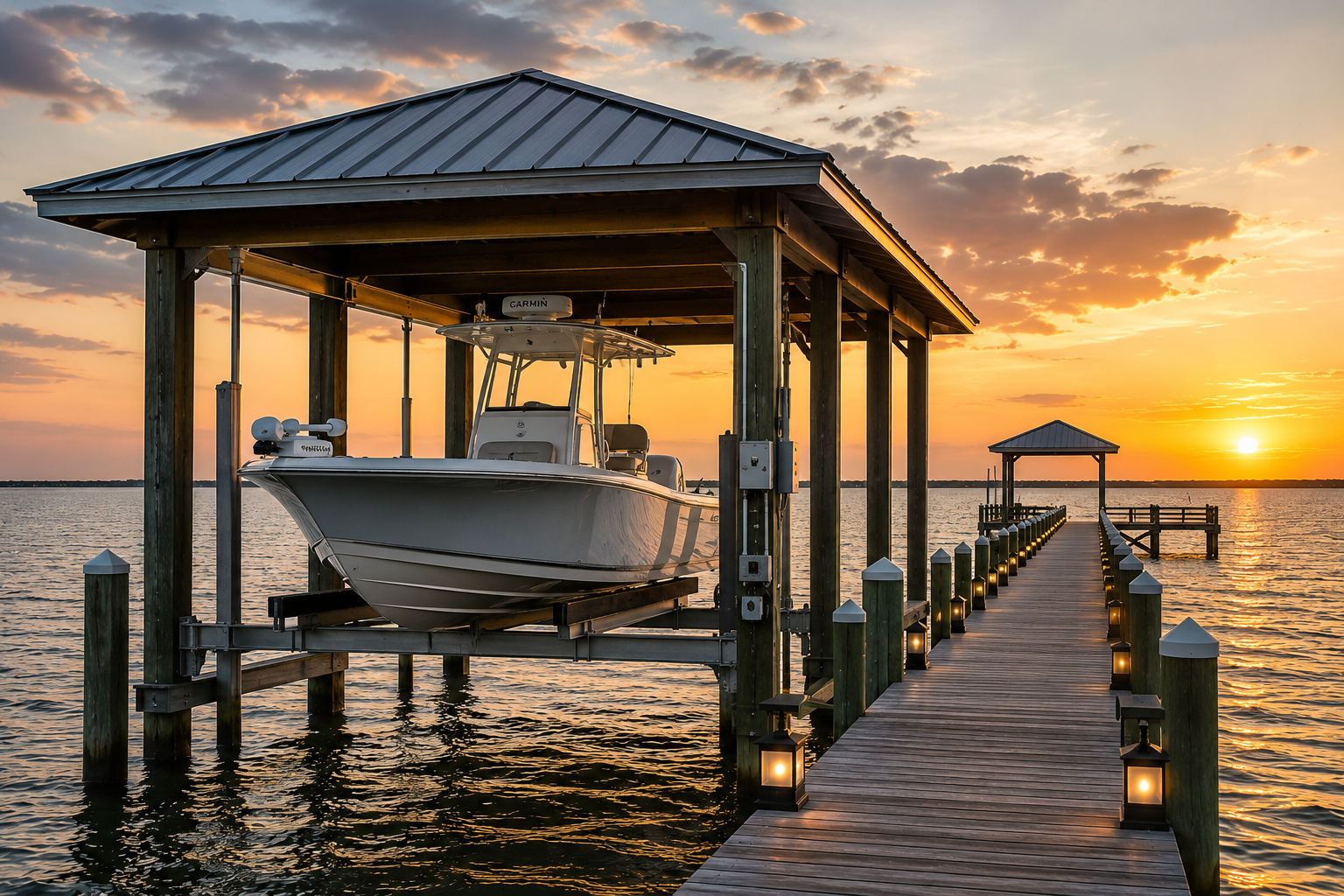
Boat Lift Maintenance for the Gulf Coast Environment
Inspect cables and pulleys for fraying or corrosion at least twice a year, and lubricate moving parts with marine grade grease. Check bunk boards or slings for wear and replace them before they contact and damage the hull finish. All structural fasteners should be stainless steel or hot dipped galvanized. See our how to maintain your boat lift guide for a full checklist.
Permitting for Boat Lift Installation in Bay St. Louis
Boat lift installation, particularly for freestanding elevator systems requiring new pilings, typically requires permits from the Mississippi Department of Marine Resources and potentially the Army Corps of Engineers. Visit our Bay St. Louis marine construction page to learn more about how Lamulle approaches projects in this community.