Choosing the right material for your bulkhead is one of the most important decisions you’ll make when planning shoreline protection along Louisiana waterways or the Mississippi Gulf Coast. Bulkheads play a critical role in stabilizing soil, protecting property from erosion, and maintaining usable waterfront space. The material you choose directly affects how well your bulkhead performs under constant exposure to water, fluctuating tides, and coastal conditions.
Because every shoreline is different, there is no one-size-fits-all solution. Water depth, soil conditions, wave action, and long-term maintenance expectations all factor into the decision. Understanding how common bulkhead materials compare helps property owners make informed choices that support long-term performance and value.

Why Bulkhead Material Selection Matters
Selecting the right bulkhead material ensures structural stability, longevity, and compatibility with your shoreline conditions. Materials react differently to saltwater exposure, soil pressure, and marine organisms, which can significantly impact lifespan and maintenance needs.
Along the Gulf Coast, bulkheads must withstand frequent water movement, changing weather patterns, and soft soils. A material that performs well inland may not be suitable for coastal applications. Choosing wisely from the start reduces the risk of premature failure and costly repairs later.
What Factors Should You Consider When Choosing a Bulkhead Material?
The best bulkhead material depends on site-specific conditions and performance goals. Key factors include environmental exposure, structural demands, and how the bulkhead will be used over time.
When evaluating options, consider:
-
Water salinity and exposure duration
-
Soil composition and load requirements
-
Height and length of the bulkhead
-
Maintenance expectations
-
Desired lifespan and appearance
An experienced marine contractor evaluates all of these conditions together rather than focusing on material alone.
Vinyl Bulkheads: A Modern, Low-Maintenance Option
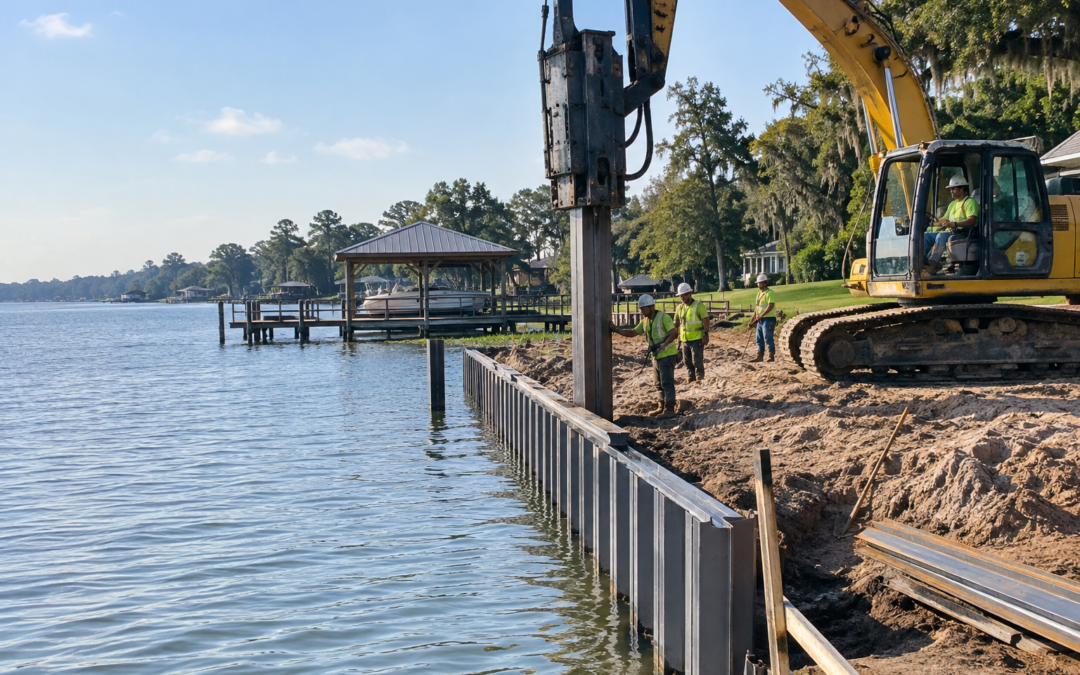
Vinyl bulkheads are engineered specifically for marine environments and are widely used throughout Louisiana and coastal Mississippi. They are resistant to rot, corrosion, and marine borers, making them well-suited for saltwater and brackish conditions.
Vinyl materials maintain consistent strength over time and typically require less maintenance than traditional materials. Their flexibility also allows them to absorb wave energy, which can be beneficial in areas with frequent boat traffic or tidal movement.
Wood Bulkheads: Traditional Appearance with Considerations
Wood bulkheads have been used for decades and are often selected for their natural appearance. Treated timber can perform well in certain conditions, particularly in freshwater or low-salinity environments.
However, wood is more vulnerable to rot, marine borers, and long-term deterioration in coastal settings. Over time, even treated lumber may require repairs or replacement as exposure takes its toll. For property owners prioritizing longevity, wood may require more frequent attention than alternative materials.
Steel Bulkheads: Strength for High-Load Applications
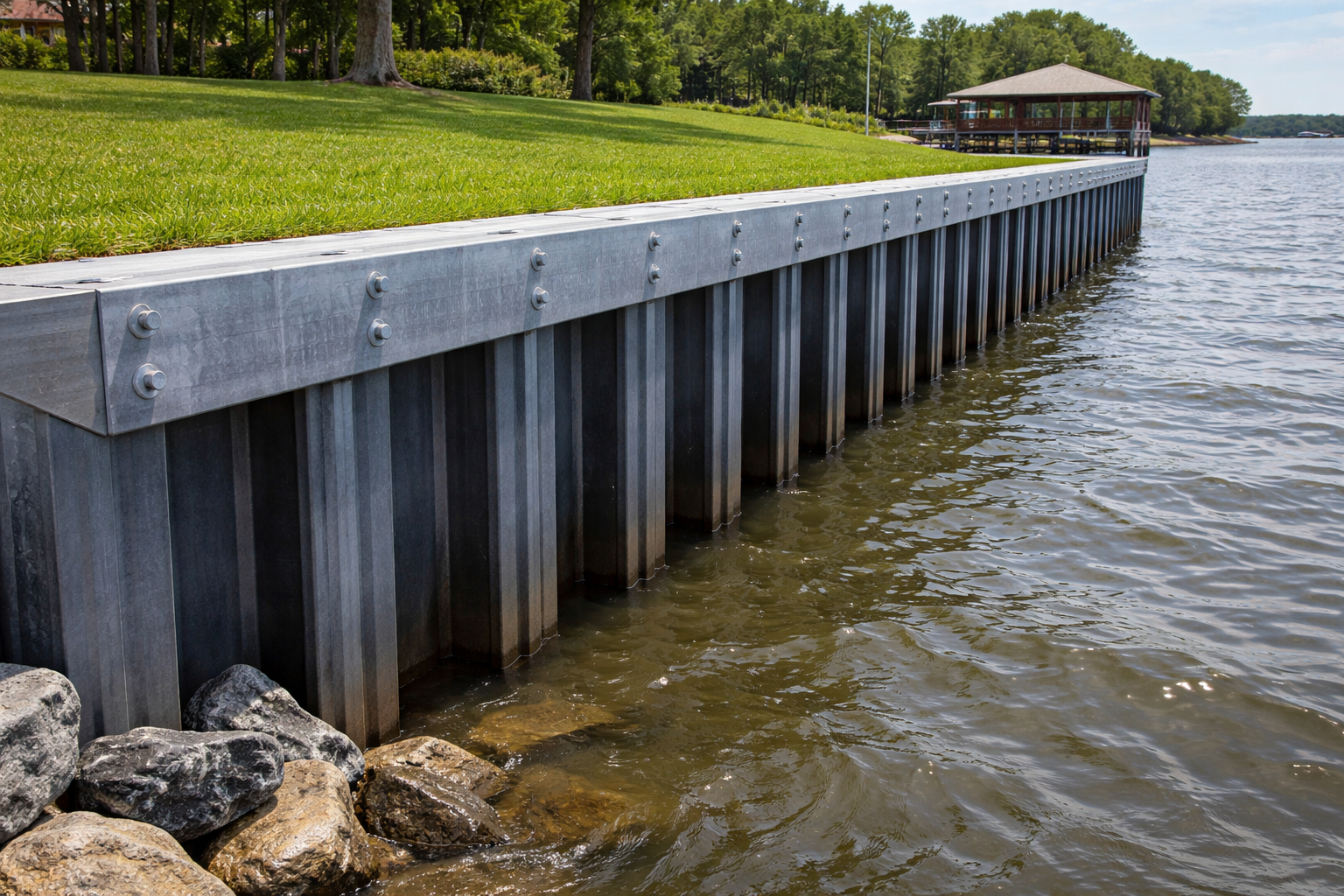
Steel bulkheads offer exceptional strength and are commonly used in commercial or industrial marine applications. They can support significant loads and are often selected for deeper water or areas with heavy soil pressure.
That strength comes with trade-offs. Steel requires protective coatings to resist corrosion, especially in saltwater environments. Ongoing maintenance is critical to preserve performance, and without it, corrosion can compromise structural integrity over time.
Concrete Bulkheads: Durable but Site-Specific
Concrete bulkheads provide a solid, long-lasting solution when designed and installed correctly. They are highly resistant to impact and can perform well in areas with strong wave action.
Concrete systems are typically heavier and more complex to install, making them better suited for specific shoreline conditions. Proper engineering and installation are essential to avoid cracking or shifting over time, especially in soft or unstable soils.
Which Bulkhead Material Works Best for Louisiana and Gulf Coast Conditions?
Vinyl bulkheads are often the preferred choice for residential and light commercial properties along the Louisiana coastline and Mississippi Gulf Coast. Their resistance to corrosion, marine growth, and environmental wear makes them particularly effective in saltwater environments.
That said, no material should be selected without evaluating site conditions. Soil stability, water depth, and shoreline use all influence which option will perform best over the long term. A professional assessment ensures the material aligns with both environmental demands and project goals.
How Long Do Different Bulkhead Materials Typically Last?
Bulkhead lifespan varies by material and environmental exposure. Vinyl bulkheads are known for long service life with minimal maintenance, while wood may require periodic replacement or reinforcement. Steel and concrete can last decades when properly maintained but demand careful monitoring.
Longevity depends not just on material, but on correct installation and design. Proper anchoring, tie-back systems, and drainage all contribute to how well any bulkhead performs over time.
Matching Bulkhead Materials to Shoreline Use
Bulkheads serving residential docks, commercial waterfronts, or municipal shorelines may require different materials. A residential property may prioritize low maintenance and aesthetics, while a working waterfront may require higher load capacity.
Matching material choice to how the shoreline is used ensures the bulkhead supports daily activity without unnecessary overbuilding or compromise.

Choosing the Right Bulkhead Material Starts with Expert Guidance
Selecting the right bulkhead material requires more than comparing product features. It involves understanding how materials interact with water, soil, and long-term environmental exposure. Professional evaluation ensures the solution is tailored to your shoreline rather than forced into a generic approach.
Ready to Choose the Right Bulkhead Material for Your Property?
Choosing the right material for your bulkhead is a long-term investment in shoreline protection and property stability. Lamulle Construction works with property owners across Louisiana and the Mississippi Gulf Coast to evaluate conditions, recommend appropriate bulkhead materials, and deliver dependable marine construction solutions. Contact Lamulle Construction today to discuss your project and take the next step toward a durable, well-designed bulkhead.